Best Fit for Dog-Worn Storage? Kurgo Baxter Review
A source-based look at the Kurgo Baxter K01587: size selection, side-bag organization, everyday care and capabilities to confirm before buying.
Kurgo Baxter Dog Backpack Coastal Blue / Baxter 30–85 lb size / K01587
Consider it for
Dog-worn storage when individual fit and suitability have been established.
Check before buying
Dog weight band is not a cargo limit. No lifting, rescue or waterproof rating verified.
Jump to a section
The direct answer: a pack for shared outings
The Kurgo Baxter is worth considering when you specifically want a dog-worn saddlebag pack and are prepared to check fit, organize both sides and carry the pack yourself when necessary. It makes less sense when all you need is an ordinary walking harness. Extra storage creates extra decisions: what belongs on the dog, how the bags sit and whether the arrangement remains practical throughout the outing.
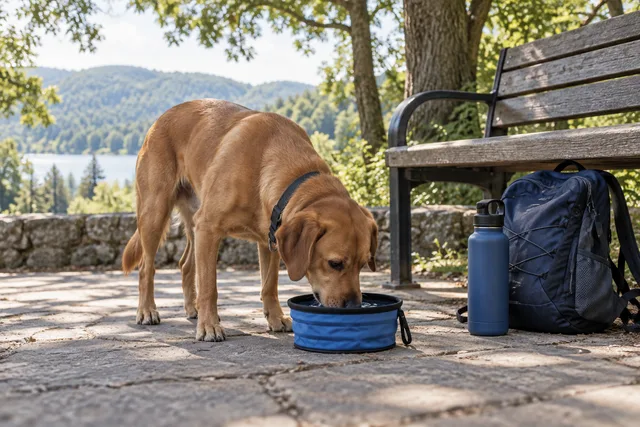
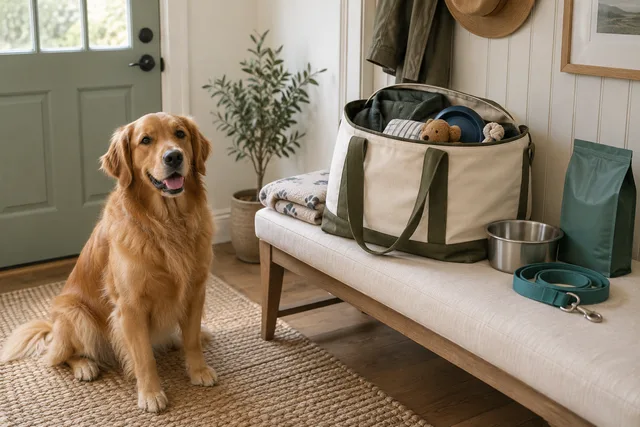
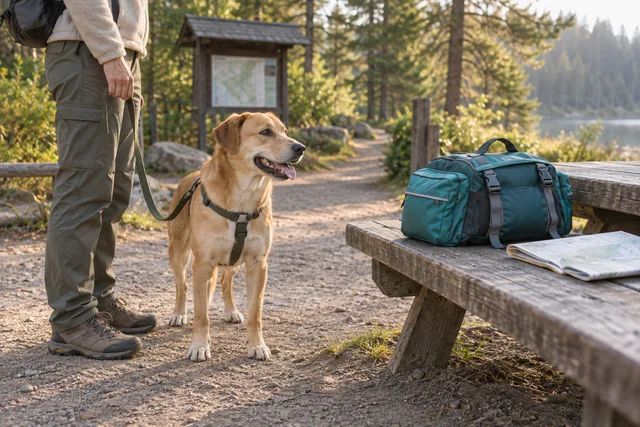
This source-based review covers the Baxter family, using the Coastal Blue K01587 as the verified US purchase example. We have not trail-tested this pack or measured comfort, abrasion, carrying performance or durability. The assessment focuses on its documented configuration and the buying questions that follow from it. Our scene cover is illustrative; the product panel uses the first image from the checked Amazon listing.
Know which Baxter you are ordering
The US Amazon listing identifies ASIN B00VTTD50I as the Coastal Blue Baxter, model K01587. It describes a 3.5-liter, two-sided pack for dogs in the 30–85-pound size band. That weight band describes the dog, not an approved cargo load. A capacity in liters also does not establish a safe weight to carry.
Keep Baxter and Big Baxter in the same buying decision rather than treating each size or color as a different product recommendation. The example linked here is the regular Baxter. Before ordering, check the selected size and color beside the purchase button, since changing a variation can change the item being purchased. A blue thumbnail by itself is not enough to confirm the selection.
It is also useful to distinguish a dog-worn pack from a carrier that lets a person carry a dog. Search results use “dog backpack” for both. This product puts storage on the dog; it does not provide an enclosed passenger compartment, a human shoulder harness or a solution for transporting a tired dog.
What the documented design provides
Kurgo lists eight adjustment points, two saddlebags, reflective trim, a padded top handle and a rear leash attachment. The manufacturer describes a contoured back section and permits gentle machine washing or hand washing followed by air drying. These are useful specifications, but they do not tell us how the pack will fit an individual dog or how long its hardware will last.
The main buying advantage is the combination of storage and a harness-like arrangement in one item. That may suit someone who wants to keep a few dog supplies together for an outing. The tradeoff is that the storage travels with the dog. Reaching an item means stopping and attending to the dog rather than opening your own pocket while moving.
Consider that workflow before comparing colors. If you frequently need a phone, map, keys or other human essentials, a personal bag may be the more convenient location. If your main goal is to reduce what you carry, remember that you still need room to take the dog’s pack back. The purchase should work even when the planned division of supplies changes.
Use measurements before choosing a size
Kurgo’s size chart gives regular Baxter a 17–24-inch neck range and a 27–40-inch chest range. Big Baxter is listed at 21–33 inches around the neck and 30–48 inches around the chest. The ranges overlap, so weight alone cannot settle every size choice. Compare both measurements with the current manufacturer chart and the instructions supplied with the pack.
For an uncertain match, write down the two actual measurements before asking the manufacturer about sizing. “Medium dog” is much less useful than a neck and chest measurement, and a familiar size from another brand may mean something different. If the measurements point in different directions, resolve that before relying on the pack for a trip.
During a clean indoor fit assessment, look at the whole arrangement rather than only whether a buckle closes. Can the dog move normally? Do the bags sit symmetrically? Is any strap twisted or lying awkwardly? These are inspection questions, not proof of a medically suitable fit. A pack that appears adjustable on paper can still be the wrong shape for a particular dog.
Keep packaging and check the seller’s return conditions before an outdoor trial. This gives you a practical way to reject a poor match without feeling committed because the pack has already been used on a muddy outing. Do not assume that the manufacturer’s guarantee and a retailer’s return policy cover the same circumstances.
Plan the contents without inventing a load limit
We have not verified a model-specific cargo-weight limit in the product sources used here. This review therefore does not turn a general percentage of body weight into a Baxter loading recommendation. Whether a dog should carry anything, and how much, calls for advice appropriate to that dog and the planned activity. Ask your veterinarian when making that decision, particularly if suitability is uncertain.
A useful purchasing exercise is to lay out the objects you intend to take before deciding that saddlebag storage is necessary. Identify which items you need at every stop, which must stay dry and which you cannot afford to lose. This is a packing decision that can be made without asking the dog to carry a trial load.
Keep your own essential supplies accessible to you. A phone, navigation information and the means to return safely should not depend on retrieving the dog’s pack. Likewise, do not make a particular item inaccessible because you expect the dog to stand patiently while you search through a bag. Simpler organization is valuable even when there is unused space.
If carrying has been cleared and you proceed, take changes in the contents seriously. Removing a bottle from one side changes the arrangement; returning a damp item may change it again. The practical question is not merely whether everything fit at departure, but whether the setup remains sensible after several stops. Empty space is acceptable; capacity is not a target.
The handle and leash point need realistic expectations
The handle gives the pack an obvious place to grasp, but its presence is not a certification for lifting a dog over obstacles. We have not verified a lifting rating, rescue approval or fall-arrest function. Do not build a route around the assumption that this pack can substitute for equipment intended for those jobs.
Similarly, a leash attachment does not establish car-crash protection. Walking equipment and vehicle restraints solve different problems. If the outing begins with a drive, plan that part separately using equipment appropriate to vehicle travel. Avoid treating a familiar brand name as evidence that every product in its range has the same testing.
For the purchase itself, these distinctions help narrow the shortlist. Someone seeking storage for ordinary outings may find the configuration relevant. Someone seeking a certified rescue harness, a vehicle restraint or a way to carry an injured dog has a different requirement. An unanswered capability that is central to your intended use is a reason to keep looking.
Think about the route as well as the bag
A pack adds width around the dog. Before making it part of an outing, consider narrow openings, crowded stopping places and vegetation along the intended route. We have not measured snag resistance or clearance. The editorial point is straightforward: a route that is easy with an ordinary harness may involve different equipment considerations with bags at the sides.
Start your assessment somewhere that makes changing the plan easy. An unfamiliar remote route is a poor place to discover that you dislike the packing arrangement or that the pack does not suit the dog. A simple outing near your starting point gives you the option of returning, removing equipment or carrying it yourself.
Keep observation separate from wishful thinking. If the dog does not appear comfortable with the arrangement, stop and reassess rather than interpreting persistence as successful training. This review does not prescribe conditioning sessions or promise that every dog will eventually enjoy wearing a pack. Choosing not to use one can be a perfectly satisfactory outcome.
Cleaning and storage affect everyday convenience
Follow the current care label and supplied instructions when cleaning your own pack. Empty every compartment first and check for forgotten food or damp contents before putting it away. Give the item sufficient time to dry before storage. Those steps also let you inspect it rather than discovering a problem at the next departure.
Look over closures, stitching and straps as part of that inspection. We cannot give a service-life estimate or an abrasion rating from photographs. If something is damaged or does not operate as expected, resolve it before use instead of assuming that an adjustment will compensate for it.
The sources checked do not establish a waterproof rating. If keeping contents dry is essential, do not infer that capability from the outdoor styling or the fabric’s appearance. Decide which items should stay in your own protected storage. A damp walk, a submerged bag and ordinary cleaning are different situations; success in one would not prove performance in all three.
When the Baxter earns a place on your shortlist
The strongest case is a deliberate one: you want dog-worn storage, the measurements look promising and you are willing to manage the setup throughout the outing. In that situation, a product combining side compartments with multiple adjustments is relevant to the job you are trying to solve.
The weaker case is buying it because a hiking photograph looks appealing, then finding objects to fill it. If your current harness and personal bag already handle the outing comfortably, extra equipment may not simplify anything. Compare the complete routine, including fitting, stops, cleaning and the possibility of carrying everything yourself.
Before paying, resolve the requirements that matter most to you. A buyer who needs removable bags, a specific empty weight or a documented load rating should confirm those details directly rather than assume them from this review. We have intentionally left unverified capabilities unclaimed. A clear answer before purchase is more useful than an optimistic interpretation afterward. Save the model number with your receipt so future questions concern the exact version you own. This is particularly helpful when a retailer groups several sizes together or changes the displayed photograph.
Frequently asked questions
Is this the regular Baxter or Big Baxter? The verified linked example is regular Baxter, Coastal Blue K01587. Both sizes belong to the same family, but the linked variation and the manufacturer’s size chart should be checked together before ordering.
Does the stated dog-weight range tell me how much to pack? No. A size band and a storage volume answer different questions from an appropriate carrying load. This review does not provide a universal loading percentage.
Can it replace my own backpack? Plan on retaining the ability to carry your supplies and the dog’s pack yourself. Whether it reduces what you carry on a particular outing should not determine whether you can safely complete the route.
Can the handle be used for rescue or lifting? We have not verified a rating for those uses. Do not buy it on the assumption that the handle makes it certified lifting equipment.
Have you tested it on a trail? No. This is a source-based buying assessment. We do not claim measured comfort, long-term durability, owner satisfaction or an independently tested performance ranking.
Sources and product details
Product identity and the pictured selection were checked against the US Amazon K01587 listing. Configuration, sizing and the manufacturer’s care description come from the Kurgo Baxter product page. Check the instructions supplied with the item you receive for current use and care information.

Kurgo Baxter Dog Backpack
Coastal Blue / Baxter 30–85 lb size / K01587
Read customer reviews on Amazon ↗
- Two-sided saddlebag design
- Eight adjustment points
- Regular Baxter: check neck and chest measurements
Consider for: Dog-worn storage when individual fit and suitability have been established.
Before you choose: Dog weight band is not a cargo limit. No lifting, rescue or waterproof rating verified.
Product information source · Reviewed 2026-09-23
Check current price, seller and options on Amazon.
US Amazon ASIN B00VTTD50I, model K01587, Coastal Blue; manufacturer K01587 matches. Affiliate link.