How to Check a Hotel Room Before Settling In With a Dog
A practical arrival check for doors, reachable objects, floor-level gaps and your own luggage before your dog explores an unfamiliar hotel room.
Jump to a section
The short answer: inspect first, then unpack and explore
Keep your dog with a responsible adult while you check the room’s exits, accessible floor, furniture edges and reachable belongings. Resolve anything concerning with hotel staff before allowing exploration, then put your own bags away and check the room again. A pet-friendly booking does not tell you what is under this particular bed today.
The ASPCA’s travel guidance specifically recommends looking around a hotel room before letting a pet in, noting calls about medication left on floors by previous guests. That is the reason to inspect even a room that appears clean and ready.
The sequence below is an editorial arrival checklist, not a hotel inspection certificate or a guarantee that every hazard can be found. It focuses on what to do after receiving your room key. Packing supplies, choosing accommodation and making a care plan remain separate tasks.
1. Give the dog and the doorway clear supervision
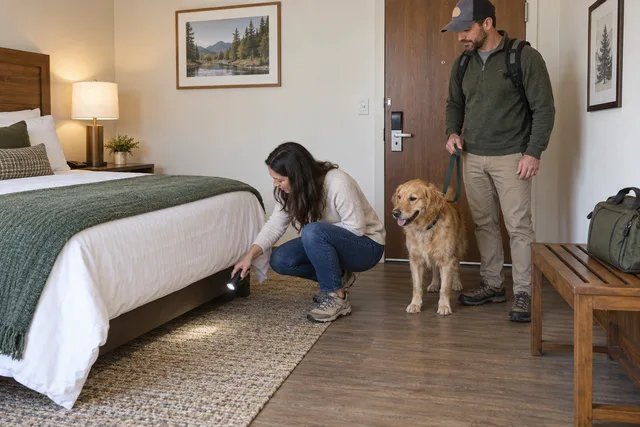
If two adults are traveling, have one stay with the dog in an appropriate permitted area while the other checks the room. Agree on this before opening bags or moving a trolley. The person watching the dog should not simultaneously be expected to search under furniture, answer reception and carry several suitcases.
If you are alone, plan how you will keep your dog supervised and under control during the check. Use familiar, suitable equipment according to its instructions. If you cannot inspect without losing that control, ask staff about a workable arrangement. Do not leave your dog tied outside the room while you disappear inside.
Carry in only what you need for the first look: your key, phone and a light if the room is dim. Keep the entry closed whenever practical. A hallway with luggage carts, opening lift doors and unfamiliar people is a poor place to discover that nobody is holding the leash.
2. Check every exit and connecting door
Find the main door, any connecting-room door, balcony access and windows. Confirm that closures work normally without relying on a suitcase pushed against them. If a latch will not engage or you cannot understand a control, keep the dog away and ask hotel staff to demonstrate or repair it.
A connecting door deserves its own check even if you do not plan to use it. Do not assume that it is secure because it looks like a wall panel. Likewise, a balcony is a separate space; leave it inaccessible until you have assessed whether it can be used appropriately with your dog.
Keep the route out of the room clear. Do not build a barricade from chairs or interfere with the door closer, alarm equipment or posted emergency arrangements. The purpose is to manage access during an ordinary stay, not to modify the hotel’s safety systems. Report a problem rather than trying to engineer a repair.
3. Make one complete floor-level pass
Start at the entrance and work around the room in one direction. Look along the wall edges, beside the bed, under accessible furniture edges and around the luggage bench. A phone light can help you see into a shadow without reaching blindly into it. Do not move heavy hotel furniture or remove fitted panels.
Look for loose items that do not belong in the space you will use. A small object hidden against patterned carpet can be easy to miss from standing height. If you notice something concerning, keep the dog away and ask staff to handle it. You do not need to identify an unknown tablet yourself before deciding that the area needs attention.
Finish the circuit before arranging the dog’s resting place. Checking only the obvious patch where the bed will go leaves the route to the water bowl or bathroom unexamined. Mark any inaccessible area as unresolved rather than silently treating an incomplete view as a successful check.
4. Look behind the obvious surfaces
The ASPCA’s destination checklist advises viewing the space at the pet’s level, looking for pest-control traps behind furniture or appliances, securing dangling cords and ensuring cleaning products are put away. Use those categories to guide attention without dismantling anything.
If a pest-control device, unidentified container or loose electrical fitting is visible, do not relocate or open it yourself. Explain its position to staff and prevent access while they respond. A quick reassurance that the room is pet friendly does not answer a specific question about an object you can see.
Check where your dog could put its head or body, particularly beside cabinets and beneath open furniture. You are looking for an obvious access problem, not measuring structural safety. When a space cannot be checked or managed reliably, request another room rather than filling the gap with improvised objects that may move.
5. Check the bathroom and the low storage areas
Open the bathroom door while your dog remains supervised elsewhere. Look at the floor, waste container, lower shelving and the area around the vanity. Check that anything you plan to keep closed actually closes. A door that swings back open will not provide the boundary you thought you had arranged.
Inspect without emptying staff supplies or handling unfamiliar residues. If the floor is wet, there is a spill you cannot identify or a maintenance panel is loose, explain the condition to reception. Ask for the issue to be resolved and for the area to be ready for use before your dog enters.
Once you unpack, put toiletries and medicines in secure storage your dog cannot reach. A zipped bag left open at floor level defeats that plan. Assign a specific closed location, and tell another adult where it is so that items are returned there after use instead of accumulating beside the sink.
6. Decide where the dog can actually rest
Choose a resting spot after completing the first inspection. It should fit the equipment you brought without blocking circulation, a door swing or the ventilation around a carrier. Put the familiar bed or suitable crate where someone can observe it and where luggage will not repeatedly be carried over it.
Check the room controls and ask staff if their operation is unclear. You need to understand how the room is being ventilated or conditioned during your stay. Do not assume a display setting alone describes conditions in the dog’s resting corner, especially if that corner is beside a window or directly in an air stream.
There is no single room temperature or layout in this checklist that certifies comfort for every dog. If the room cannot meet your dog’s established needs, change the arrangement. A familiar blanket can help create a recognisable resting place, but it cannot resolve a faulty door, inaccessible hazard or unsuitable environment.
7. Unpack without creating a new problem
Keep the first inspection clear of open suitcases. Once the room is ready, unpack deliberately: put food and personal items away, place the water bowl in a checked location and keep walking equipment easy for the responsible adult to reach. Avoid spreading everything across the floor simply because the journey was tiring.
Give each traveler a place for small loose belongings. Charging cables, snack bags and the contents of coat pockets can change an otherwise tidy room quickly. The important question is not whether the room looked clear when you arrived, but whether the accessible space remains clear after the household moves in.
Use a final short pass from the entry to the resting area and bathroom. Notice what your own unpacking added. Our overnight packing guide helps organise the supplies before travel; this second pass checks how those supplies now affect the room.
8. Agree on staff visits and departures
Ask reception how housekeeping and maintenance visits should be arranged when a dog is present. Confirm the property’s actual rules about leaving a dog in the room. Do not assume that a do-not-disturb sign, a crate or a camera grants permission or prevents every entry.
The AKC’s lodging advice stresses respect for staff and other guests, cautions about unattended dogs in unfamiliar places, and recommends asking where dogs should be walked. Those are useful conversations to have before the first meal or outing pulls you away from the room.
Agree who handles the dog when someone knocks. Before opening, make sure the dog is under the responsible person’s control. After a service visit, look again at the areas that changed. A waste container moved into reach or a bag placed by the door can alter the setup without anyone intending to.
9. Use a specific report when something is wrong
Tell staff what you observed and where it is. For example: “There is a small loose object under the bedside cabinet, and we have kept our dog away. Could someone remove it and check that area before we settle in?” This is easier to act on than saying the whole room feels unsafe.
If you need a different room, explain the unresolved condition and ask what alternative is available. Photograph the issue if that helps communicate it, while keeping the dog away and avoiding other guests’ private information. The aim is a usable room, not an argument about how the object arrived there.
After staff finish, revisit the exact location before treating the issue as closed. If the problem cannot be resolved, do not let a long drive or late hour pressure you into ignoring it. Arrange another suitable option with the property while maintaining supervision of your dog.
10. Keep an arrival note short enough to use
A useful note needs only a few headings: exits checked, accessible areas checked, concerns resolved, resting spot ready, own bags secured and staff arrangements confirmed. Record an actual exception beside the relevant heading. A long list of ticks is less useful than one clear note that a broken latch remains unresolved.
For example, two travelers might agree that one stays with the dog while the other checks the room, then both unpack into closed storage. They find an unlatched connecting door and call reception. The check is incomplete until staff resolve that door, regardless of how clean the rest of the room looks.
Keep the hotel’s contact route and a local veterinary emergency service easy to find. If you believe your dog has contacted or swallowed something potentially harmful, seek veterinary or animal poison-control advice promptly. A room checklist is not a way to decide whether an exposure can be ignored or treated at home.
Frequently asked questions
Do I need to inspect a freshly cleaned room? Yes. Cleaning and your arrival check serve different purposes. Look at the specific places your dog could access, then report anything that needs attention.
Can I just close the bathroom and skip it? Only if you can reliably keep it inaccessible throughout the stay, and you still need to assess any area your dog will use. Shared routines make an unexamined space easy to open accidentally.
Should I spray the room with my own cleaner? Do not make that the default response. Ask staff to address an identified cleaning concern using the property’s procedures, and keep the dog away until the area is ready.
What if my dog is restless while I check? Pause and arrange a workable supervised setup. Do not hurry through an inspection merely to get the leash off. Another adult or an agreed arrangement with staff may make the sequence manageable.
When is the check finished? When the intended areas have been inspected, specific concerns resolved, belongings secured and responsibility agreed. Revisit the relevant parts whenever the room’s arrangement changes.