How to Prepare for a Dog Grooming Appointment
Prepare the information, questions and pickup arrangements that make a grooming appointment easier to discuss, without attempting last-minute grooming fixes.
Jump to a section
The direct answer: prepare the conversation before the visit
Confirm what the appointment includes, collect the records the salon requests, write a short factual note about your dog and agree how the groomer will reach you. Bring clear preferences and questions rather than trying to fix unfamiliar grooming problems immediately before drop-off.
This guide is an organizational workflow for an already planned professional grooming visit. It does not teach clipping, mat removal, restraint or medical treatment. The aim is to make the handover specific enough that the person receiving your dog understands what you are requesting and what still needs discussion.
Start a single note on paper or your phone. Use five headings: booking, requested service, dog information, contact plan and pickup questions. Keeping these together is more practical than searching through separate messages at a busy reception desk. You can reuse the structure next time, but check the details before every appointment.
Confirm the booking beyond the calendar time
Check the date, location, arrival instructions and the name under which the booking was made. If the business has several branches or a mobile service, confirm exactly where the handover happens. A familiar business name is not enough when a confirmation message refers to a different address or collection arrangement.
Ask whether the listed time is the start of grooming, a drop-off window or an assessment appointment. Then ask how completion will be communicated. Avoid building an immovable commitment around an assumed finish time. The useful answer is the salon’s actual arrangement for your booking, not a general estimate found online.
Record cancellation, late-arrival and late-collection conditions in your own words after reading the current policy. If another household member booked the visit, make sure you have the same confirmation and service description. A quick internal check can prevent two people from giving the groomer different instructions.
Ask what documentation must arrive beforehand and what can be presented at reception. Send information through the business’s stated channel, checking the destination before sharing personal details. Keep a copy available to you, but avoid sending an entire unrelated folder when the salon has requested one particular record.
Turn a vague style request into a useful discussion
Words such as tidy, short and natural can mean different things to different people. Write down what you hope the visit will achieve in ordinary language. For example, you might want to discuss an easier maintenance routine or understand which parts of a previous trim you would like changed.
If you have a photograph of your own dog after a previous appointment, bring it as a conversation aid. Explain what you like about it instead of treating the image as an exact specification. Lighting, coat condition and the angle of a photograph can conceal details that the groomer needs to assess in person.
Separate your preferences from questions requiring professional assessment. You can say that you prefer a certain appearance while also asking what is practical for the coat presented that day. Do not assume a particular result is suitable simply because it looked attractive on a different dog in a social-media photograph.
Ask the groomer to repeat the agreed service in plain language. If the assessment changes the plan, clarify the new scope before handing over. A useful record might say, “Discussed the current coat, agreed the service described on the booking, and requested a call before any optional addition.” Adapt the wording to the actual agreement.
Write factual notes about previous handling
Describe observations rather than applying broad labels. “Pulled a paw away during brushing last week” gives more information than “a little dramatic.” If you do not know how your dog responds to salon equipment, say that the response is unknown. A guess made to simplify the conversation can leave an important uncertainty hidden.
Include relevant details from earlier appointments, such as a service that was stopped or an instruction the previous groomer asked you to pass on. Distinguish what you saw yourself from what someone told you. If you have a written note from that visit, ask whether the new groomer would find it useful.
The RSPCA’s groomer guidance emphasizes discussing individual needs, including sensitivity to particular handling, and using reward-based approaches. It also advises against forcing dogs through grooming they do not enjoy. These principles support an honest conversation rather than a promise that every booked service must be completed.
Ask what the groomer would do if your dog could not comfortably continue. Record the answer as a plan to discuss, not as your own instructions for handling the dog. An incomplete service with clear communication is a different outcome from a service being silently changed. Knowing the contact process helps you respond when a decision is needed.
Keep health information accurate and within its proper role
Provide the information requested by the salon and any relevant instructions already given by your veterinarian. Use the original wording when you are unsure how to summarize it. Do not turn a past observation into a diagnosis, and do not omit an unresolved concern because you think it may complicate the booking.
If your dog’s condition has changed since the appointment was arranged, contact the appropriate professional before arrival. Ask the veterinarian about medical concerns and the salon about its admission and service policies. This guide cannot determine whether a particular dog should proceed with grooming on a particular day.
Do not add a new medication, calming supplement or topical treatment just to make the appointment easier. Questions about those choices belong with your veterinarian. Likewise, do not change an existing prescribed routine based on a generic preparation checklist. Pass along relevant professional instructions rather than improvising a new plan.
For required vaccination documentation, ask which record format the salon accepts and how it should be supplied. The RSPCA recommends checking vaccination requirements and referring vaccination questions to a veterinarian. Requirements are not interchangeable across businesses, so use the policy for the appointment you actually booked.
Ask a few focused questions about the service
The American Kennel Club’s questions for potential groomers cover experience, the facility, services, waiting arrangements, emergencies and cost. Use those topics to resolve gaps in your booking, rather than trying to conduct a lengthy interview while other clients are waiting behind you.
Choose the questions you genuinely cannot answer from the confirmation. For example: who will receive the dog, where will the dog wait, how will you be contacted if the plan changes, and which services are included? If the answers require a longer discussion, arrange that conversation ahead of the visit.
Ask for the quoted scope and any circumstances that could change the charge. An estimate should not be mistaken for an unlimited authorization. Clarify how the salon obtains agreement for optional work, then make sure the person answering the phone has authority to discuss the decision.
Keep the wording neutral and concrete. “Please explain how pickup is arranged” is easier to answer than an assumption about how all salons operate. Written policies can be useful references, but a point you do not understand still needs clarification. Save the answer beside the booking information so you can find it quickly.
Pack a small, appointment-specific set of items
Bring the requested records, your contact details and the short note you prepared. Check whether the salon wants any familiar item, owner-supplied product or other accessory before packing it. A large bag of unrequested equipment can create more sorting work without making the handover clearer.
If the salon agrees to accept an item, label it in a way the staff can recognize and note that it should come home with your dog. Keep the inventory brief. For example, record a lead and a particular approved item, rather than assuming everything placed in the bag will be tracked automatically.
Prepare the transport arrangement separately from the grooming request. Use the equipment and instructions appropriate to your journey, and allow time for parking and finding the entrance. Do not plan to resolve a transport problem at the reception desk while also discussing the grooming service.
Keep your appointment note accessible without having to release control of your dog to search for it. A printed copy or an easy-to-find phone document can help. If someone else is doing drop-off, give them the current version and identify which questions must be answered before they leave.
Use the handover to confirm, not to rush
At arrival, identify yourself and your dog, confirm the booking and mention any changes since the earlier conversation. Hand over the relevant note and allow the staff member to ask questions. A prepared document supports the discussion; it does not replace making sure the person receiving it understands the important points.
Listen for discrepancies between your expectation and the service being described. If you thought the booking included an assessment but the staff member describes something else, pause and clarify. Resolving the mismatch before leaving is simpler than reconstructing two different conversations afterward.
Confirm the number the salon will call, who will answer and the pickup arrangement. Check that the phone will be available during the appointment. If you expect to be unreachable, discuss an appropriate contact arrangement beforehand instead of assuming the business can wait indefinitely for a response.
Before leaving, make sure the handover itself has been completed according to the salon’s process. Do not assume that stepping through the door means the booking has been accepted or that every requested detail has been recorded. A short final confirmation should leave both sides with the same understanding.
Make the pickup conversation useful for next time
Ask what was completed and whether anything differed from the agreed plan. If a service was omitted, request a clear explanation and the recommended next step. Distinguish a grooming observation from a medical diagnosis; concerns about health should be discussed with your veterinarian.
Ask what information would help at the next booking and whether the groomer recommends a demonstration of routine between-visit care. Do not rely on remembering unfamiliar instructions from a hurried conversation. Request clarification or a written note when the explanation is important to follow correctly.
Check that the agreed belongings are returned and keep the receipt or service record with the appointment note. Add a few factual observations while they are fresh: who groomed the dog, what service was completed and what should be discussed next time. This creates a useful history without turning every visit into a lengthy report.
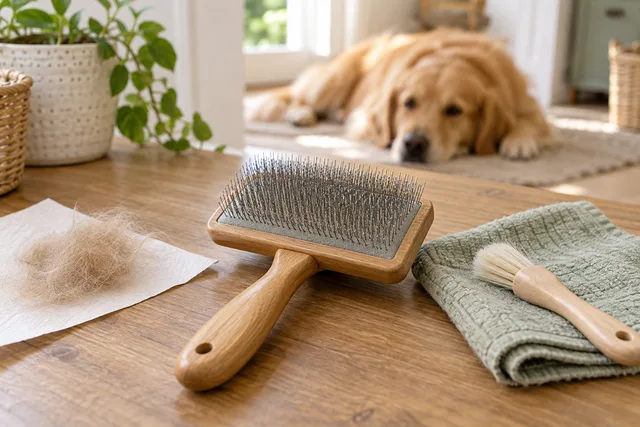
For related organization, our dog-sitter handover guide covers a separate care arrangement. If you already use a slicker brush between appointments, see cleaning a slicker brush for that equipment task. Neither replaces the instructions specific to your dog’s coat or this appointment.
Frequently asked questions
Should I attempt a last-minute trim before the appointment? This preparation workflow does not require one. Discuss the current coat honestly and leave unfamiliar procedures to the appropriate professional instead of changing the starting point without advice.
What if I do not know my dog’s grooming history? Say so clearly. Share what you do know, identify the unknowns and ask how the groomer proposes to assess the appointment. Missing history is information worth communicating.
Can someone else do drop-off? Ask the salon about its process. Give that person the current notes and make clear who can approve service changes and who will collect the dog.
Is a reference photo a guarantee of the finished result? No. Use it to explain preferences, then agree what is appropriate and achievable after the groomer has assessed the actual dog and coat.
What is the minimum useful preparation? Know the booking details, requested service, relevant dog information and contact plan. Confirm those four things with the receiving staff member, then keep the phone available for any agreed follow-up.