How to Join Acadia’s BARK Ranger Program With Your Dog
Plan Acadia BARK Ranger checklist collection, dog supervision at visitor facilities, program completion and the optional tag without assuming unrestricted park access.
Jump to a section
Direct answer: get the checklist and plan a dog-permitted visit
To take part in Acadia’s BARK Ranger program, obtain the park’s activity checklist, follow the B.A.R.K. principles during a visit and ask staff how to complete the local swearing-in process. Check that the place where you plan to collect or return the checklist is operating on your visit date. Arrange continuous care for your dog whenever a human needs to enter a building where ordinary pets are not permitted.
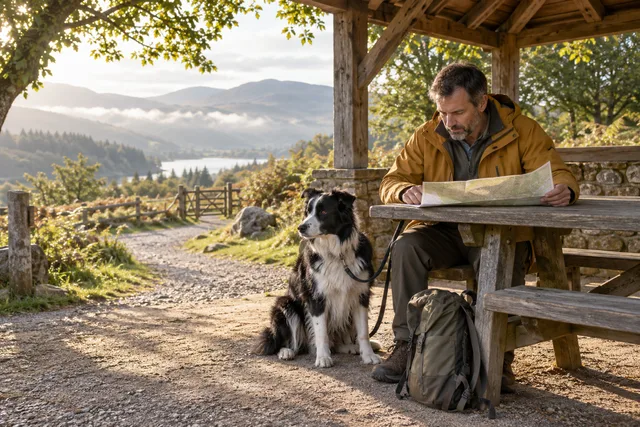
The program is a way to learn responsible park visiting, not permission to take a dog everywhere in Acadia. This guide explains the participation logistics, the difference between the program and a souvenir purchase, and how to organize a visit without assuming access. We have not attended a ceremony or reserved anything for this article. The cover is an illustrative planning scene, not an actual National Park Service event.
Start with Acadia’s own program description
The NPS Acadia BARK Ranger article says activity checklists are available at campground ranger stations, Sieur de Monts Nature Center and Hulls Cove Visitor Center. Dogs completing the short program can be sworn in as BARK Rangers. Their owners are then eligible to purchase a special collar tag at the Eastern National Bookstore at Hulls Cove.
Those are distinct steps: obtain the activity material, learn and complete what it asks, establish the completion process with staff, and decide separately whether to buy a tag. A photograph of a dog wearing a tag does not tell you the current operating arrangements. A store listing also does not replace the program instructions.
Save the official program page before traveling, and note the date you checked it. You do not need to build the whole trip around a souvenir. Decide whether the learning activity itself is something you want to do. That makes it easier to keep the visit worthwhile if a particular location, staff interaction or retail option is unavailable.
Treat the four B.A.R.K. ideas as the activity’s purpose
The program centers on four ideas: bag waste, always use a leash, respect wildlife and know where you can go. Think of the checklist as a prompt to put those ideas into practice, rather than a scavenger hunt requiring you to reach every scenic spot.
Before departure, turn each idea into a simple planning question. How will you carry used waste bags until suitable disposal is available? Who will hold the leash while another person handles a map? How will you avoid approaching wildlife? Have you checked the exact place you intend to visit rather than assuming the park name settles access?
Write the answers in your own trip notes, alongside the official checklist once you have it. These notes are an editorial planning aid, not a replacement NPS form or a claim that we can certify completion. Follow the activity sheet you actually receive. If its instructions differ from an old online account, ask staff to explain the current local procedure.
Check seasonal operation before choosing a collection point
Use Acadia’s Operating Hours and Seasons page to check your proposed stop. The page lists seasonal opening and closing dates for visitor facilities, campgrounds, roads and services separately. A park area being accessible does not mean its visitor center or campground desk is staffed.
Choose a first option and a realistic alternative only after checking their operating information. Keep the names precise: the nature center, a campground ranger station and the Hulls Cove Visitor Center are different places. Do not infer that any campground in the area is an NPS checklist collection point.
Check the date and the daily hours relevant to your plan. If information does not establish that a desk will be open, leave that as a question to resolve before making the journey. Avoid copying last year’s schedule into a new itinerary. A short program still depends on practical access to its materials and completion arrangements, especially near a seasonal opening or closing period.
Plan for the visitor-center boundary before you arrive
The current Acadia Visiting With Pets page lists public buildings, ranger-led programs, Wild Gardens of Acadia and Duck Harbor Campground as restricted to ordinary pets. The program article specifically includes Hulls Cove Visitor Center among the buildings pets cannot enter. Collecting a checklist is not an exception to that boundary.
If traveling with another adult, agree who will stay with the dog while the other person asks for materials or information. Choose a permitted place to wait and keep the arrangement simple. The person collecting the checklist can then return and explain the instructions without everyone assuming the dog can follow indoors.
If visiting alone, establish a workable way to access the program without leaving the dog unattended. Do not solve the problem by tying the dog outside or leaving it alone in a vehicle. Ask about the current arrangement before committing to the stop, or adjust the visit if there is no practical option. The goal is a responsible outing, not reaching a desk at any cost.
Choose the outing separately from the certificate goal
The current pet page requires a leash no longer than six feet, proper waste disposal and no unattended pets, including in cars or campsites. It distinguishes trails closed to pets from trails not recommended for them. Those categories should remain visible in your planning; a BARK Ranger activity does not erase either one.
Pick a modest visit plan that already works within the current rules and your own suitability assessment. Do not assume the checklist requires a strenuous hike, a ladder trail or a complete tour of the park. Ask what the actual sheet requires rather than adding challenges because they appear in a social-media account.
Keep the route note separate from the participation note. One records where you intend to go and what access applies; the other records where to obtain the checklist and how completion works. This separation makes a change easier. You can adjust an outing without pretending that a restricted trail became available because a program item is on your schedule.
Use the newest pet rules when sources disagree
The dedicated pet page was updated in September 2026, while the program article carries an older update date. Their seasonal beach restrictions are not presented identically. For that reason, this guide does not repeat a single old date range as though it applies to every beach and every year.
Before including a beach, read the current entry for that specific location and the dates of your visit. Do the same for a named trail or other restricted area. A broad statement that dogs can visit Acadia is not enough to establish access to the next stop on your route.
If an older program article and a current access page leave you uncertain, resolve the access question with current park information before proceeding. Keep the uncertainty visible in your notes. Do not choose the wording that is more convenient simply because it allows the outing you wanted. The checklist’s educational purpose is compatible with changing a plan when the access information calls for it.
Pack the checklist task into an ordinary visit kit
Bring the practical items you already use to supervise and care for your dog during a suitable outing. Include waste bags, a way to carry used bags, water and the permitted leash. This is a planning reminder, not a branded equipment list or a suggestion to buy new supplies just to participate.
Keep a pen and a place to protect the activity sheet from damage. A simple folder can hold the checklist beside your route and opening-hours notes. If you are using a phone for those notes, save the information you need before departure and make sure you know how to find it without repeatedly searching through unrelated photographs.
Avoid treating the activity sheet as the only thing to carry. Equally, do not let an elaborate packing list distract you from a missing collection-point arrangement. Equipment cannot make a closed desk open or turn a prohibited building into a pet-permitted place. Confirm the visit logistics first, then prepare the small set of items that supports your actual plan.
Ask staff how completion works at your chosen stop
When collecting the checklist, ask where and how to return it, whether your dog needs to be present for the local completion interaction, and what arrangements are available on the day. The published program description does not establish a universal ceremony time, a guaranteed immediate appointment or a reservation process for every collection location.
Read the sheet before leaving the contact point so you can clarify an unclear instruction while information is available. Then complete the activity honestly. Do not mark an action as done merely because it was planned, and do not use a souvenir purchase as evidence that the learning task has been completed.
Allow space in the itinerary for a change of plan. If a completion interaction cannot happen during your visit, keep the accurate checklist and staff instructions rather than inventing a result. This guide cannot award a BARK Ranger designation, authorize a ceremony or promise a particular staff member will be available. Those details belong to the park’s actual program operation.
Keep the optional tag separate from program completion
The NPS description makes the special collar tag a purchase option after completion. It is not described as a free item automatically handed to every arriving dog. We do not quote a price, promise stock or state that a particular design will be available when you visit.
If a tag matters to you, confirm the current store arrangements and decide independently whether to make a purchase. A store’s opening time and the availability of program assistance are separate pieces of information. Plan who stays with the dog during any indoor retail stop, just as you would for collecting a checklist.
There is no need to make the quality of the outing depend on buying something. Keep a personal note of what you learned or a suitable photograph if you want a memory of the visit. Do not stage an image that requires entering a restricted area or disturbing other visitors. A souvenir does not change the rules that apply after the activity is finished.
Recheck current conditions before setting out
Acadia’s Current Conditions page provides a place to review alerts and links to facility dates. It also notes that weather can change quickly and that conditions on mountain peaks can differ from those elsewhere on the island. Use current information for the actual visit rather than treating a saved plan as final.
Review the proposed collection stop, route and return arrangement together. If a closure or change affects one part, check what it means for the rest. For example, an inaccessible contact point can affect completion logistics even when another outdoor area remains open. Do not assume an alternative stop offers identical services without checking.
If the plan no longer works, postpone the program task or choose a different appropriate visit. There is no reason to force a ceremony, purchase or route into a day that does not support it. The useful outcome is a clear plan with accurate expectations, not a claim that every visitor can finish every step on demand.
Frequently asked questions
Where do I get the activity checklist? NPS names campground ranger stations, Sieur de Monts Nature Center and Hulls Cove Visitor Center. Check current seasonal operation and the practical collection arrangement for your chosen stop.
Can my dog enter Hulls Cove Visitor Center to participate? Ordinary pet access restrictions still apply. Plan continuous supervision outside in a permitted place rather than assuming the program overrides the building rule. Service-animal access is a separate policy; this guide does not assess eligibility.
Is a collar tag guaranteed or free? The program description says owners become eligible to purchase a tag after completion. We have not verified a current price, inventory or automatic handout.
Must we do a difficult hike? Do not add an unverified hiking requirement. Read the actual activity sheet and ask staff about its instructions. Plan only an outing appropriate for you and your dog within current access rules.
Does participation permit off-leash access? No. Continue following the park’s current leash and access rules. The program teaches responsible visiting and does not provide an exception to those rules.