How to Pack Dog Supplies for an Overnight Stay
Build a practical overnight bag around your dog’s normal routine, with meal planning, accessible walking supplies, a clear handoff note and a return-home check.
Jump to a section
Start with the routine, then choose the bag
Pack the things your dog will need between departure and the first normal routine after you return. Count meals and walks, confirm the sleeping arrangement, and keep arrival essentials where you can reach them. A single overnight stay can cover very different needs depending on when you leave and come home.
This guide covers a short domestic stay with you, a friend or a sitter. It is a packing method, not an airline checklist or a substitute for accommodation rules. If a boarding facility supplies a required list, use that list first and resolve differences before drop-off.
You do not need a dedicated new travel bag to begin. Lay out the required items, check their size and weight, then choose a clean bag that keeps them organized. Buying the container before identifying its contents can leave you trying to make an unsuitable arrangement work.
Step 1: confirm what the destination provides
Ask where your dog will sleep, where food can be stored and whether bowls or bedding are supplied. Confirm whether personal items are welcome and how they should be labeled. A friend’s home, a hotel and a boarding facility may have quite different expectations.
Check the planned arrival and collection times rather than assuming one night means exactly twenty-four hours. Write down who will meet you and how to reach them. If you arrive after the usual evening routine, knowing the handoff arrangement matters more than adding another optional toy.
Separate confirmed information from assumptions. If you do not know whether refrigerated storage is available for an item that needs it, resolve that before packing. Do not leave an essential condition to a hopeful conversation at the front desk after you arrive.
Step 2: write a departure-to-return timeline
List the normal care events that fall within the time away: meals, walks, bedtime and any established care instructions. This is a scheduling exercise, not a reason to change your dog’s usual portions or routine. Include the journey at both ends, because supplies packed at the bottom of luggage may be needed before check-in.
For example, leaving after breakfast on Saturday and returning after Sunday dinner covers a different number of meals from leaving Saturday evening and returning Sunday morning. Mark each meal individually. Then identify a reasonable spare supply in case the return is delayed.
The American Kennel Club’s boarding guide recommends bringing familiar food and extra for unexpected schedule changes. Use that principle to plan for your own trip. A spare supply is easier to manage when clearly distinguished from the meals intended for the scheduled stay.
Step 3: pack food with its identity intact
FDA recommends keeping pet food in its original packaging, including when placing it inside a second container. That preserves the product name, lot number and other identifying details. For a short trip, an appropriately sized original package may be more straightforward than repacking a large quantity.
If transfer is necessary, FDA advises a clean, dry container with a closely fitting lid and retaining the original product information. Keep that information with the food and follow its storage instructions. Do not interpret a travel pouch as proof that every food can be stored without temperature control.
Count the planned meals against the existing feeding instructions and include the usual measuring utensil if one is needed. Label which food belongs to which dog when traveling with more than one pet. A clear label is more reliable than expecting a sitter to recognize different kibble by appearance.
Step 4: separate the feeding kit from the walking kit
Keep the bowl, measuring utensil and feeding note together so they can be found without unpacking the entire bag. If you use collapsible bowls, check them before departure and make sure they are clean and dry. A small practical check at home prevents discovering a damaged rim or missing part at mealtime.
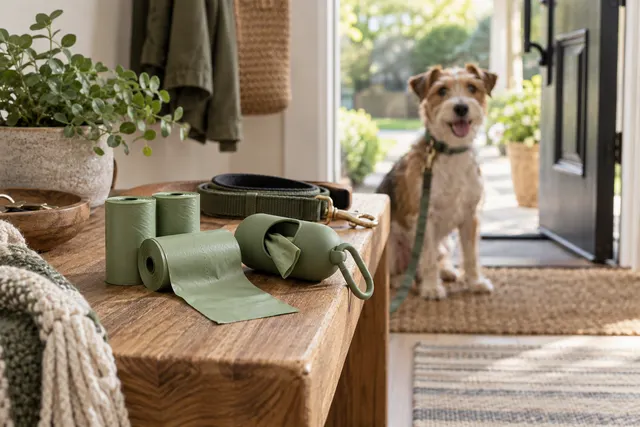
The walking kit should be reachable sooner: the familiar leash, correctly fitted walking equipment and waste bags. Pack those near the opening or in a separate pouch. Avoid burying the item needed for the first arrival walk beneath bedding and food.
Decide where drinking water will come from during the journey and at arrival, and carry what is needed for that plan. Keep a bowl accessible. This guide does not prescribe one water quantity for every dog, weather condition or travel duration; those circumstances differ.
Step 5: choose familiar bedding that fits the stay
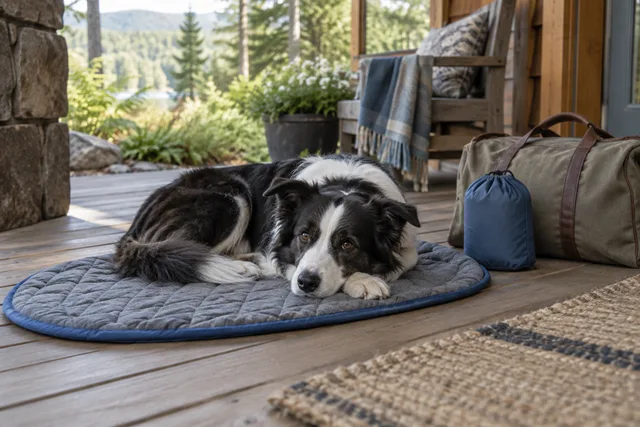
Check the dimensions of the sleeping space before bringing a large bed. A familiar washable mat or blanket may be easier to transport, provided it suits your dog and the destination permits it. Do not assume the largest item from home is automatically the most useful one away.
Think about the morning departure as well as the first night. Can the bedding be packed if it becomes damp, and do you have a separate place for it? A spare bag for used textiles protects the remaining clean supplies without requiring everything to be washed before you can leave.
If a crate is part of the agreed arrangement, confirm its setup and familiarity beforehand. Packing night is not the ideal time to discover missing hardware or introduce an entirely unfamiliar sleeping system. The bag should support the existing plan rather than conceal an unresolved accommodation problem.
Step 6: keep identification and contacts easy to find
Check that your dog’s identification details and your reachable phone number are current. The AKC boarding guidance emphasizes identification. Keep a recent photograph available on your phone and store the sitter’s or host’s contact details where you can find them without searching through booking messages.
Prepare one concise contact note with your name, your dog’s name, your number and the relevant veterinary contact. Add an agreed backup contact if you have one. Share this information with the person responsible for care rather than placing it on a publicly visible luggage label.
Ask the destination which documents it needs and in what format. Requirements differ, so do not assume an old record or a photo of one page is sufficient. Keep any confirmed documents together, and verify that a phone-based copy remains available when mobile reception is poor.
Step 7: handle existing medication instructions separately
If your dog already takes medication, pack it according to the prescribing veterinarian’s directions and the destination’s requirements. FDA advises keeping pet medication in its original labeled container and securing it from pets and children. Store it separately from human medication to reduce mix-ups.
Write down the existing schedule clearly and identify who is responsible for each administration. Record the last dose before handoff so two people do not act on different assumptions. If any direction is unclear, confirm it with the veterinarian instead of improvising a change for the trip.
Do not add a new calming product or alter a dose simply because the stay is unfamiliar. Packing is an organizational task, not a treatment decision. Confirm any special storage needs in advance and keep the medication accessible to the responsible adult while securely out of your dog’s reach.
Step 8: make a small cleanup kit
Pack a towel suitable for paws, enough waste bags for the planned walks and a separate bag for dirty items. Consider the weather and the destination’s flooring. A modest kit that you can locate immediately is more practical than a large collection of products you have never used.
Check which cleaning supplies the host or facility allows. Keep cleaning products separate from food and follow their labels. You do not need to decant chemicals into an unmarked bottle to save a small amount of space, especially when someone else may be unpacking the bag.
Put the cleanup pouch where it can be reached before entering the sleeping area. If the first walk is wet, you should not have to spread the entire bag across a room to find the towel. After use, keep the towel apart from the clean bedding and feeding supplies.
Step 9: write a handoff note that can be used quickly
For a sitter, keep the main note to the information needed to carry out the agreed routine. Include meal times and usual amounts, walking arrangements, sleeping setup, essential care directions and contacts. Avoid mixing important instructions with a long story about your dog’s habits.
Use plain labels that match the supplies. If a pouch says evening meal, use that same wording in the note. When several people are involved, agree who is responsible rather than assuming everyone will infer the schedule from the contents of the bag.
Read the note from the recipient’s perspective. Could someone identify the correct bowl or food without calling you? Are any abbreviations unclear? A short conversation at handoff can confirm the essentials, but the written version should still make sense after you have left.
Step 10: pack in the order you will need things
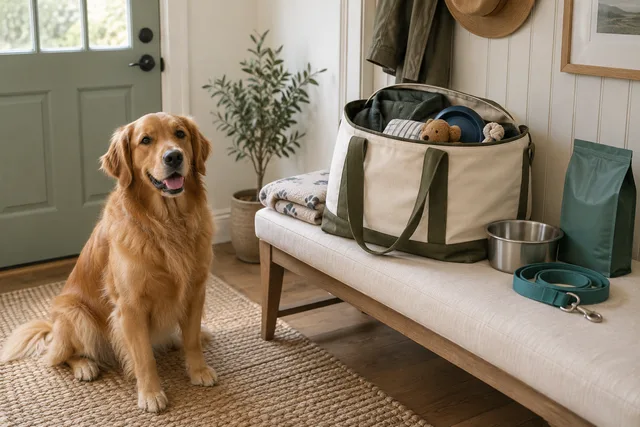
Put infrequently needed bulky items lower down, while keeping walking supplies, the contact note and immediate arrival items near the opening. Keep food securely closed and separate from anything wet or dirty. The goal is retrieval, not a perfectly symmetrical photograph of the bag.
Leave room for repacking. Used bedding rarely folds as neatly in an unfamiliar room as it did at home, and the towel may need its own bag. A container filled to its absolute limit can become frustrating at checkout even when it worked on departure.
Lift the packed bag and walk a short distance at home. Check that handles are comfortable and that the contents do not shift awkwardly. If carrying it requires both hands, consider how you will also manage your dog and other luggage at arrival.
Use a two-pass departure check
The evening before travel, check items that can be packed early: bedding, documents, spare bags, bowls and the written note. On departure morning, check the items still in use: leash, current food supply and any prescribed medication. This avoids unpacking repeatedly just to complete the home routine.
Keep a short last-minute list by the bag rather than relying on memory. Cross off an item only when it is actually packed or intentionally carried separately. A checklist marked complete while the leash is still hanging by the door can create false confidence.
Before leaving, verify the arrival arrangements once more if plans have changed. Make sure the responsible person knows about any change affecting meals or collection time. The best packing list cannot compensate for two people working from different versions of the itinerary.
Reset the bag when you return
Unpack food and any temperature-sensitive items promptly according to their storage directions. Separate used textiles for cleaning and check bowls and utensils before putting them away. Do not leave the whole bag untouched until the next trip and assume it remains ready.
Note one thing you missed and one thing you carried unnecessarily. Adjust the list for the next comparable stay, while preserving items needed for contingencies. A useful list becomes more specific through experience without turning every trip into an opportunity to buy additional equipment.
Keep a reusable version organized by routine rather than by brand. Meals, walks, sleep, cleanup and handoff information remain useful headings even if you later replace a bowl or travel bag. Recheck quantities and destination requirements for every new itinerary.
Frequently asked questions
Does one overnight mean two meals? Not necessarily. Count the scheduled meals from departure through return using your dog’s established routine, then plan for possible delay.
Should I buy a matching travel set? Only if it solves an identified need. Existing clean, suitable equipment may be sufficient. Check the contents before choosing a bag.
Can I leave the instructions only on my phone? Share an accessible copy with the caregiver. Confirm they can open it and keep a practical backup when connectivity is uncertain.
Should I pack every toy? Choose a small number of appropriate familiar items that the destination allows. Space, supervision arrangements and your dog’s actual habits matter more than filling the bag.
Sources and related guides
Source checks on September 20, 2026 included AKC boarding essentials, FDA pet-food storage guidance and FDA medication storage guidance. The packing sequence is an organizational suggestion, not individualized medical advice.
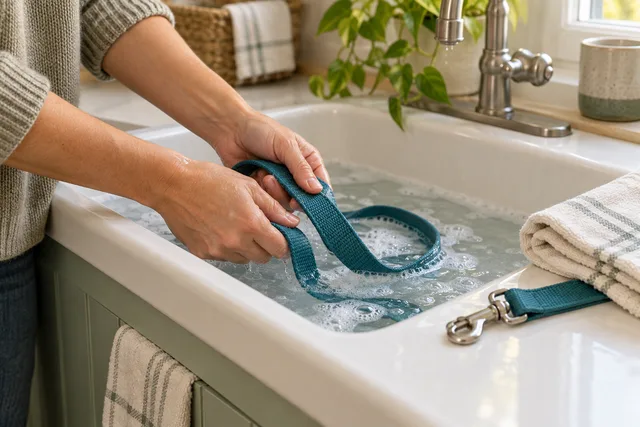
For equipment preparation, see our fabric leash cleaning guide. Compare the format in our travel pillow bed review and check the unscented waste bag review for walk-time supplies.