How to Prepare for Your Dog’s First AKC Fast CAT Event
Prepare eligibility records, the premium-list checklist, release and catcher roles, inspection questions and arrival logistics for a first Fast CAT event.
Jump to a section
Direct answer: prepare the entry and the people before the run
Prepare for a first AKC Fast CAT event by confirming eligibility, reading the host’s premium list, completing the correct entry and arranging who will release and catch your dog. Then follow the inspection and field instructions at the event. The goal of a first visit is an orderly introduction, not a promised speed, title or qualifying result.
Fast CAT involves one dog following a lure along a timed 100-yard course. This guide concerns participant preparation for that specific event. It is not a conditioning program, a medical clearance or a claim that we have tested a dog on a competition course. If you have concerns about your dog’s ability to participate, resolve them with your veterinarian and the event officials before proceeding.
1. Confirm eligibility without assuming registration is enough
The AKC Fast CAT overview identifies a minimum age of 12 months and recognized AKC registration or listing routes, including Canine Partners, PAL and FSS. Spayed and neutered dogs may participate; females in season may not. An inspection committee checks dogs for lameness and fitness to compete.
Write down your dog’s registered or listed name and number exactly as recorded. A familiar household name is useful when talking to a helper, but it should not silently replace the identifying information requested on an official entry. If your dog has no appropriate number, investigate the applicable enrollment route before selecting an event.
Keep administrative eligibility separate from individual suitability. Having a number does not establish that a particular dog should run on a particular day. Equally, enthusiasm for chasing a toy does not establish eligibility. Treat both questions as necessary checks, and leave an unresolved answer visible rather than assuming the other answer covers it.
2. Find the actual event and its premium list
Use the event-search link on AKC’s Fast CAT page, then obtain the host’s premium list. Record the event date, venue, host and entry contact. Confirm that you are looking at Fast CAT rather than another coursing activity or an informal practice session. Similar names do not mean identical procedures.
Save the document with the date in its filename. Read it once from beginning to end before extracting a checklist. The details you need include how to enter, the deadline, the fee, any stated capacity, reporting arrangements and local instructions. Do not assume a social-media announcement includes everything required for an entry.
Also check that the document belongs to the correct year and venue. A search result can lead to an earlier premium list that remains online. Compare the identifying details before relying on a deadline or submitting a form. Save the current version so you and your helper are reading the same instructions. Make a separate note for each event you intend to enter. A weekend listing can contain more than one event, and a date on your calendar is not a substitute for identifying the entry you submitted. If a document is unclear, ask the named event contact a specific question yourself. This guide has not contacted a club or reserved a place.
3. Separate an entry from a confirmed plan
Complete the host’s form using its own instructions. Before submitting, compare the dog’s identifying details and the event details against your records. Retain a copy and any confirmation. Do not assume that a payment receipt, a drafted form or a message saved on your phone means every entry requirement has been met.
Record what you know in plain language: submitted, acknowledged, awaiting clarification or not entered. These are your own organizational labels, not official event statuses. They help prevent a household conversation from turning an intention into an assumed reservation.
Avoid budgeting from an old article’s example fee. Read the current premium list, including any distinctions between advance entries, other entry arrangements and practice opportunities. An informal run, if offered, is not automatically an official qualifying run. Do not promise yourself a particular opportunity until the host’s published information supports it.
4. Assign the release and catch roles
Discuss the two ends of the course with your helper before the event. Decide who is responsible for the dog before release, who will be in the designated catch area and how you will reunite afterward. Use the dog’s familiar name when briefing the helper, while keeping the official entry identity available for check-in.
The AKC handler update says handlers may not travel down the course during or just before a run and cannot recall their dog from the start line. It recommends a familiar person at the finish to catch the dog. Do not plan to release the dog and then race down the course yourself.
If you are attending alone, resolve the catch arrangement with the host before relying on it. Do not assume that an available volunteer knows your dog or has agreed to help. Explain relevant handling concerns honestly and follow the host’s process. A helper arrangement should be explicit, not a last-second guess made while another dog is waiting.
5. Pack around the waiting period
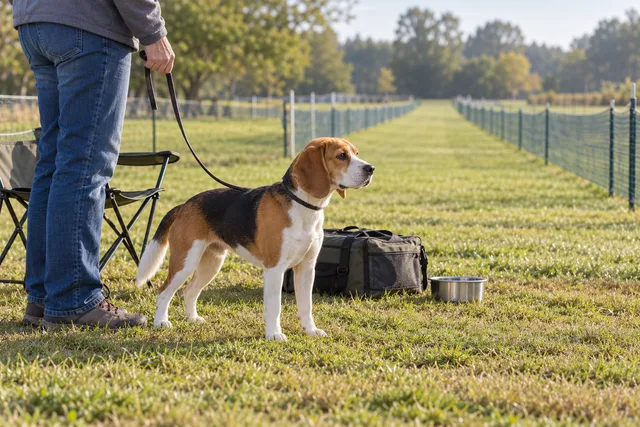
Prepare the ordinary supplies your dog needs while attending: water, a bowl, waste bags, suitable containment, the entry information and a way to manage your own belongings. Match the setup to the venue and its instructions. The purpose is to manage the time around the run, which may require more organization than the short run itself.
Keep documents accessible without opening the dog’s containment or unloading the entire vehicle. Put cleanup supplies where you can reach them promptly. If another person is helping, show them where the essentials are rather than expecting them to search an unfamiliar bag.
Review any equipment conditions in the current regulations and premium list. Do not assume that a walking accessory can be worn during a run simply because it is convenient in the parking area. Ask officials about an item you do not understand. This guide does not certify a collar, harness, muzzle or release device as suitable for competition.
6. Make an arrival sequence
Write an arrival plan with distinct tasks: reach the correct entrance, park as directed, locate check-in, identify the inspection process and learn where to wait. Use the host’s reporting instructions instead of inventing a universal arrival time. Allow yourself room to find the right place without treating early arrival as permission to enter the course.
At check-in, identify yourself as a first-time participant. Ask where the release person and catcher should go, when they should move and how they will know the dog is ready. A short practical question is often easier to answer than a broad request to explain the whole event while staff are managing a queue.
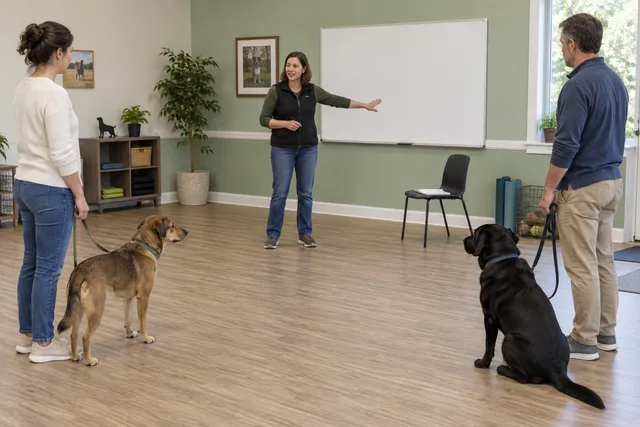
Our first group-class guide covers a different setting. Do not transfer a classroom’s movement patterns or instructor permissions to a running course. Here the event’s field officials control the sequence, and your preparation should make it easier to follow their directions.
7. Complete inspection without treating it as medical treatment
Present your dog for the required event inspection as directed. Keep the distinction clear: event personnel decide participation under the event rules, while your veterinarian addresses medical questions. Do not use an accepted entry as evidence that an unresolved health concern has disappeared.
Be ready to give accurate information when asked. If the dog is not cleared to participate, follow the decision rather than trying another route onto the field. A paid entry is not a reason to override a concern. Your plan should allow for attending without completing a run.
For questions about fitness, recovery from illness or injury, or an individual dog’s limitations, seek veterinary advice before the event. This article does not provide exercise prescriptions, feeding intervals, supplements or medication suggestions. Avoid making a major care change solely to fit a competition schedule. Keep any existing professional instructions separate from the administrative checklist.
8. Learn the release sequence before your turn
The AKC regulation book describes the marked start area and a coordinated release under the huntmaster. The lure begins moving before the release signal; premature releases and hot starts are not permitted. The same book distinguishes the finish from the run-out area used to retrieve the dog.
Ask for clarification before your turn if you cannot hear or understand the instruction. Tell the official which part is unclear. Do not rehearse a release by letting the dog go without authorization, and do not use another participant’s movement as your signal. Attend to the person directing your own start.
Keep the catcher’s position settled before reaching this stage. A release person should not be simultaneously trying to locate a helper, read a message and interpret a start instruction. The benefit of advance planning is fewer competing tasks at this moment. It does not guarantee a successful run or remove the need to follow current field directions.
9. Plan retrieval and the return to waiting
The catcher should understand where officials want them to stand and how the dog will leave the catch area. Ask about the route back to the waiting space, including gates and any areas that must remain clear. Do not cross the course to shorten the walk or improvise a different exit.
Once reunited, return to the designated area and reorganize before dealing with other tasks. Confirm who has the dog, the leash and any belongings. If another run or event is planned, check its own reporting requirements rather than assuming you can immediately repeat the previous sequence.
Keep the first-event goal modest. You are learning whether the arrangements work for your household and how your dog responds to the setting. A result is one piece of information, not a requirement to enter more events. If you decide to stop, communicate that through the host’s process so staff are not waiting for a participant who has left.
10. Keep a useful record afterward
Save the event identifier and the result information supplied by the host. Check the dog identity before filing it. If you notice a record problem, use the official correction route linked by AKC or the event’s stated process; do not create your own revised result and treat it as official.
Write a separate preparation note: what was hard to find, whether the helper arrangement was clear, and which item would have made waiting easier. Keep observations about your own visit distinct from claims about every event. One venue’s parking arrangement or timetable does not become a universal Fast CAT rule.
Before entering again, revisit the current regulations and the next host’s premium list. Reuse your organizer, but replace the date, event identity, deadlines and local instructions. A previous entry can remind you which questions to ask without supplying answers for a different event.
Frequently asked questions
Does a mixed-breed dog need to be excluded? No. AKC lists an enrollment route for mixed-breed dogs; confirm your dog’s appropriate number and the other eligibility conditions.
Can a paid entry guarantee a run? No. Administrative entry and permission to participate on the day are different questions.
Can I copy a practice-session running technique? Do not assume so. Informal practice and official competition may use different permissions; follow the official rules and field instructions.
Must I buy a particular product? This guide recommends no product. Start with the host’s requirements and the supplies you can manage appropriately.
Will this preparation improve my dog’s time? No performance outcome is promised. The checklist addresses organization, documents and people, not speed training.
Sources and related reading
The AKC overview supplies basic eligibility and the event-search route. Its handler update and regulation book supply the formal field boundaries referenced here. The linked book contains later supplements despite its older cover date; consult the regulation resources page for updates rather than relying only on the cover.
Our household role assignments and record format are planning suggestions, not additional AKC rules. No event registration, fee payment or hands-on trial was performed for this article. The cover is an independent illustrative preparation scene, not a photograph of an AKC event or evidence of professional training credentials.