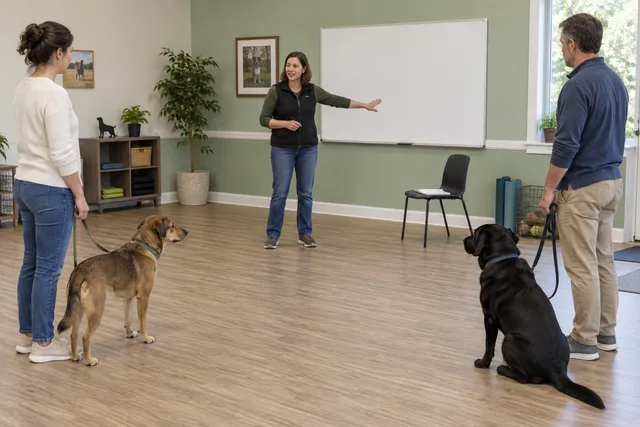
How to Prepare for Your Dog’s First AKC CGC Evaluation
Organize a first Canine Good Citizen evaluation with a readiness record, event eligibility checks, permitted equipment, arrival plans and result paperwork.
Jump to a section
Direct answer: separate test readiness from booking readiness
To prepare for your dog’s first AKC Canine Good Citizen evaluation, review the official skills with a suitable trainer or evaluator, confirm the specific event’s entry requirements, and assemble the equipment and paperwork before test day. Booking an appointment does not establish that your dog is ready, and completing a class does not settle every arrival detail.
This guide focuses on organizing a first CGC evaluation. It is not a behavior treatment plan, a promise of passing or a substitute for the evaluator’s instructions. You will finish with a short readiness record, a confirmed event plan and a way to keep the result documents together. Those are useful outcomes whether you test now or decide to prepare further.
1. Make sure you are planning the CGC evaluation you intend
Start at the AKC Take the Test page, which links approved evaluators and training clubs. It also distinguishes a CGC certificate from the official title. The title requires an AKC, PAL or Canine Partners number; do not assume that booking a test also completes enrollment or the later application.
Write down your goal in plain language: you want an initial CGC assessment and, if successful, a certificate or title. Keep that goal beside the event name. This prevents confusion when a provider offers several programs or a training package with an assessment at the end.
Ask what the booking actually includes. A class, a practice opportunity, an evaluation appointment and submission of an award application are different actions. Record which ones you are purchasing or arranging instead of relying on a course title. You can then budget for the next step without assuming it has already been handled.
2. Confirm eligibility for that particular event
The AKC participation page welcomes mixed-breed and purebred dogs and describes immunization readiness and the owner’s pledge. It also notes exceptions when testing takes place at an AKC show: show age rules apply, and entry may be restricted. General program eligibility therefore does not prove access to every advertised session.
Send the organizer a concise question identifying the exact session and asking whether your dog can enter. You do not need to write a long training history to clarify a date or entry restriction. Keep the response with the booking information so another household member can understand the plan.
For health-related entry questions, obtain the organizer’s document requirements and discuss your dog’s individual care with your veterinarian. Do not use a general article to decide vaccine timing or alter medical care. Your planning task is to know what evidence is requested and whether it will be available, rather than to invent a universal health schedule.
3. Build a short readiness record from the ten skills
Use the official test-item descriptions as your reference. In brief, the skills address a stranger’s approach, petting, grooming examination, loose-leash walking, a crowd, sit/down/stay, recall, another dog, distractions and supervised separation. The final separation is three minutes out of sight. Read the full descriptions before judging readiness; the short names leave out conditions.
Create three columns: skill, what you have actually observed, and question for the trainer. For example, write that your dog remained comfortable with a familiar person’s brief handling, rather than declaring grooming passed. A household observation is not an evaluator’s score.
Use the record to decide where help is needed. A vague note such as needs manners gives a trainer little to work with. A specific observation identifies the setting, cue, response and point where the situation became difficult. You can discuss a suitable preparation approach without trying to force an unfamiliar test sequence at home.
4. Separate understanding the test from rehearsing it
Reading the rules helps you recognize what will happen; it does not mean every exercise should immediately be staged in full. If a task is unfamiliar, discuss it with the trainer before arranging other people or dogs to participate. Do not surprise strangers with a request to become practice distractions.
Our planning suggestion is to identify one uncertainty at a time. Perhaps you understand the walking task but do not understand where the handler stands during another exercise. Ask for clarification of the procedure first. Once you understand the task, the trainer can help assess what preparation is appropriate for your dog.
Keep a distinction between information you need and behavior your dog needs to learn. Confusing the two can produce unnecessary practice when the real problem is an unclear instruction. There is no fixed number of sessions or universal completion date in this guide. Choose an evaluation date around readiness rather than trying to make readiness fit a deadline.
5. Check equipment against the current participant guide
The AKC participant guide says testing is on leash, using a permitted well-fitting collar or a body harness that does not restrict movement. Retractable leashes, head collars, pinch collars and electronic collars are not permitted. Ask the evaluator to confirm your exact equipment and arrangements for the long line before the day.
Make that question concrete. Give the style of collar or harness and the leash material rather than saying you have normal gear. If you already own suitable equipment, a test date is not a reason to buy a new version. Familiarity and compliance are more useful questions than whether an item looks impressive.
The official skills page asks handlers to provide their dog’s usual comb or brush. Put that item on your packing list and label a place for it in the bag. Check that you can retrieve it without putting the leash down. This is an organization exercise, not a recommendation for a particular grooming product.
6. Discuss rewards and communication before test day
The participant guide prohibits food rewards during the test, while allowing handler communication and praise; harsh corrections are grounds for dismissal. Bring questions about those boundaries to the evaluator before entering the test area. Do not read a no-food test rule as an instruction to change your dog’s normal meals or remove rewards from all training.
If your preparation has relied on a particular aid, tell the trainer exactly what that is. Ask how they will assess readiness within the permitted conditions. A last-minute attempt to hide the aid or change your handling can leave both you and the dog dealing with an unfamiliar routine.
Write down the cues you normally use so you can explain them consistently. You do not need a dramatic new command vocabulary for an appointment. If you are unsure what encouragement is allowed during a particular exercise, ask for a procedural explanation. Clear questions before the start are more useful than relying on something remembered from an unrelated video.
7. Confirm arrival details and a place to wait
Ask the organizer for the check-in time, entrance, parking location and waiting instructions. Distinguish the advertised event start from your own appointment. Put the address and entrance note together in one saved record; an address alone can lead to the wrong side of a large venue.
Plan the trip so you can handle registration without juggling unrelated errands. Decide who will drive, who will hold the leash if two adults attend, and where the documents will be accessible. If you attend alone, arrange the bag so essentials can be reached while you retain control of the leash.
Ask where you can wait without obstructing other participants. The entrance to an evaluation area is not automatically a greeting space. Give other teams room and follow staff directions. If the available waiting arrangement does not suit your dog, ask about another appointment or preparation option instead of assuming that remaining there longer will solve the difficulty.
8. Pack a small, purpose-based bag
Use a list with three groups: confirmed test equipment, ordinary outing supplies and documents. Include the usual brush or comb, the approved leash setup, cleanup supplies and whatever records the organizer has requested. Add the items you normally need for the journey, without treating extra equipment as a substitute for readiness.
Keep entry confirmation and any requested records in a folder or a clearly named phone album. Save an offline copy if you depend on mobile reception. Put the dog’s name and session date on the folder so a helper can locate it without searching through personal messages.
Before leaving, compare the packed items with the organizer’s response. Mark anything unresolved rather than silently assuming it will be supplied. If the long-line arrangement or a required document is still unclear, resolve that specific gap. Avoid purchasing a collection of accessories merely because a generic test-day packing list mentions them.
9. Let the evaluator direct the assessment
At check-in, confirm how you will be called and where you should wait. Listen to the briefing even if you have practiced the skills. If an instruction is unclear, ask what you are being asked to do before beginning. Do not substitute a remembered demonstration for the direction given at that evaluation.
Attend to your dog’s response as well as the sequence. If you are concerned about continuing, say so. An appointment is not a commitment to push through every situation. Discuss the next step with the evaluator rather than trying to conceal a problem in order to obtain a result.
You can use a short personal reminder: listen, clarify, then act. This is a planning aid, not an AKC scoring rule. It may help prevent the administrative pressure of being watched from taking over the task. No article can determine the evaluator’s decision in advance, and a successful household rehearsal is not an official pass.
10. Keep the result and application steps distinct
After the assessment, ask for feedback and check the identifying details on the result paperwork. The participant guide distinguishes the local testing fee from a later AKC certificate or title fee. It also says a same-day retest after missing one item is at the evaluator’s discretion. Do not budget or schedule around an automatic free retry.
If more preparation is needed, record the specific item and the suggested next step while the feedback is fresh. Then arrange a suitable follow-up with your trainer. A useful record describes what happened and what to work on; it does not label the dog or turn one assessment into a permanent judgment.
If your dog passes, follow the current application route linked by AKC and the instructions on your form. Save a copy before submission and keep any confirmation with it. Check names and registration details carefully. Passing the assessment and receiving the intended certificate or title are separate milestones to track.
Frequently asked questions
Does my dog have to be purebred? The general program includes mixed-breed dogs. Check restrictions for the specific event, especially testing held at a show.
Does finishing a class mean my dog has passed? Confirm whether an actual evaluation was included and what result paperwork you receive.
Can I use treats during the assessment? Food rewards are not permitted during the CGC test. Discuss preparation with the trainer rather than improvising on the day.
Can I count on a retest that afternoon? No. Ask about the evaluator’s arrangements before making that assumption.
Does CGC make a dog a service or therapy dog? The participant guide explicitly says it does not automatically confer either status or special public access.
What if my main concern is handling or separation? Explain the specific concern before booking and seek an appropriate preparation plan. This guide does not prescribe treatment.
Sources and your final planning check
Keep four official references with your notes: the linked AKC test descriptions, participation page, participant guide and Take the Test page. Recheck the relevant instructions when booking, and confirm the venue’s arrangements directly. Our folder structure, role assignments and planning questions are practical suggestions rather than additional official test requirements.
Before leaving, you should be able to answer three questions: why this appointment is appropriate now, what you must bring, and what happens after the result. If one answer is missing, make it your next clarification. No evaluation, registration, payment or professional training session was performed for this article.