How to Prepare for Your First AKC Beginner Novice Obedience Trial
Organize an in-person AKC Beginner Novice entry: A/B eligibility, current rules, premium, judging program, handler-only walkthrough and accurate result records.
Jump to a section
Direct answer: prepare the entry and the ring routine separately
To prepare for a first in-person AKC Beginner Novice obedience trial, confirm that the event offers the class, establish the correct A or B entry, and review the current regulations with someone familiar with the sport. Then organize the event documents, equipment and arrangements for looking after your dog during the handler-only walkthrough. The goal is an appropriate, informed entry, not simply arriving with a dog that can sit.
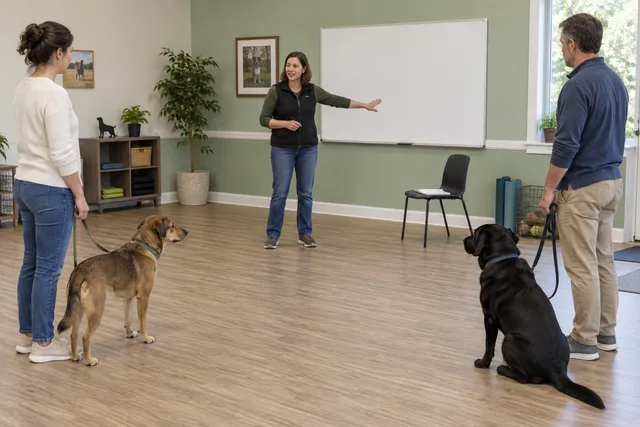
This guide concerns the live Beginner Novice class and BN title. It does not cover a virtual submission, the regular Novice class or a Rally Novice course. It explains event preparation rather than prescribing a training schedule, examination-handling exercise or a way to make an unready dog compete. The cover is an independent illustrative preparation scene, not an actual trial.
Start with the right documents, not a familiar class name
Keep three items together: the current AKC regulations, the particular event’s premium list and the judging program supplied for that event. They answer different questions. The regulations define the sport; the premium describes what the club is offering; the program organizes the judging for accepted entries.
The checked Obedience Regulations are amended to May 12, 2026, with Beginner Novice in Chapter 16. A search can also surface a 2012 eligibility insert or an older overview. Do not use an old insert as a complete statement of today’s class requirements.
Save the source link and the version you reviewed, then identify any later notices supplied by AKC or the organizer. A screenshot of one paragraph is less useful than a complete document when the next question concerns a different section. Keep event-specific correspondence alongside the premium so a general online explanation does not displace an answer about that particular trial.
Use a short unresolved-questions list. For example, record a class eligibility question separately from a parking question. That lets you direct the former to the appropriate event official and the latter to the organizer’s venue information, instead of trying to solve both from a social-media comment.
Confirm A or B using both dog and handler history
Under the checked Chapter 16 rules, A is for a dog without BN or another AKC obedience title; the handler must meet the ownership, household or immediate-family requirement and must not previously have handled a dog that earned an AKC obedience title. B permits an eligible dog without an obedience title or with BN, CD and/or PCD, but no other obedience titles, and permits another handler. A dog cannot enter both A and B at one trial.
Build a simple history sheet before selecting the entry box. Record the dog’s exact registered identity and known titles, then the intended handler’s relevant history. Being new to this particular dog is not the same as being new to the sport. Likewise, an owner’s history and a different proposed handler’s history may not be interchangeable.
If the facts are unclear, provide them to the trial secretary for clarification before submitting. Do not remove a title from your own notes simply because an entry form has limited space. An accurate explanation of the situation is more useful than a guess based on which class sounds welcoming.
Also review the general eligibility provisions and any limitations in the premium. This class check does not replace the rest of the entry requirements. A registration or enrollment record should be resolved using the relevant AKC process, not by borrowing another dog’s number or changing the registered name to fit a form.
Know the five exercise names without treating this as Rally
AKC’s obedience class overview lists five Beginner Novice exercises: Heel on Leash, Figure Eight, Sit for Exam, Sit Stay and Recall. Use those names as the headings of your preparation notes so that no part of the class disappears behind the general word obedience.
Chapter 16 uses Rally signs during the heeling exercise, but the class remains obedience. Do not carry over an assumption about continuous talking or handling from a Rally course. The sit-stay involves the handler walking around the ring, and the recall is off leash; this is not an entirely held-leash class.
Ask a suitable instructor to help you distinguish understanding an exercise from being prepared to perform it in an event environment. Keep questions specific: which part of the rules you do not understand, which ring transition is unfamiliar, or whether observing a trial first would be more appropriate.
Do not turn this overview into an improvised examination rehearsal with strangers or an off-leash exercise in an unsuitable place. Familiarity with the written requirements is a preparation step. It does not demonstrate that the dog is comfortable with the situation or establish that the team should enter immediately.
Read the premium before committing to the date
AKC’s explanation of how an obedience trial works identifies the premium list as the event announcement containing its dates, location, offered classes, judges and entry information. Confirm that Beginner Novice is actually offered for the particular trial you want, rather than assuming every obedience event includes it.
Create one line of notes for each proposed entry: club, event identity, date, class, intended handler, entry recipient, closing information and stated fee. If several trials appear in one premium, keep their details separate. A shared site or weekend name does not make every entry the same event.
Read the organizer’s submission and payment instructions carefully. This article does not establish a universal online portal, accepted payment method or entry price. Use the information attached to the chosen trial and avoid sending personal details or payment to an unrelated third-party listing.
Allow time to resolve a discrepancy before the published deadline. If the class is not offered, full or unsuitable for the team’s circumstances, choosing another date is a practical outcome. Do not interpret an advertised event as a guaranteed available place, or travel on the assumption that an unconfirmed entry has been accepted.
Check the acknowledgement, then the judging program
After submitting through the organizer’s stated process, keep your own copy of the entry and the acknowledgement. Compare the registered dog, class, handler and trial date rather than checking only that an email arrived. Report an apparent discrepancy through the event’s designated channel while there is time to clarify it.
The judging program is a separate planning document. AKC explains that it follows the close of entries and sets out class scheduling. When it arrives, update your notes with the ring and class information relevant to your entry. Do not continue to rely on a tentative schedule copied from an early announcement.
Keep travel planning separate from a promised ring-entry minute. Parking, finding the appropriate entrance, settling equipment and locating check-in all take time. Work backward from the relevant instructions and leave a sensible margin for your circumstances without assuming the event will run at a perfectly predictable pace.
If you have another obligation at the same event, identify the possible conflict early. Ask the organizer how it should be handled; do not assume that a class will wait while you are elsewhere. Keep the answer with the judging program so the person accompanying you understands the arrangement too.
Plan dog care during the handler-only walkthrough
The checked Beginner Novice rules provide a walkthrough for handlers without their dogs at the listed class start, with the judge available for questions. Arrange beforehand how your dog will be looked after during that period. It is not a walkthrough in which you bring the dog around the pattern with you.
If someone accompanies you, agree who holds responsibility while you are in the ring. If you intend to use permitted crating, confirm the site’s arrangements and use an appropriate setup already familiar to your dog. Do not make the first event the occasion for discovering that there is nowhere suitable to leave the dog while you step away.
Use the walkthrough to resolve ring-procedure questions. Note where the judge directs handlers and how the space is arranged. It is more useful to clarify one uncertain instruction than to spend the period discussing an unrelated problem from a previous class.
Prepare a practical bag without assuming every item enters the ring
Organize documents, the dog’s usual appropriate care supplies, waste bags and the equipment required by the current event rules. Review collar, leash and permitted-item requirements against the regulations and premium. Familiar training equipment should not be assumed eligible merely because it is used in your ordinary class.
Separate things needed outside the ring from things permitted inside it. A training bag may contain food, toys or other aids; that does not establish permission to carry or use them during judging. Resolve the rule rather than relying on what another spectator seems to have in a pocket.
Make a short packing list with three columns: documents, dog care and ring equipment. Check the actual items for condition before leaving. A spare document copy can be useful, but adding unfamiliar equipment at the last moment can create a new issue instead of solving one.
Observe the venue and respect other teams
AKC’s first-steps advice recommends becoming familiar with ring procedures by attending trials, and asks spectators to obtain permission before petting a dog. Observation can therefore be a useful separate visit before deciding to enter, subject to that event’s admission rules.
Notice practical details: where people wait, how they avoid blocking the entrance and where posted information is located. Watching from an appropriate area can answer logistical questions without distracting a team during its work. Keep your own dog-management arrangements separate from an assumption that every dog at the venue wants to greet yours.
At your entered event, follow staff directions about circulation and waiting areas. Give other handlers room to manage their dogs and equipment. If your circumstances make the environment unsuitable on the day, discuss the available options with the responsible official rather than treating the entry fee as a reason to proceed regardless.
This guide does not prescribe a warm-up duration, repeated stays, exposure exercises or a medical decision about participation. Those are different questions from organizing an entry. Do not add extra work at the venue solely because you have arrived early and are waiting for the class.
Record the result accurately and choose the next step
AKC’s trial explanation states that qualifying requires more than half the available points in every exercise and at least 170 overall, out of 200. A high total alone is therefore not the whole qualification check. Record the official outcome rather than inferring it from a spectator’s estimate.
The AKC title summary states that BN requires qualifying results at three licensed or member obedience trials. One successful outing is progress, not the completed title. Keep the event identity and result together so separate trials do not become confused in your own notes.
Afterward, write down a few concrete administrative observations: whether the equipment was ready, which instruction you needed clarified and whether your travel plan allowed a manageable arrival. Keep those separate from a training assessment so your next conversation with an instructor is specific.
Whether the result is qualifying or not, another entry is a choice to make after reviewing the experience. There is no need to book a string of dates before resolving an eligibility, environment or procedure question from the first outing.
Frequently asked questions
Is Beginner Novice the same as regular Novice? No. Check the exact class name on the premium and entry, and use the corresponding regulations.
Does a first-time dog automatically belong in A? No. Check the intended handler’s relevant history and relationship to the dog as well as the dog’s record.
Is this the same as a Rally Novice course? No. Shared sign use during one exercise does not make the sports’ handling procedures interchangeable.
Can my dog come into the handler walkthrough? Plan separate care for that period and follow the official instructions for the class.
Does this guide replace instruction? No. It organizes sources and event preparation, without providing an individual training prescription or readiness guarantee.
Where should I start if group classes are also new? Read our group-class preparation guide and clarify the instructor’s experience with the event you are considering.