How to Choose a Dog Crate Location at Home: Questions Answered
Compare real room layouts, door clearance, household traffic and changing daylight before choosing a resting spot for your dog’s crate.
Jump to a section
Where should you put a dog crate at home?
Start with a quiet, comfortable part of a room where you can support your dog’s introduction to the crate, then check the actual floor space, door movement and daily household activity. The best location is not necessarily the emptiest corner. It must work when people are moving around, sunlight changes and the crate door is open.
This guide helps you compare locations for an ordinary indoor resting crate. It does not set a confinement schedule, treat separation distress or replace a veterinary recovery plan. A suitable position also does not make an unsuitable crate size acceptable.
Think of the decision as three checks: whether the room is appropriate, whether the equipment fits the usable space, and whether your dog is comfortable with the arrangement. Complete them in that order, rather than buying furniture around a location you have not tried.
How quiet should the location be?
Dogs Trust recommends a calm location where a puppy is unlikely to be disturbed, alongside correct assembly and a gradual, positive introduction. Its guidance also calls for securing the door open during early exploration. These points concern comfort and introduction; a quiet corner alone is not crate training.
Make a short list of sounds that actually occur in each candidate room. Include the doorbell, dishwasher, television, home office calls and the school morning rush. A room that feels peaceful while you measure it may be very different when everyone returns home.
Record the source of a disturbance rather than simply labelling the room noisy. A crate beside a speaker may have an obvious alternative position within the same room. A narrow passage used constantly by the whole household may not. This distinction can save you from moving the crate farther away than necessary.
Should the crate be near the family?
The RSPCA’s introductory crate guidance suggests an area where the family spends time, with the door fixed open so it cannot swing shut and frighten the dog. That does not mean placing the crate in the center of every activity. A quieter edge of a shared room is a useful candidate to assess.
Draw two routes on a simple room sketch: the route people take between doors and the route your dog would take into the crate. Look for an arrangement where those routes do not repeatedly cross at the entrance. Being near you and being stepped around all evening are different experiences.
If you work at home, consider what happens during calls. The space beside your desk may be convenient, but a rolling chair, headset cable and frequent visitors can change its practicality. Try the chair in its normal positions before deciding that the gap beside it is available.
How do you measure the space the crate really needs?
Use the assembled exterior dimensions from the manufacturer, not just the size name. Then account for the door in the position you intend to use. A rectangle that accommodates the closed crate may still leave its open door across a walkway or against a cabinet.
With the dog elsewhere, mark the proposed footprint temporarily on the floor using a surface-safe method. Open nearby furniture doors and drawers. Pull out the dining chair, move the desk chair and carry a laundry basket through the room. These ordinary actions reveal conflicts that a tape measure alone will miss.
There is no universal clearance number in this guide. Door designs, room layouts and household access needs differ. Check the product instructions and preserve comfortable access for the people who use the room, including anyone using a mobility aid. Never obstruct an exit to make the furniture arrangement look more balanced.
Keep the distinction between exterior footprint and interior dog space clear in your notes. If the required crate cannot fit, reconsider the room instead of choosing a smaller crate solely to fill that corner.
What should you check around windows, heating and airflow?
A Welsh Government dog welfare code, available through the RSPCA’s document library, advises locating a crate away from drafts, heat sources and direct sunlight while maintaining air circulation. We use that as a welfare reference, not as a statement of US law.
Check a proposed window-side position at the times you expect the room to be used. Note where direct sun falls, whether a vent blows toward the crate, and whether a radiator or portable heater is nearby. A bright photograph taken early in the day cannot describe the afternoon conditions.
Do not try to solve an unsuitable hot or drafty location simply by covering the entire crate. Keep the equipment instructions and ventilation in mind, and reconsider the location first. No photograph in this article establishes a safe temperature or a universal distance from a heat source.
Which nearby objects deserve a closer look?
Inspect the area from floor level, including behind the crate. Charging leads, blind cords, trailing fabric and items balanced on nearby furniture can be easy to miss while standing. Move accessible loose items away rather than assuming the crate bars make everything outside irrelevant.
Our practical room check is to clear the surrounding space before bringing the crate in, then check again after assembly. A lamp cable that seemed distant may now run directly behind a side panel. A drawer handle may catch the open door. A rug edge may interfere with how the crate rests on the floor.
Do not use the top as a storage shelf unless the manufacturer specifically provides for that use. Also leave access to the tray, latches and any parts that need routine inspection. A location that requires unloading household clutter before every cleanup is likely to become frustrating quickly.
Is a living room, bedroom or utility room better?
Compare the actual use of each room rather than choosing by its name. These are planning examples, not rankings that apply to every dog.
- Living room: consider a quieter edge away from the main path, speakers and frequently opened doors. Check evening use, not only daytime quiet.
- Bedroom: check access around the bed, clothing storage and the route to the bathroom. Make sure the open crate door does not become an obstacle in low light.
- Home office: check chair movement, cables and whether long calls change the noise level or your ability to attend to the dog.
- Utility room: check appliance cycles, cleaning supplies and ventilation. Empty floor space beside a machine does not by itself make the room suitable.
If two rooms remain possible, write one advantage and one unresolved issue for each. Resolve the concrete issue before treating either as your final choice. Avoid moving the crate into an isolated room simply because it is less visible to guests.
What if your home is small?
Start by moving portable furniture on your sketch before moving the dog’s space into a cramped recess. An occasional table may have several workable positions; an accessible crate entrance may have fewer. Compare the whole usable room instead of looking only at the wall space left after everything else is arranged.
In a studio apartment, activity changes within one room can matter more than room names. Mark the cooking area, work area and route to the bathroom. Then identify a resting corner that does not need to become a temporary storage area every evening.
A two-door design can offer layout options, but only use it as intended and keep the required entrances accessible. Do not assume a furniture-style enclosure has suitable internal dimensions or ventilation because it blends into the room. Check those separately before spending money.
If no suitable location exists for the necessary crate, discuss alternatives with an appropriately qualified reward-based trainer. A room plan should help identify a limitation, not pressure you into forcing a crate into the home.
How can the household keep the resting area usable?
Agree on a few practical rules before the crate becomes part of the room: keep the approach clear, do not store bags against it, and do not use the resting space as a place to initiate games. Explain the arrangement to visitors rather than expecting them to infer it from the furniture.
Where children are present, adults need to manage interactions and preserve an undisturbed resting area. A crate is not a substitute for supervision. If a play area regularly spreads into the proposed location, change the room arrangement instead of relying on repeated reminders alone.
For a shared household, place a brief note with the care instructions: which door is used, how it is secured open during appropriate introduction sessions, where the cleaning supplies are kept and whom to tell if anything shifts or breaks. Keep the instructions specific to the actual crate model.
How do you evaluate a new location without rushing?
Finish the equipment and room checks first. Follow a gradual introduction appropriate to your dog; do not shut the door merely to see whether the new position works. Dogs Trust advises letting the puppy explore at their own pace and returning to an easier stage if they show worry during training.
Keep a simple observation note with the location, time, household activity and what you saw. “The dishwasher started and the dog left the open crate” records a sequence. “The dog hates the kitchen” assumes more than that observation establishes. Look for practical changes you can assess without forcing another exposure.
If your dog is distressed, stop the exercise and seek suitable help rather than moving the crate repeatedly as a substitute for a training plan. A different corner cannot be promised to solve distress about confinement or being alone.
Recheck the position after seasonal heating changes, new furniture or a larger replacement crate. The room may change even when the crate has stayed still.
Frequently asked crate location questions
Should the crate face a wall?
There is no universal direction to prescribe. Preserve the intended entrance, airflow and usable approach. Compare what your dog sees and what people need to pass, rather than applying a compass direction or a decorative rule.
Can I move it between daytime and nighttime locations?
Assess both locations and follow the maker’s handling instructions with the dog out of the crate. Do not assume comfort in one setting transfers instantly to another. Keep introduction and location planning connected.
Should I buy a cover before choosing the location?
Choose an appropriate location first. A cover does not create missing floor space, move a heater or prevent people blocking the door. If you use one, follow the equipment guidance and preserve ventilation.
Is a garage a good quiet option?
Do not equate separation from household noise with suitability. Temperature, ventilation, stored chemicals, vehicles and access all need consideration. This indoor room-planning guide does not endorse garage housing.
Does choosing the right spot mean I can leave my dog there all day?
No. This guide does not establish any confinement duration. Location, gradual training and meeting the dog’s daily needs are separate responsibilities. Ask for individual guidance when planning time alone.
Your final room check
Before settling on the spot, confirm the assembled footprint, open-door position, clear approach, changing sunlight, surrounding objects and household routine. Keep the manufacturer’s instructions accessible so a future move does not become a guess.
Explore our How-To Guides for other home care tasks and dog supply categories for related buying information. Choose equipment around the dog’s needs before fitting it into your room plan.
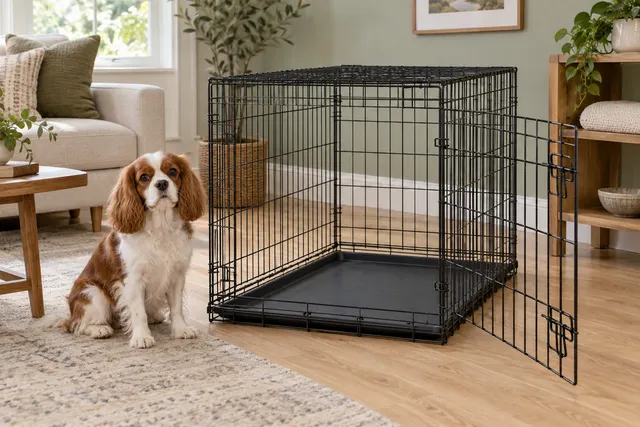
Sources checked September 17, 2026. Room sketches, comparison examples and observation notes are original editorial planning suggestions. The cover is an illustrative home scene, not a product recommendation or an assembly diagram; secure the actual door according to its instructions.