How to Clean Stainless Steel Dog Bowls: Everyday Questions Answered
Build a repeatable bowl-cleaning routine, check dishwasher instructions and organize a clean replacement before the next meal.
Jump to a section
How should you clean a stainless steel dog bowl?
Follow the bowl’s care instructions. For a hand-washable bowl, remove leftover food, wash with detergent and water, scrub the surfaces, rinse thoroughly and dry. Use a dishwasher only when the exact bowl is labeled dishwasher-safe. Check any base, coating or removable component separately rather than assuming all metal bowls have identical instructions.
This guide combines a short summary of public-health guidance with a practical household workflow. It covers routine care for ordinary dog food and water bowls, not a treatment plan for an animal’s illness. If your household has been given specific veterinary or medical cleaning instructions, those take priority.
The most useful routine is one you can repeat after a busy meal, not just on a weekend. Before buying extra equipment, look at where dirty bowls go, where clean ones dry and whether a replacement is available when your dog next needs it.
How often should you wash food and water bowls?
The FDA advises washing pet food bowls and food-measuring utensils after each use. CDC’s example schedule calls for washing wet-food bowls after use and dry-food and water bowls daily, with more cleaning when needed. A straightforward household plan is to wash food bowls after meals and water bowls at least daily.
Write the routine around events you already remember. For example, clearing breakfast can also be the reminder to collect the empty dog food bowl. Refilling the water station can prompt the scheduled swap to a clean bowl rather than another top-up in the same container.
Assign the task clearly when several people share pet care. “Whoever feeds the dog handles the used bowl” is easier to follow than an unspoken assumption that someone will do it later. Choose a system that fits your household and keep the clean and used sets easy to distinguish.
What equipment makes the routine easier?
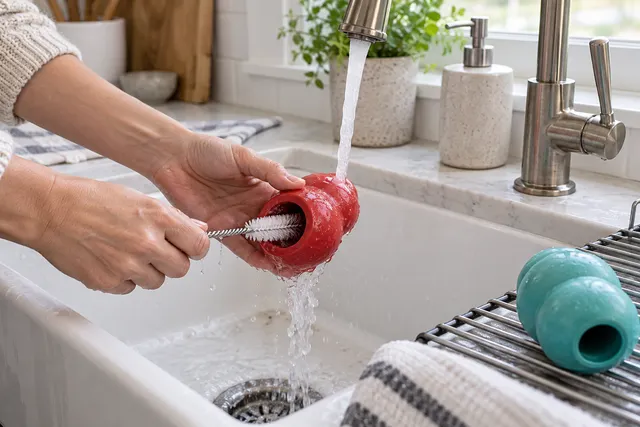
Set out the bowl’s instructions, a suitable detergent, a cleaning brush or sponge and a clean drying area. Our organizational suggestion is to keep an identifiable brush for this task so that you can find it quickly and avoid confusion with other household cleaning tools.
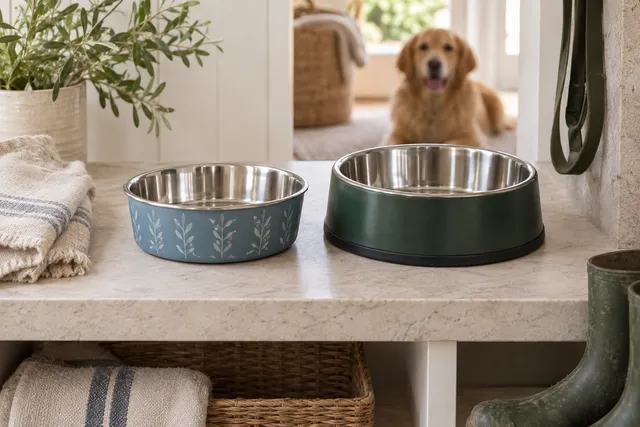
A second bowl can make the routine less rushed. You can put a clean water bowl back in service while the first dries, or prepare a clean food bowl for the next meal without waiting for a dishwasher cycle. The spare does not need to match the color of the first, but it should suit the same feeding position and your dog’s use.
Check storage before adding more supplies. A small tray for the cleaning tools and one shelf for dry bowls may be enough. If equipment is scattered across several cupboards, simplify the setup before assuming that a more expensive bowl will solve the problem.
Keep the packaging or save a photograph of its care label. That small record is especially helpful when the bowl has a coating or fitted base and you cannot remember whether it belongs in the dishwasher.
What is the step-by-step hand-washing process?
- Read the instructions. Identify the permitted cleaning method and whether any component should be removed.
- Empty the bowl. Deal with leftovers appropriately before washing, keeping the work area clear.
- Wash and scrub. Use the compatible detergent and water method, paying attention to the rim, inside and underside.
- Rinse. Remove remaining detergent and loosened debris.
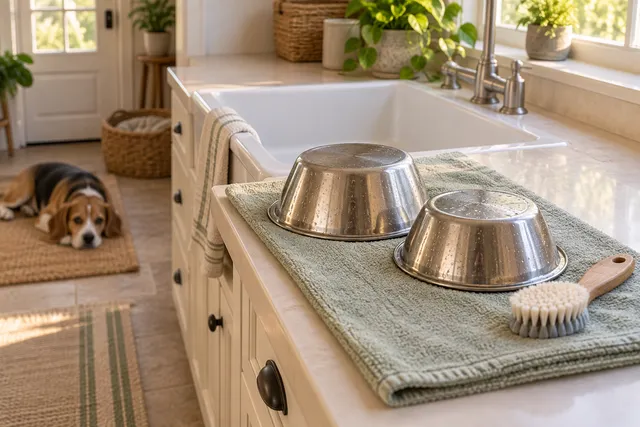
- Dry and inspect. Let the bowl dry or use a clean towel, then check it before returning it to service.
The basic wash, scrub, rinse and dry sequence follows CDC guidance. The following preparation tips are our practical suggestions for making that sequence less awkward in a real home.
Choose a moment when you can complete the task without leaving partly washed bowls among clean ones. Clear enough counter space to put everything down safely. If there are several bowls, work through a visible line: used items on one side, washed items in the drying area.
Before carrying the bowl back, look at the feeding spot as well. A clean bowl placed into a tray full of old crumbs leaves an unfinished job. Include the surrounding mat or holder in your plan, using its own care instructions.
Can stainless steel dog bowls go in the dishwasher?
Only assume dishwasher compatibility when the manufacturer confirms it for your bowl. Stainless steel describes a material; it does not tell you everything about a coating, attached ring or decorative finish.
As a concrete example, YETI’s official Boomer FAQ identifies its dog bowls as dishwasher-safe. That supports a choice for the Boomer model family; it is not evidence that another brand’s bowl has the same care requirements. Check the instructions supplied with your own item, including any accessory.
Think about physical fit too. Before buying, compare the bowl’s height and diameter with the space in your rack. A wide bowl might fit on the counter yet be inconvenient to position in your machine. The dishwasher’s loading instructions remain relevant, including how to avoid blocking moving parts.
If you use the dishwasher infrequently, decide what happens between cycles. Keeping a compatible hand-washing method and a spare bowl available may be more practical than building the entire routine around a machine you run only occasionally.
Do not turn an unverified care claim into a household rule. If the listing and packaging disagree, ask the manufacturer which instructions apply to the exact model you own.
How should you handle a non-slip base or removable ring?
First establish whether the part is designed to come off. Some bowls have removable components; others use a fitted or attached base. Do not pull a ring away simply because a similar-looking bowl has a removable one.
If removal is permitted, follow the stated sequence and keep the parts together. A shallow tray beside the work area can help you avoid losing a small component. Photograph the original arrangement if you need a reference for putting it back correctly.
Check each part’s care directions. The bowl and its accessory may have different requirements. A dishwasher-safe metal insert does not automatically establish that the surrounding holder can use the same cycle.
After cleaning, confirm that the bowl sits as intended in its usual position. If a component no longer fits properly or the product appears damaged, stop using the affected item and ask the manufacturer about replacement parts or the appropriate next step. Do not glue household materials onto the base to recreate a missing part.
What should you do if marks or odors remain?
Do not diagnose a mark from its color alone. A photograph may not distinguish residue, a change in the finish or damage to the surface. Start by checking whether you completed the approved cleaning method and whether any hidden area or separate part was missed.
If the mark remains, take clear photographs in ordinary light. Include the whole bowl, a close view and the model information. Ask the manufacturer what cleaning method is compatible with that surface and whether the condition affects continued use.
Avoid escalating through a random sequence of household chemicals. This guide does not provide a universal stain-removal recipe because coatings and components vary. A suggested treatment for a plain metal pan may not be appropriate for your particular pet bowl.
Set a questionable bowl aside while you resolve the issue and use a suitable spare. That gives you time to obtain an answer without needing to decide immediately at the next meal. Keep your question focused on the actual model and condition rather than asking whether all stainless steel is safe.
Is cleaning the same as disinfecting?
No. Cleaning removes dirt and germs; disinfection is an additional process intended to kill germs. CDC says cleaning is usually sufficient for most pet items, while some circumstances call for disinfection. Follow the current guidance and the product label, and never mix cleaning chemicals.
For this everyday routine, do not treat a shiny appearance as proof of disinfection. Likewise, do not advertise a home washing process as laboratory-verified sterilization. Those are different claims and require different evidence.
If your veterinarian recommends a special protocol, ask for instructions that cover the bowl material, the product to use and when the bowl may return to service. Write those instructions down so that another caregiver can follow the same process. If the specified method conflicts with the bowl manufacturer’s care requirements, resolve that conflict before proceeding.
The aim of a clear routine is consistency. Adding an unexplained extra step can make the process harder to repeat without establishing that it addresses the reason special cleaning was recommended.
How can you organize bowls in a multi-dog home?
Give each feeding setup an easy-to-recognize place in your storage system. You might use separate shelves, differently colored mats or a simple list of which bowl belongs at each station. Choose identifiers that are easy for everyone to understand without modifying the bowl’s food-contact surface.
Separate the scheduling question from the purchasing question. You may already own enough suitable bowls but need a clearer handover between the person feeding and the person cleaning. Walk through a normal morning together and note where the process becomes unclear.
Make the spare set visible. If clean replacements are hidden behind unrelated cookware, someone may reuse the nearest bowl simply because it is easier to find. A designated dry storage spot reduces that friction.
This organizational approach does not determine whether your dogs should share resources. Follow any individual feeding or separation plan provided for your household. The cleaning system should support that plan rather than quietly changing it.
What belongs on a simple care checklist?
| Check | Question to answer | Practical record |
|---|---|---|
| Identity | Which exact bowl is this? | Brand, model and care-label photo |
| Method | Hand washing or dishwasher? | Manufacturer’s approved instructions |
| Parts | Does anything detach? | Removal and reassembly directions |
| Timing | Who cleans it and when? | A meal or daily reminder |
| Replacement | What is available while it dries? | A clean spare and storage location |
Keep the checklist short enough to use. A note inside the pet-supply cupboard can be more helpful than a complicated tracking system. Review it when you buy a different bowl, add a feeding station or change who handles daily pet care.
For a pet sitter, show the process once and point out the written instructions. Explain which parts need separate attention and where used items go. This avoids relying on the sitter to infer your routine from the appearance of the kitchen.
What other questions come up?
Does a bowl that looks empty still need washing?
Yes. Follow the cleaning schedule rather than using visible leftovers as the only trigger. An empty bowl is not evidence that the washing task has already happened.
Do I need a premium bowl to create a good routine?
No. Clear care instructions, a suitable shape and a workable cleaning setup are more useful starting points than price. Compare those practical details before upgrading.
Can I leave the care label unread?
Read it before the first wash. It may contain the detail that distinguishes your bowl from a similar-looking product, especially where a coating or separate base is involved.
What if I cannot find the manufacturer’s instructions?
Contact the brand with the model information or ask the retailer for the original care details. Do not assume that a general stainless steel description supplies every missing instruction.
Where can you check the source information?
Sources checked September 15, 2026. The household organization examples are editorial suggestions; no product durability or germ-removal testing is claimed.
- FDA: safe handling of pet food and treats — food-bowl washing frequency.
- CDC: cleaning and disinfecting pet supplies — routine methods and the distinction between cleaning and disinfection.
- YETI: Boomer FAQ — the manufacturer’s dishwasher compatibility statement.
For a closer look at one model, read our YETI Boomer 4 review. To compare useful features before replacing a bowl, visit our stainless steel dog bowl guide.