How to Prepare for a Dog Walker Meet and Greet
Plan a dog walker consultation around service scope, specific dog history, handoffs, access, updates and the questions to resolve before booking.
Jump to a section
Direct answer: use the meeting to decide whether to book
Prepare for a dog walker meet and greet by defining the service you need, sharing specific observations about your dog, and asking the prospective walker to explain an ordinary visit from arrival to departure. Finish with a written list of agreed details and unresolved questions. A friendly conversation is useful, but it is not the same as an agreed walking arrangement.
This guide focuses on choosing a recurring walking service before care begins. It does not replace a care handover sheet for someone you have already hired, assess a daycare facility, or teach treatment for behavior problems. The goal is to leave knowing who would handle your dog, what the visit includes, and what still needs clarification. You can decide that the match is unsuitable without inventing a pass score.
1. Describe the visit you actually need
Start with a short service brief: the days involved, the approximate arrival window, how many dogs live with you, and whether the request is a walk from home or another arrangement. Explain any fixed commitments that affect access. “A weekday visit while I work” leaves more unanswered than “a midday visit on Tuesdays and Thursdays, with collection from my apartment.”
Ask how the company defines a booked visit. Does the stated duration include entering the building, fitting equipment, cleaning up afterward and writing an update? When does the clock start? These are practical questions, not assumptions about what all walkers offer. Write the answer in ordinary language so that you can compare two proposals for the same work. A longer advertised appointment is not necessarily more outdoor walking time.
2. Confirm the meeting format before bringing your dog
Agree on a time, location and expected outline for the consultation. Ask who will attend and whether the person you meet is the person who would provide the service. If another team member might substitute, clarify how introductions and instructions would work. Do not assume that everyone listed on a company website will have met your dog.
The suitable meeting place depends on the arrangements and information already shared. Discuss any concerns before arrival instead of improvising introductions at a busy doorway. Ask whether the meeting includes a short accompanied walk, a home-access discussion, or conversation only. Confirm any consultation fee in advance. There is no universal free-meeting rule in this guide, and agreeing to a consultation does not by itself settle the terms of future care.
3. Bring observations instead of reassuring labels
Prepare a few concrete examples of what your dog does during normal walks and arrivals. “Barks when a bicycle passes close to the curb” conveys more than “a little excitable.” Include relevant experiences with unfamiliar people, other dogs, children, handling and entry into the home. Describe what happened and the circumstances; do not guess a diagnosis or conceal an incident behind a flattering label.
Pet Sitters International’s behavior questions emphasize specific history, including reactions when owners are absent and any previous bites or scratches. Share pertinent facts before someone approaches or handles your dog. If the prospective walker says those circumstances exceed their service, that is useful information. A meet and greet is not an opportunity to test whether a stranger can manage an undisclosed difficulty.
4. Ask about the walking arrangement, not just experience
Ask whether your dog would be walked alone or alongside other dogs, whether transport is involved, and who chooses the route. Clarify what “group walk” means for that provider. The phrase does not tell you the number of dogs, their introductions, or whether your dog would share a vehicle.
Rover’s official questions for prospective carers include other animals, other helpers and planned exercise. Use those topics to obtain a proposal for your own booking. If you requested an individual walk, have that written into the proposed service rather than assuming it follows from a private consultation. Experience with a familiar breed or an appealing profile photograph does not answer these operational questions.
5. Make equipment and handoff responsibilities explicit
Show the equipment already used for your dog’s routine and explain which pieces belong together. Ask whether the walker expects you to provide everything and whether they propose any change. Follow the manufacturer’s instructions for existing gear; a meeting does not establish that a different attachment or unfamiliar fitting method is suitable.
If an accompanied demonstration is appropriate, agree on it first. Observe communication and the sequence of the handoff rather than manufacturing a difficult encounter to see what happens. There is no need to seek out another dog or deliberately drop a leash as a test. Unresolved equipment or handling questions are reasons to pause the plan. For an existing harness, our harness-fit guide covers a separate equipment check; it does not certify a walker.
6. Walk through arrival and departure on paper
Ask the walker to describe a complete visit: arriving at the property, identifying the correct dog, collecting supplies, leaving, returning, and securing the home. For an apartment, include the building entrance and any restrictions on visitor access. Note which steps need information from you and which the provider will manage.
Discuss access arrangements privately after you have established the appropriate process. Do not put door codes, key locations or household absence patterns into a public review or shared neighborhood post. Ask how the company stores and returns access information. This is planning guidance, not a technical security audit. If the explanation leaves you unsure who could enter your home, resolve that question before giving access or starting recurring visits.
7. Review evidence without inventing a credential checklist
Ask for information relevant to the actual service: the provider’s process for screening staff, applicable business documentation, training, and insurance. Pet Sitters International’s professional consultation checklist identifies these as topics to discuss. It also notes that local requirements and the handling of staff background-check documents can vary.
You are asking what evidence exists and what it covers, not declaring that a badge guarantees an outcome. Record the name of any training or credential accurately and ask how it relates to dog walking. If documentation is unclear, request clarification through the provider’s normal channel. This guide does not interpret insurance terms, determine legal compliance or promise that membership in an organization establishes suitability for every dog.
8. Agree on updates that help you understand the visit
Ask what an ordinary completion message includes and when it is sent. Useful details might include arrival and departure times, whether the planned walk occurred, and a concise note about an unexpected event. Decide how questions should be raised during a visit and which channel you will check.
A photo can be pleasant without answering whether the agreed service happened. Conversely, a short factual message may be more useful than many images. Specify any privacy preferences about photographs or social posting. Do not assume that permission to send you a private update also means permission to publish your dog, home or walking route. Keep communication expectations proportionate to the service and record them in the proposal rather than expecting the walker to infer them.
9. Clarify changes, delays and unavailable visits
Discuss what happens if the walker is delayed, becomes unavailable, or cannot complete the intended outing. Ask who contacts you, whether a substitute is proposed, and what decisions require your agreement. Make clear how you will learn that a visit has not happened. A backup plan should identify a next action rather than simply say that someone will handle it.
Ask how the provider approaches weather-related changes and other practical interruptions. This guide sets no temperature threshold or medical exercise rule. Any health restrictions should come from your dog’s veterinary team and be communicated accurately. The booking discussion should establish who makes contact and how the altered service is documented. If you cannot be reached, the provider should be able to explain its existing escalation process before the first booking.
10. Keep health information accurate and within scope
Tell the prospective walker about relevant restrictions or care instructions that affect the proposed visit. Identify the source of any veterinary directions and avoid paraphrasing them into a different plan. Ask whether the requested service falls within what the provider offers. Do not assume that ordinary dog walking includes medication administration or specialist handling.
Prepare current contact information for yourself and the appropriate emergency contact through the provider’s private onboarding process. Ask what authorizations and veterinary contact details it requires before care begins. The consultation is for establishing responsibilities, not diagnosing symptoms or testing a dog’s physical limits. If you need a clinical decision about exercise or an unresolved behavior concern, seek the appropriate professional guidance before turning it into a walk requirement.
11. Leave with a decision record, not a numerical score
Use a simple note with four fields: requirement, provider’s answer, evidence or follow-up, and decision. For example, your requirement might be “the same named walker where possible.” Record whether the proposal includes that person, what substitution arrangements apply, and whether you accept them. That is more informative than awarding an unexplained nine out of ten.
Keep the note factual: who answered, when the discussion took place, and which written information you still expect. If a proposal changes afterward, update the relevant line rather than keeping two contradictory versions. A household member who missed the meeting should be able to understand the proposed arrangement from your notes. That makes the record useful for a shared decision, without turning it into a public evaluation of the provider or a collection of another client’s private information.
Mark each essential question as agreed, unresolved or unsuitable. Optional preferences can remain separate so that an attractive extra does not hide a missing essential. A sample outcome could be “route and update plan agreed; duration definition still unclear; no booking until clarified.” You do not need to rank every provider in your area. You need an arrangement whose important details you understand and can accept.
12. Confirm the proposal before the first paid visit
Read the written service proposal and check that it reflects the meeting. Verify dates, arrival windows, visit scope, charges, cancellation arrangements and the people involved. Ask about any discrepancy instead of relying on a remembered conversation. Do not interpret this article as advice to accept a contract you do not understand.
If you both choose a preliminary visit, agree on what you want to learn from it and how you will discuss the result. One successful visit supplies an observation; it does not prove that every future situation will go the same way. After selecting the provider, move routine information into a dated care handover sheet. That later document supports delivery of agreed care, while the consultation helps decide whether to hire.
Frequently asked questions
Must a meet and greet include a walk? No universal format is established here. Confirm whether the appointment includes conversation, an accompanied outing, home access or another agreed activity before attending.
Should I hide a past incident if it might affect acceptance? Give relevant, specific history before handling begins. The provider needs accurate information to decide whether the proposed service is within its scope.
Does a background check or insurance prove a good fit? These are evidence topics to review, not guarantees. Ask what the documentation and service arrangements actually cover.
Can I book immediately after a friendly meeting? First resolve essential questions and confirm the written proposal. A pleasant introduction does not define visit duration, substitutions or access arrangements.
Is a dog walker consultation the same as daycare evaluation? No. This guide concerns a walking service and individual visit arrangements. A facility assessment considers a different environment and service.
Sources and related reading
The PSI consultation checklist informs the evidence questions; its behavior article supports specific history sharing. Rover’s official help page supplies examples of service questions. These sources describe their own professional guidance and platform practices, not universal rules or an endorsement of a particular provider. The numbered workflow and decision-note examples are practical planning suggestions.
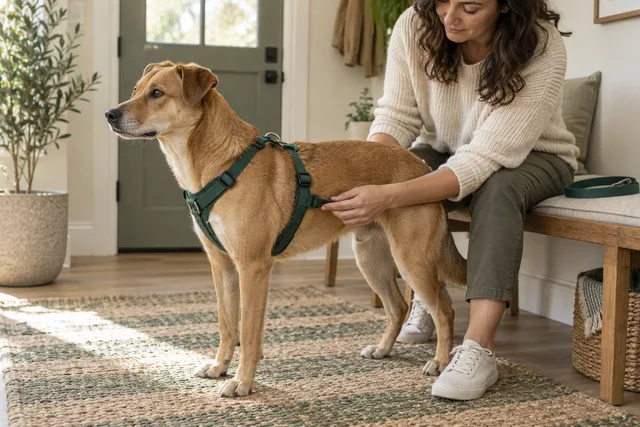
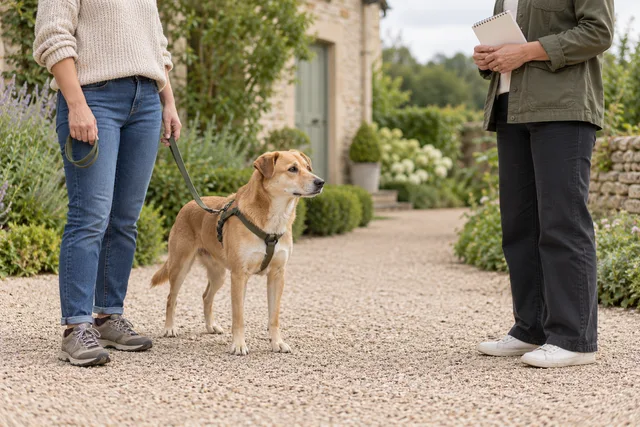
For other arrangements, see boarding-facility comparisons and the handover and harness guides linked above. Use the guide that matches the service you are deciding about. The cover is an illustrative consultation scene, not a real client’s meeting or evidence of professional credentials.