How to Prepare for Your First AKC Fetch Novice Test
Organize a first Fetch Novice entry: verify eligibility, understand the three retrieves, clarify event arrangements and preserve the correct result records.

Jump to a section
Direct answer: prepare the test plan before the entry
To prepare for a first AKC Fetch Novice test, confirm eligibility, read the current Novice checklist and participant guide, identify an actual test offering that level, and settle the host’s entry and equipment arrangements. Build your plan around three directed retrieves and the required paperwork, rather than assuming ordinary backyard ball play matches the evaluation.
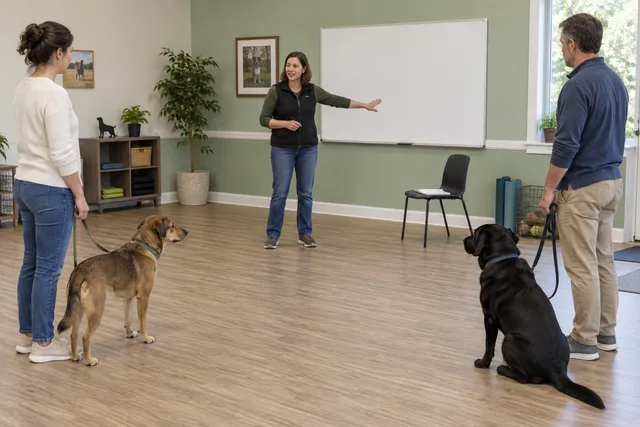
This guide helps an owner organize that preparation. It does not teach a dog to retrieve, assess physical readiness or guarantee a qualifying result. A handler who needs help with the skills should work with an appropriate instructor; questions about an individual dog’s exercise suitability belong with the dog’s veterinarian. The independent scene cover is illustrative, not a photograph of an AKC event.
Start with the correct program and dog record
The AKC Fetch program page describes a noncompetitive pass-or-fail activity for all breeds. It states a minimum age of six months and an AKC registration, PAL or Canine Partners number. Each title requires two passing tests under two different approved Fetch judges. Novice is the FTN level, not a generic label for any beginner retrieving game.
Find the dog’s actual record before copying information into an entry. Keep the registered or listed name separate from the call name used at home. A typing mistake is easier to correct before documents begin referring to different versions of the same dog. Do not guess a number from a breeder’s advertisement, an unrelated registry or another pet’s file.
If enrollment is unresolved, clarify the appropriate route through AKC before relying on an event plan. A program’s minimum age is an eligibility condition, not a personalized recommendation that a dog should perform the activity at that age. The administrative check and the readiness decision need separate answers.
Keep a private preparation sheet with the dog name, relevant number, owner’s contact information and links to the documents you are using. There is no reason to publish this sheet or share payment details with an unofficial event discussion group.
Read the Novice task without importing another level
AKC’s test-level overview describes Novice as three single retrieves at 30 feet, with four distractions on the course. The throws include left, center and right in an order chosen by the handler. A ball, retrieving bumper or toy may be used, and the handler may hold the collar at the start. The dog can see where the object is thrown.
Turn that outline into a simple course-reading note: start position, intended direction and the point to which the object must return. The purpose is to understand what the judge will be observing. It is not a prescription to repeat a set number of throws at home or to build a course in a space that is unsuitable.
Do not import the distances and handling requirements of Intermediate, Advanced or Retriever into a first Novice entry.
Likewise, a dog enjoying a toy does not establish familiarity with the complete sequence. Waiting at the start, following the intended retrieve and returning the object are separate parts of the task. An instructor can help identify which part needs work without turning the entry date into a deadline the dog must meet.
Use the checklist to understand a qualifying attempt
The current Novice form linked from AKC’s judge resources is the May 2025 Novice checklist. It records control at the start, each directional retrieve and return within two steps. All required items must pass. It also records nonqualifying issues such as leaving the course, soiling, refusal or not finishing in time.
Read the form before asking someone to watch a practice session. Instead of saying only that the dog fetched, you can ask which part of the specified sequence was observed. A short note identifying a question is more useful than declaring a mock pass based on enthusiasm.
Leave judging decisions to the approved judge at the actual test. A personal practice note is not an official checklist, and a recording of an ordinary outing does not become a qualifying result because it resembles the task. Avoid signing, premarking or editing any field reserved for the judge.
The checklist does not prescribe practice repetitions. More attempts are not automatically the answer to an unresolved training question.
Resolve start timing and rewards before test day
The linked Fetch Judge and Participant Guide says to send the dog when the object has stopped moving. It also states that testing is in person, with no video tests. Food rewards or lures, imaginary-food luring, and clickers or toys used as reinforcers are not permitted during the test. Distinguish the approved retrieving object from an extra reward toy.
These details can differ from a household’s everyday game. If someone normally encourages an immediate chase while a ball is still moving, identify that difference before entering. Do not rely on a short third-party description that reduces the timing to the moment an object lands. Ask the actual judge about any uncertainty before your attempt begins.
Make a clear distinction between the contents of the travel bag and what you take into the test area. An item may be useful during the wider outing while being inappropriate during the evaluated activity. Check the current rules rather than assuming that equipment allowed in a training class is allowed here.
This article does not replace the guide’s provisions on collars, leashes, handling assistance or accommodations. Read those sections for your circumstances and clarify them with the host in advance. It is better to settle an equipment question calmly before departure than discover it while waiting to be called.
Verify the event rather than assuming a listing is an entry
Use AKC’s official event-search route from its Fetch pages, then read the particular host’s announcement or premium information. Confirm the date, venue, Novice availability, entry method, closing arrangements and the person responsible for questions. A calendar result is a starting point for checking an opportunity, not proof that a place remains available.
Write the event details in one place so that the venue name, address and session do not come from different listings. If several activities share a site, check where Fetch participants should report. A general dog-show entrance may not answer the question of where your own check-in occurs.
Confirm whether more than one test and more than one judge are actually offered if you hope to complete both passes on the trip. The title’s two-pass requirement does not promise that every host provides that arrangement. Do not make travel plans around a same-day title assumption that the schedule does not support.
Ask about entry fees and cancellation terms directly from the current host information before committing. This guide quotes no universal event fee, refund promise or opening time. It does not submit an entry, reserve a space or contact an organizer on your behalf.
Check the setting and decide how you will wait
A retrieving evaluation involves more than the brief time on the course. Review the venue information for the surface, boundaries, waiting area and route between parking and check-in. If fencing or separation from other dogs matters to your decision, obtain an actual answer rather than inferring it from a distant photograph.
Plan how the dog will remain with a responsible person while paperwork is handled. If you attend alone, organize the documents so that you do not need to empty a bag while managing the leash. If someone accompanies you, agree on who holds the dog and who handles the administrative exchange.
Check the forecast and the host’s latest notices before leaving. A published event date does not guarantee suitable weather, an unchanged site or an unchanged timetable. Allow the plan to change when the actual conditions or the dog’s condition make participation unsuitable.
Keep the option to leave without testing. Time spent traveling or paying an entry is not a reason to continue with a dog that should not participate that day. This is a practical decision about the outing, not a judgment that a noncompetitive activity must be completed at all costs.
Pack for identification, the retrieve and the return home
Prepare the current event confirmation, the dog’s identifying record and whatever participant documents the host requests. Keep a pen and a protective folder available. Do not assume that a phone with poor reception will be sufficient to recover every detail at the venue; retain an accessible copy of essential information.
Confirm who provides the retrieving object and whether the specific object you intend to use is acceptable. Inspect your ordinary supplies before packing them. This guide does not recommend a particular brand, ball diameter or toy model, and it does not establish that a product review confers approval for a test.
Include the dog’s usual suitable travel essentials, such as water arrangements and cleanup supplies, according to the outing’s needs. No fixed drinking amount, exercise warm-up or recovery timetable is prescribed here. Individual requirements can differ from another entrant’s routine.
Leave room to store paperwork separately after the event. A damp or dirty equipment bag is an inconvenient place for a signed record you may need later. A simple document sleeve can make it easier to keep the event’s administrative outcome distinct from the gear used on the day.
After the attempt, preserve the result before planning another
When the attempt is finished, understand the result and any feedback before leaving the appropriate reporting area. A description of what needs work can guide a later conversation with an instructor. It should not be turned into a dispute about a decision based on an online summary or a practice video.
For a passing result, check the participant and dog information on the record and confirm that the necessary judge details and signatures are complete. Keep the original document secure and make a private backup. If something is missing, ask how to resolve it while the event information is still readily available.
Track each test separately: event, date, judge and outcome. Do not merge two attempts into one entry in your notes simply because they occurred on the same trip. Clear records make the later application easier to prepare and reduce the chance of assuming that one completed test satisfies the whole title requirement.
If the dog does not qualify, record the actual feedback without inventing a pass or scheduling repeated attempts automatically. The next useful step may be further instruction or a different plan, rather than another immediate entry.
Keep title processing separate from participating
AKC’s Fetch title application, marked 10/25 when reviewed, calls for the application and both passing checklists. Its pages include applicant, dog, test and payment information. The title page also links the online application portal. Read the current instructions for your chosen route instead of assuming that a ribbon completes the application.
The reviewed paper form contains an inconsistent ATT reference in a payment sentence despite being a Fetch application. Do not use that stray label to choose a different title. If it affects your understanding of how to apply, seek clarification from AKC through its official contact route before submitting or paying.
Review the final names, number and two event records against your saved documents. Keep confirmation of what you submit and follow the official status process. This guide cannot verify a private application, promise a processing date or guarantee that a title will be issued.
For help organizing a first instruction setting, our first group training class guide addresses a different task. Use it if you need to prepare for instruction; the present guide concerns the particular Fetch test and its records.
FAQ: a first Fetch Novice test
Does ordinary ball play count as an official pass? No. A qualifying result comes from the actual evaluated test and its official record.
Can I substitute a home video? The linked participant guide specifies an in-person format. Do not apply the video arrangements of another AKC program to Fetch.
Should I enter before resolving the rules? Settle questions about the task, equipment and event arrangements before relying on an entry plan.
Does this guide assess my dog’s readiness? No. Administrative preparation, skill instruction and individual physical suitability are separate questions.
What should I keep after the event? Preserve the actual result, relevant event details and any official paperwork securely for the next administrative step.