How to Prepare for Your First AKC Scent Work Trial
Organize your first AKC Scent Work trial: verify class eligibility, read the premium, confirm entry status, plan waiting and keep target odors out of the bag.
Jump to a section
Direct answer: prepare the entry, the waiting plan and the rules
To prepare for your first AKC Scent Work trial, choose a class your team is eligible and trained for, read that event’s premium list, confirm acceptance, and organize a practical plan for the time between searches. Review the current regulations before packing. A successful home search does not tell you which entry to submit or how that particular venue operates.
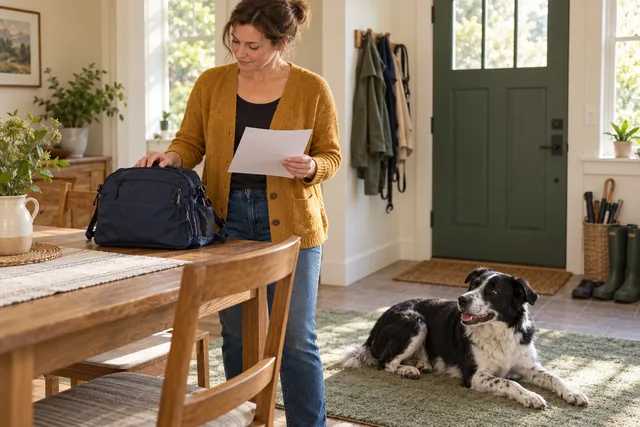
This guide is for someone already working on the sport who needs to organize a first in-person competition. It is not a scent-training course, an essential-oil preparation recipe or a prediction that your dog will qualify. We have not entered a trial for you. The independent household cover illustrates getting ready; it is not an AKC event photograph.
1. Identify the exact sport and event
The AKC Scent Work overview distinguishes Odor Search from Handler Discrimination. The former uses specified target odors; the latter concerns the handler’s scent. That distinction matters when choosing an entry. A generic event described as nosework may belong to a different organization with different requirements.
Record the organizing body, host club, venue, date and event number from the official announcement. When a weekend contains multiple trials, keep those trials separate in your notes. “Saturday morning” is a useful travel reminder, but it is not a sufficiently precise description of what you entered.
Save the host’s current documents in a single folder with the date you downloaded them. If you later find an older flyer in a search result, compare its event details before using it. Avoid treating a familiar club logo as proof that an announcement applies to the same year, venue or weekend.
2. Separate basic eligibility from readiness
AKC’s overview says dogs must be at least six months old and have an eligible AKC number, with routes including registration, PAL, Canine Partners and FSS. Confirm the route that applies to your dog. Having a number is an administrative requirement; it does not establish that a dog is ready for every class or for a long outing.
Compare what your team has practiced with what you propose to enter. Ask your instructor to discuss the specific class rather than give a broad yes-or-no answer about competition. Explain the environments you have practiced in, the transitions you find difficult and how your dog manages waiting around unfamiliar activity.
Do not use a first trial as an obligation to demonstrate progress on a fixed date. It is reasonable to spend more time preparing or choose another event. A decision to wait is most useful when it identifies a concrete issue to work on, such as understanding the paperwork or organizing a suitable rest arrangement, rather than becoming a vague judgment about the dog’s ability.
3. Read the premium before completing an entry
AKC’s getting-started page describes the premium list as the official event announcement, containing details such as the location, classes and judges, plus an entry form. It identifies the trial secretary as the recipient specified by that document. After entries close, a judging program provides scheduling information.
Make your own small entry worksheet before copying anything into a form. Include the dog and handler identifiers, exact trial, division, element, level, section and fee. Add the opening and closing dates, the accepted submission method, and any host instructions that affect your choice. Fill a field only when you can identify where its answer came from.
Read the acceptance procedure carefully. Sending a form, receiving an automated payment receipt and having a confirmed place are different pieces of information. Check which message establishes your status for this event. If you are waitlisted, keep the host’s instructions with your travel notes instead of treating your preferred class as a confirmed appointment.
Do not copy a friend’s entry settings just because you train together. Different prior titles, handler experience or chosen elements can change the relevant answers. Resolve an unclear field with the designated event contact before the deadline; do not improvise an answer simply to make a form submit.
4. Check class details against the current rulebook
The regulations inspected for this guide are amended August 2025. Novice A eligibility considers the dog’s relevant titles, comparable titles elsewhere and specified handler experience; Novice B is not simply a synonym for a harder search. Review Chapter 2 rather than choosing A automatically because it is your first AKC trial.
Use a two-column note: what your entry says and what you need to confirm. For example, a team might have experience in another organization but no AKC result yet. That history belongs in the eligibility discussion, even when an online account currently looks empty. Keep the underlying records available while resolving the question.
Consult AKC’s regulation resources page for updates as well as the linked book. The page lists a September 2025 Buried-search revision after the book’s cover date. This guide therefore does not reproduce Buried technical specifications or offer a complete class-rule summary. Check the material that applies to your actual entry, including later notices.
5. Plan the time outside the search
Ask what waiting arrangements the particular site offers and permits. An indoor crating area, outdoor space and vehicle-based setup present different practical questions. Do not assume a photograph from another trial shows the facilities you will have. Establish who remains responsible for the dog while you obtain information or attend any required briefing.
Plan for changing conditions rather than a single weather forecast. If the proposed waiting arrangement cannot remain comfortable and supervised, reconsider attending or discuss the available options with the host. This is not a recommendation to leave a dog unattended in a parked vehicle, and opening a window is not a complete waiting plan.
Allow space for other teams when deciding where to stand or settle. A dog can be capable of searching yet find a busy arrival area difficult. Think through how you will move from parking to the permitted waiting location without needing another handler to hold your dog or rearrange their equipment.
Write down your own limits before leaving home. Examples include an unavailable rest area, a travel delay that makes required check-in impossible, or conditions you cannot manage with your existing setup. Deciding how to respond in advance makes it easier to leave or seek instructions without feeling that the entry fee obliges you to stay.
6. Pack for the event rather than for a home training session
Put confirmation documents, the premium, judging information and your entry worksheet where you can find them quickly. Save offline copies if reception may be uncertain. Carry ordinary supplies you already know how to use, such as water, a bowl, waste bags and a familiar resting surface when the venue permits it. Avoid making the trial the first outing for an unfamiliar restraint or waiting setup.
Keep a separate equipment question list for your instructor and the host. Confirm the collar or harness, leash and reward arrangements against Chapter 5 and any event directions. Do not infer permission for a particular accessory from a different sport’s rules. A shopping description that calls something competition equipment is not approval for your search.
One especially important rule: the inspected regulations prohibit exhibitors from possessing target odors on the trial grounds and restrict training there to the designated warm-up area. Leave your home odor kit out of the trial bag. Do not pack it on the assumption that having personal supplies nearby will be useful.
Repack deliberately rather than taking a training bag untouched from class. Empty the compartments, identify the contents and remove anything that does not belong at this event. This also gives you a chance to spot an old confirmation sheet or an unrelated leash before you reach the parking area.
7. Make an arrival and check-in sheet
Put the correct entrance, parking instructions, check-in location and required arrival time on one page. Include the host’s designated contact method for unexpected delays. Distinguish the published trial start from any earlier task you need to complete; do not calculate an arrival time from a search duration alone.
Once on site, confirm where information is posted and how teams are called. Ask procedural questions while there is time to understand the answer. If a volunteer directs you to a waiting point, use that instruction rather than following a different team whose class may operate elsewhere.
If there are two handlers sharing transport, compare both schedules before deciding who can help with which task. Do not assume that a companion will be available during your own briefing or search. Give each person’s dog a complete care and supervision plan, and agree where to reunite if the timetable changes. A shared car does not make two entries one appointment.
Keep conversations specific and brief when others are working. “Where should this class wait?” is easier to answer than asking someone to reconstruct your whole morning. Have your entry details ready so a secretary or steward does not have to guess which trial, dog or class you mean.
If something conflicts with the document you saved, ask the appropriate official to resolve it. Do not decide that a social post, an overheard instruction or another entrant’s recollection overrides the current event direction.
8. Protect the search and follow official directions
The inspected rules prohibit disclosing search information to handlers who have not yet run. Keep discussion of locations, dog behavior within the search and any recordings out of conversations with waiting competitors. Review the spectator provisions before deciding what you can watch; permission is not the same for every division.
For a first outing, adopt a simple conversation habit: talk about your own packing or journey, and save the search discussion until you know everyone involved is permitted to hear it. Ask companions to follow the same approach. They may mean to be encouraging without realizing that a seemingly small detail can reveal useful information.
Review how the handler communicates with the judge before the day, with your instructor using the current regulations. This guide does not replace that preparation with a last-minute performance script. At the venue, listen to the relevant briefing and instructions rather than trying to learn an unfamiliar handling method from another team’s run.
9. Record the outcome without rushing the next entry
Afterward, compare the official result with the class you entered and retain the event details. Make a separate practical note about the outing: whether your documents were easy to find, where waiting became difficult, and which question you should have asked earlier. Keep observations distinct from guesses about a judge’s reasoning.
Choose one or two useful adjustments before looking for another event. Perhaps you need a clearer packing list, more practice managing transitions, or a conversation about class eligibility. A qualifying result does not make every part of the day ideal, and a non-qualifying result does not erase everything that worked.
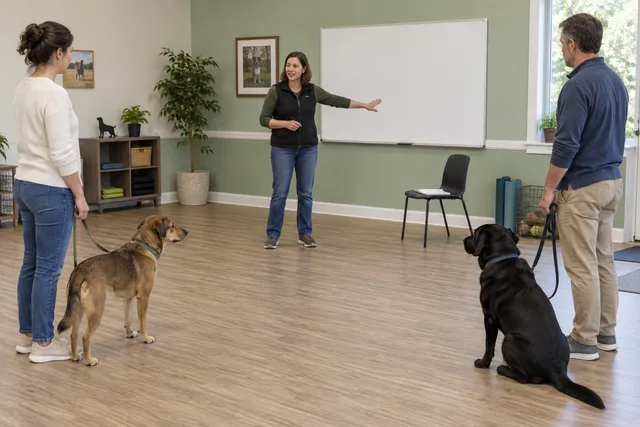
For general preparation in a teaching environment, see our first group training class guide. A class and a licensed trial serve different purposes. Use the appropriate setting to work on skills rather than expecting competition day to provide a full lesson.
Frequently asked questions
Can a mixed-breed dog participate? AKC provides eligible-number routes for mixed breeds. Check your dog’s individual records and the current program requirements; breed appearance alone does not complete an entry.
Does first-time entry automatically mean Novice A? No. Check both the dog and handler criteria, including relevant experience elsewhere, before selecting a section.
Should I take my own target odors? No. Keep the home training kit out of the trial setup and follow the organizer’s designated arrangements.
Is a completed entry a guaranteed place? Do not assume so. Read the event’s acceptance and waiting-list procedure, and keep the actual status message.
Does this guide certify readiness or submit an application? No. It helps organize a first trial. It does not assess an individual dog, provide a training or medical prescription, accept terms, make payment or contact a club on your behalf.