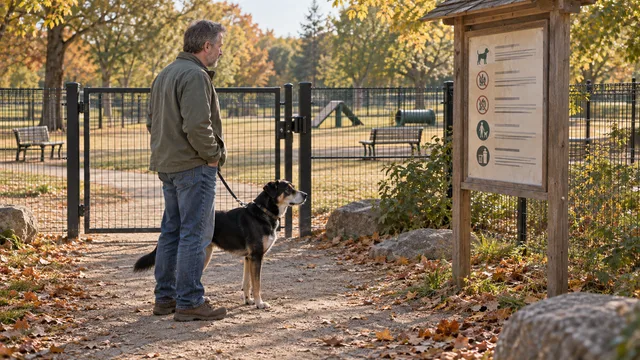
How to Prepare for Your First Sniffspot Visit
Prepare a first private dog-space visit with eligibility checks, listing details, confirmed access, a simple packing kit and an on-time departure plan.
Jump to a section
Direct answer: prepare the reservation, access and exit together
To prepare for your first Sniffspot visit, check your dog’s eligibility, choose a listing whose boundaries and surroundings suit your needs, and save the confirmed access instructions. Bring your own essentials, arrive with your dog leashed, inspect the space before using it, and plan to leave within the reserved window. A private booking is useful only when the actual space and the handover work for your household.
This guide covers a first visit to a reserved private dog space. It does not assess a particular property or prescribe exercise or behavior treatment. The practical goal is a short visit plan that another adult could follow: where to park, which entrance to use, what to bring, and when to start packing up. Policies below were checked against Sniffspot’s official help pages; review the current listing and booking terms before paying.
1. Check eligibility before comparing attractive yards
Start with the platform’s requirements for use. Important exclusions include unattended dogs, dogs that have previously bitten a person or animal, dogs declared dangerous, pregnant dogs and animals other than dogs. Host Additional Rules also apply. A listing being available does not establish that every dog or visitor is eligible.
Read the complete rules with your own circumstances in mind. If something is unclear, resolve it before making a reservation rather than treating a private yard as an exception. A parent bringing children should check the supervision and booking provisions as well as any host restrictions. Keep the actual number of dogs and people aligned with the booking.
The health requirements page specifies current DHPP or DA2PP and rabies vaccines or current titers, alongside veterinarian-recommended flea and parasite prevention. It describes written veterinary documentation for titers and self-certification with proof if requested. These are platform entry requirements, not a medical schedule. Ask your veterinarian about your dog’s care and the platform about unclear documentation; do not change treatment based on a booking checklist.
2. Choose the boundaries before choosing the scenery
For a first outing, write down what you need from the space before browsing photographs. Useful questions include whether you require full fencing, how you will move from parking to the gate, and whether the ground is manageable for the person accompanying the dog. A scenic field and an enclosed yard can solve very different needs.
Sniffspot’s booking explanation describes filters for availability, fencing and size. Use them to narrow the search, then read the listing details. A filter is a starting point for comparing spaces; photographs and access notes still matter. Do not infer fence height, gate gaps or a second enclosed entrance from the word private.
For example, a household that needs a straightforward enclosed arrival may prefer a modest yard with clear gate instructions to a much larger property with uncertain boundaries. That is a planning choice, not a rating of either host. Record the feature that makes the listing suitable so you can check it when you arrive. If an essential detail is missing, ask a specific question before booking.
3. Read what can be seen and heard nearby
Private occupancy does not necessarily mean a silent or visually isolated setting. The official visible and audible surroundings guidance explains listing disclosures about dogs, people and other domestic animals around the space, including neighboring properties and passersby. Read those fields separately from the description of who occupies the booked area.
Make a simple two-column note: what the listing says and what you still need to know. A nearby dog described as sometimes audible is different from another dog sharing the exercise space. Neither description tells you how your own dog will respond. If a particular distraction makes the proposed visit unsuitable, choose another location or obtain a clear answer instead of relying on a general claim of privacy.
You can also use the listing photographs to understand sight lines. A solid boundary beside one section may leave another side open to a path. This observation helps you choose where to spend time without assuming a guarantee about every noise or passing person. Avoid turning the first visit into an experiment with a known difficulty that the setting cannot reasonably accommodate.
4. Turn the confirmation into a usable access card
The booking help page says confirmation provides the address and access instructions, with reservations managed through Visits. Save that information after the booking is confirmed. A favorited listing, a calendar search or an unanswered question is not the same as a confirmed reservation.
Keep one concise access card on your phone: date, start and end time, parking location, correct gate, entry instructions and the route back to your vehicle. Save a readable copy before leaving home if mobile reception could be uncertain. Include any host instruction about an initial meeting, gate latch or restricted area. Do not put access codes or a private address in a public review.
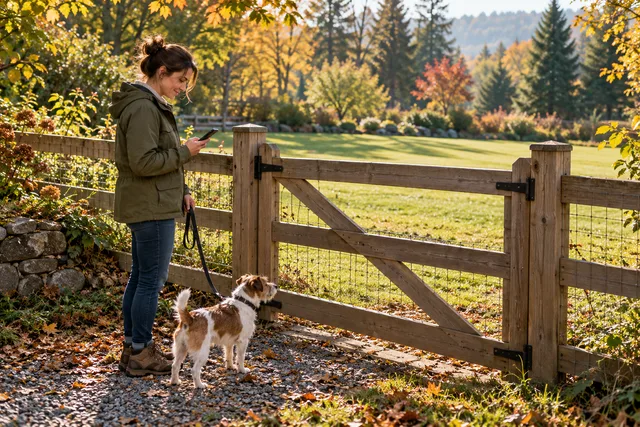
Share the plan with the adult who will actually handle the dog. Divide the arrival tasks before getting out of the vehicle: one person maintains control of the dog while the other checks the route and instructions, if two adults are present. A solo visitor can keep the dog leashed beside them while checking the entrance. No one needs to rush through an unfamiliar gate while searching messages.
5. Pack a small kit that works without promised amenities
Our suggested first-visit kit is deliberately ordinary: a suitable leash, water, a bowl, waste bags, a towel and your phone with the confirmation saved. Bring what you already use comfortably rather than buying a special set for one outing. Pack it so the leash and cleanup supplies are accessible without emptying the whole bag.
Treat listed amenities as details to verify, not reasons to leave every essential at home. If water is advertised, you still need to understand where it is and how you will offer it. If toys are available, you can choose whether to use them after inspecting their condition. You do not need to fill the visit with equipment or introduce unfamiliar activities.
Plan for the people as well. The guest rules say restrooms should not be assumed unless specified. Handle that practical need before arrival, and check whether seating or shelter matters to anyone attending. A towel placed where it can be reached at departure is often more useful than an elaborate bag that remains inaccessible in the vehicle.
6. Set the departure plan before you arrive
Read the current cancellation and modification policy before confirming. It currently allows a full cancellation refund up to two hours before the start and does not allow cancellations within that window. Time or date changes also have a two-hour threshold. Check the current policy directly when making a decision; this article cannot change your booking terms.
Put the confirmed end time in your access card and set a personal reminder earlier enough to gather belongings, leash your dog, clean up and reach the exit. The appropriate packing interval depends on the layout and your household. It is not an extra period of access after the reservation ends.
If you want longer, confirm an available extension through the service before relying on it. An interface allowing a modification request does not mean the next slot belongs to you. Likewise, arriving late does not automatically move the end time. Consider the usable time remaining and make a calm choice rather than trying to recover every lost minute.
7. Check the space before beginning the visit
The official guest rules require leashed entry and exit, keeping the leash available, checking that the area is secure, and not entering an occupied space. They also prohibit early entry and late departure. Follow the confirmed window even if the property appears quiet.
At the entrance, compare what is in front of you with the saved instructions. Check that you have the intended gate, can operate its latch and can identify the permitted area. Look for an unexpected opening or an obvious hazard before allowing the visit to begin. A brief personal check does not certify a property safe, but it can reveal a reason to stop.
If another person or animal occupies the reserved space, keep your dog controlled and do not enter. Use the platform’s communication or support route to clarify the situation from an appropriate place. Do not open additional gates, enter a residence or move someone else’s animals to make the reservation work. A confirmed booking does not remove the need to respond to the actual arrival conditions.
8. Keep the first visit simple and leave the space ready
Once the entry check is complete, use only the agreed area and supervise your dog throughout. For a first visit, our practical suggestion is to learn the layout and let the outing remain uncomplicated. You can enjoy an appropriate part of the space without sampling every feature or treating the booking as a performance goal.
Keep your bag together and note where the exit is from the place you are using. If a nearby distraction or unexpected condition makes continuing unsuitable, you can end the visit early. There is no need to remain simply because time was purchased. This guide cannot determine whether off-leash activity or any particular feature is appropriate for your dog.
Before departure, gather your own belongings, pick up waste and follow the host’s disposal instructions. Return any items you used to their designated places and check that the gate is left as directed. Finish these tasks within the booked period. A useful personal note afterward records concrete observations, such as confusing parking instructions or an accessible water point, rather than claiming every future visitor will have the same experience.
A five-line plan to keep on your phone
You can condense the preparation into five lines without losing the decisions that matter. First, identify the reservation: the actual date, time window and people and dogs attending. Second, identify the entrance: parking, gate and any access instruction. Third, identify the space requirement that led you to choose this listing. Fourth, list the few supplies you will carry. Fifth, write the packing reminder and confirmed departure time.
For example, an access note might say that one adult will keep the dog leashed while the other checks the gate, that the bag contains water and waste bags, and that the group will finish gathering belongings before the end time. Use the actual instructions for your reservation rather than copying an imagined layout from a guide.
Afterward, add one short observation to help you decide about another visit. Separate a fact from a preference: a gate requiring two hands is an observation; finding that awkward with your own bag is a personal judgment. Both can be useful. Keeping them distinct makes your notes more reliable and a later review more informative. You do not need to publish access details or photographs of other people’s private areas to explain what worked for you.
Frequently asked questions
Does a private reservation mean no nearby dogs? No. Read the visible and audible surroundings disclosures. Exclusive use of the booked space and absence of nearby distractions are separate questions.
Should I arrive early to inspect? You can plan your travel sensibly, but do not enter before the booking begins. Keep the inspection inside the confirmed access window and follow parking instructions while waiting.
Can I leave my dog while I run an errand? No. The platform excludes unattended dogs. Arrange a different plan if you cannot supervise the visit.
What if the gate or boundary does not meet my needs? Keep your dog controlled and stop before using the space. Record the specific concern and use the platform’s help process; do not assume an improvised repair or another entrance is authorized.
Is this a substitute for a training appointment? A reserved space is not itself professional instruction. Choose an appropriate professional separately if you need individual guidance, and do not expect the booking to guarantee a behavior change.