How to Recycle Dog Toys Through Join the Loop
Identify toy materials, read Join the Loop’s current acceptance scope, separate exclusions and choose a confirmed collection or mailing route.
Jump to a section
Direct answer: identify, sort, confirm, then send
To recycle dog toys through West Paw’s Join the Loop program, identify the toys and materials, check the current official acceptance information, separate excluded or uncertain items, and choose a confirmed collection or mailing route. Keep a simple count of what you hand over. Do not assume that a rubbery appearance makes every mixed-material toy eligible.
This is an end-of-use recycling workflow, not a recommendation to buy a particular toy or replace a usable one. The official pages checked during preparation describe slightly different scopes, explained below. Work from the current instructions for your items before packing. This guide does not promise a free label, a refund, a replacement toy or a measurable environmental saving from a shipment.
1. Open the official program information first
Start with West Paw’s Join the Loop page and the Recycling section of its official Help Center. Save those links with the date you read them. A retailer description, an old social post or a similar-looking website address should not replace the program owner’s current instructions.
Read the acceptance language before arranging a shipment. You are checking a destination for used material, not simply looking for a recycling symbol on a product page. A toy described as recyclable does not tell you which collection stream accepts it. Likewise, a page explaining how a material is manufactured does not necessarily provide the current return address or the procedure for sending it back.
2. Notice the difference between the two acceptance descriptions
The dedicated Join the Loop page checked here invites returns of used Zogoflex and Seaflex toys. The official Help Center’s Recycling section uses broader language: plastic and rubber-like dog toys. It expressly excludes fabric, tennis balls and rope. These descriptions should be read together, without silently turning either into permission for every possible object.
For an identifiable Zogoflex or Seaflex toy, both descriptions support checking this program as a route. For another brand or an unusual construction, use the broader Help Center wording as a starting point for clarification. Do not claim that every composite, battery-operated or unfamiliar toy is covered. If the difference matters to your item, ask a narrow eligibility question through West Paw’s official contact process before sending it.
3. Identify what is actually in your return pile
Put the candidate items where you can examine them away from pets. Look for a brand name, model name, original packaging or an order record that helps identify the product. Note the material only when you have a reliable basis for it. Color and shape alone are weak evidence of what an object contains.
Your note might say “identified Seaflex toy,” “other-brand solid rubber-like toy,” or “unknown material with fabric attachment.” These are sorting descriptions, not chemical tests. Avoid copying the material description of a similar photograph onto an unknown item. If identification is uncertain, leave it uncertain. A clear question about one item is easier for a program to answer than a box containing an undocumented mix of objects.
4. Separate definite exclusions before doing more work
Keep fabric toys, tennis balls and rope outside the candidate return group because the checked Help Center lists those as exclusions. Do not hide an excluded item among accepted-looking ones or assume that being a dog toy is enough. A donation collection and a materials-recycling collection solve different tasks and may have different acceptance rules.
For an excluded item, investigate a separate appropriate local route rather than assigning it to this program by default. This article does not establish a disposal method for every material. Our donation inventory guide applies only when a recipient actually accepts an item for that purpose; it is not a way to pass on something unsuitable simply because recycling is uncertain.
5. Pause on mixed constructions and electronic parts
A toy may combine a rubber-like body with fabric, rope, a hard insert or an electronic component. The broad material category does not answer whether the complete assembled item is accepted. Record the components you can identify and describe the unresolved part. Do not call the whole object homogeneous because its outside feels flexible.
Do not cut, melt or force apart an item to make it resemble an accepted category. This guide does not provide disassembly instructions or a battery-disposal process. If a toy contains electronics or a battery, obtain the appropriate instructions for that item and destination before shipping anything. The useful next step is clarification, not an experiment with tools at the kitchen table or an assumption that a receiving facility will sort every exception.
6. Decide whether this is recycling or a product-service question
If you also have a question about a defect, a purchase return or a product guarantee, handle that through the relevant official process before assuming the recycling shipment will resolve it. A used-material collection does not automatically create a replacement order or a refund request. Keep the two tasks distinct in your records.
For example, you might need a product photograph or purchase information for a service inquiry. Make that inquiry before sending away the item if retaining it could matter to the process. This is an organizational suggestion, not a statement of guarantee eligibility. Read the actual terms and the reply you receive. Do not promise another household that its recycling package will produce a new toy because a separate marketing page mentions a guarantee.
7. Prepare accepted items using appropriate product directions
Once eligibility is clear, check the product’s own care instructions for any cleaning you intend to do. Do not infer that all collected toys share one washing method. Familiar-looking materials can have different care directions, and this article supplies no universal dishwasher cycle, disinfectant recipe or sterilization requirement.
The program description explains that West Paw processes returned material; that is not a reason to invent preparation instructions for the sender. If an item’s condition creates an unanswered handling question, ask before packing it. Keep the accepted group separate from the uncertain group throughout preparation. There is little value in carefully identifying items and then mixing them together again just before the box is closed.
8. Choose a collection route you have actually confirmed
The checked Help Center describes participating retailers as a collection option as well as mailing. A store selling West Paw products is not automatically confirmed as a collection point. Before taking a bag there, establish whether that specific location currently participates, which items it accepts and whether there are practical handoff instructions.
If you choose to mail, use the current program instructions and a shipping service appropriate to what you are sending. The dedicated program page invites senders to use their preferred shipping method. We have not established a prepaid label or a universal free-shipping arrangement. Consider the available route and its cost before preparing a large box. Do not transfer the shipping terms for new retail purchases onto a used-toy return.
9. Verify the destination instead of copying an old label
At the time checked, the official program information lists 32050 Frontage Rd, Bozeman, MT 59715. Recheck the current page before addressing a parcel and use the recipient wording supplied there. The Help Center labels the destination Join the Loop, while the dedicated page uses West Paw at the same street address.
Copy each address line carefully and confirm it against your chosen current instructions. An old order label may contain your home address, a different facility or information unrelated to recycling. Remove or fully cover obsolete shipping labels on a reused box. This is a practical packing suggestion, not a promise that a parcel will be accepted or processed on a particular date. International senders should clarify applicable arrangements rather than infer worldwide mailing permission from the address alone.
10. Pack to preserve the sorting decision
Use a container appropriate for the items and your shipping provider’s requirements. Before closing it, compare the contents with your accepted-item note. Check that an excluded rope toy, a household object or an unresolved electronic item has not drifted into the same pile during cleanup.
A plain record can include the date, destination route, item descriptions, count and any eligibility clarification. You do not need to include an extensive personal story, private household information or a list of future purchases. If the receiving program supplies specific packing or documentation instructions, follow those. This article’s record format is an optional organizational aid; it does not claim that the program requires a particular inventory sheet.
11. Keep proof of handoff without overstating the result
After mailing, retain whatever receipt or tracking information your chosen service provides. After a confirmed store drop-off, note the location and date. These records tell you what you handed over and when. They do not prove that each item has already been recycled into a new product.
West Paw describes processing returned Zogoflex and Seaflex into material for new toys. This site has not audited a particular shipment, measured recovery rates or calculated the emissions associated with sending it. Use accurate language when telling someone what you did: “sent for recycling” is different from claiming a verified quantity diverted or a measured carbon benefit. Participation records should describe your action, not invent an environmental result.
12. Make the next household sort simpler
Keep a small note of the product identities you established and the source used for each. If another item reaches the same decision point later, you can begin with better identification rather than repeating a visual guess. Still recheck the program’s current instructions, because a saved material note does not guarantee unchanged acceptance rules.
Do not accumulate an open pile where pets can reach items you have set aside. Choose a storage arrangement suited to your household while you resolve questions or arrange a handoff. Recycling is not a reason to return a damaged item to play or buy something unnecessary to fill a package. The aim is a clear, suitable route for items you have already decided to remove from use.
If several household members are helping, give the groups simple names: eligible for the chosen route, excluded from this route, and awaiting clarification. These labels describe the decision status, not the material’s value or environmental merit. Ask everyone to leave uncertain items in the third group rather than guessing to make the table look tidy.
For example, an identified eligible toy and an unfamiliar toy with a textile tail should not receive the same status just because both have flexible bodies. Keep a photograph and a short description of the second item if you need to ask a question. Once you receive an answer, update that one entry and move the item accordingly. A small, accurate return is more useful than a larger mixed parcel assembled around assumptions that no receiving program has confirmed.
Frequently asked questions
Does Join the Loop accept only West Paw toys? The checked dedicated page names Zogoflex and Seaflex, while the official Help Center describes plastic and rubber-like dog toys more broadly. Clarify unfamiliar items instead of assuming all constructions qualify.
Can I include rope or tennis balls? The checked Help Center expressly excludes rope, tennis balls and fabric. Keep them out of this return group.
Will I receive a free replacement? Recycling is not established as a replacement request here. Handle any product-service question through the relevant official process.
Can I use household curbside recycling instead? This program’s acceptance does not establish your municipal rules. Check your local collector for that separate route.
Is postage prepaid? No prepaid-label arrangement was established from the pages checked. Confirm the current instructions and your chosen collection route before paying to send a parcel.
Sources and related reading
The official Join the Loop page and Help Center supply the limited acceptance and delivery information summarized here. The sorting notes, question format and packing sequence are practical suggestions. No independent environmental audit, material testing or universal international return arrangement is claimed.
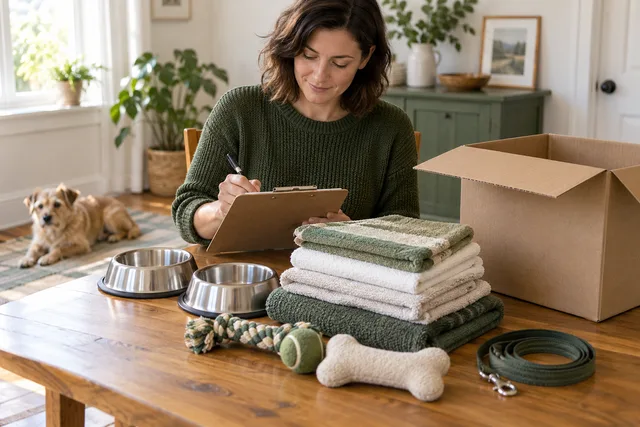
For a separate consumer-information task, see checking dog supplies for recalls. For acceptable donations, use the recipient-specific inventory guide linked above. Neither replaces this recycling program’s current requirements. The cover is an illustrative household sorting scene, not a photograph of West Paw’s facility or proof of processing.