Best Nina Ottosson Dog Brick Review: A Puzzle to Play Together
Assess the blue Dog Brick 67333 for supervised puzzle sessions: moving pieces, setup, cleanup and realistic expectations before buying.

Nina Ottosson Dog Brick Blue / one puzzle / 67333
Consider it for
Owners who want a supervised board game and can manage removable components.
Check before buying
Not a chew toy or unattended activity; capacity wording conflicted in the listing.
Jump to a section
The direct answer: choose it for shared puzzle time
The Nina Ottosson Dog Brick is a sensible shortlist option for an owner who wants to participate in a treat-finding game and manage its moving pieces. Its appeal is the variety of actions within one board. Choose something else if your priority is a chew toy, an item with no removable components, or entertainment you can leave with a dog while you go away.
This review covers the blue Outward Hound Dog Brick, model 67333, US ASIN B0711Y9XTF. The checked offer was one puzzle. It is distinct from the Dog Tornado already covered on this site, rather than another color or size of that product.
We have not tested Dog Brick with a dog or measured its durability. This is a buying assessment based on the maker’s description, a directly checked US listing and the practical work involved in owning a board puzzle. The title does not represent a comparative testing award.
Understand what moves before comparing the price
The manufacturer’s Dog Brick page identifies three treat-hiding arrangements: flip-top compartments, sliding sections and removable bone-shaped covers. Outward Hound labels the game Level 2, or intermediate. It specifies hand washing with soap and water and directs owners to supervise closely, prevent chewing on the game or pieces, remove damaged equipment and store the empty puzzle between sessions.

Nina Ottosson Dog Brick
Blue / one puzzle / 67333
Read customer reviews on Amazon ↗
- Flip, slide and lift treat-finding actions
- Manufacturer Level 2 designation
- Hand wash with soap and water
Consider for: Owners who want a supervised board game and can manage removable components.
Before you choose: Not a chew toy or unattended activity; capacity wording conflicted in the listing.
Product information source · Reviewed 2026-10-07
Check current price, seller and options on Amazon.
Product identity and manufacturer instructions checked; no hands-on testing. Affiliate link.
That description suggests a product to bring out deliberately, set up and put away. It is not simply another object to add to an always-accessible toy basket. For a buyer, the removable pieces are both part of the attraction and part of the responsibility.
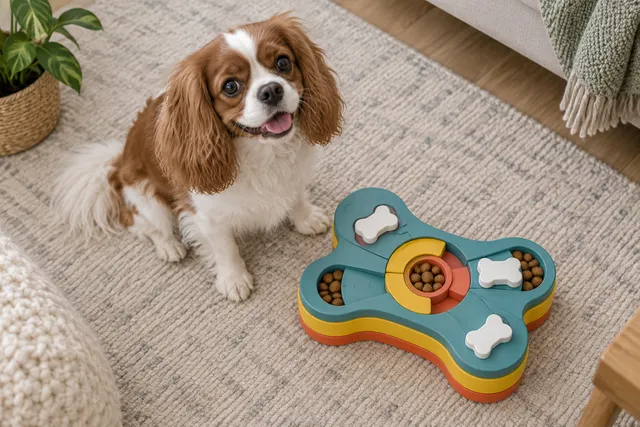
Look at the product image with that ownership sequence in mind. You will need to keep the board and its components together when they are not being used. A household that already has a reliable place for small pet accessories may find this easier than one where toys routinely move between several rooms.
What the intermediate label can and cannot tell you
A difficulty label helps locate a game within a manufacturer’s range. It does not diagnose a dog’s intelligence, establish a training milestone or guarantee a certain number of minutes of interest. Treat it as a description of the intended challenge, then assess the actual setup you will use.
For example, an owner whose dog already enjoys uncovering food may be looking for more than a single hiding action. An owner who has never offered a puzzle might place greater value on being able to understand and demonstrate the board. Both should read the supplied directions before deciding how to introduce it.
Do not buy a more complicated-looking item just because it seems like better value. The useful question is whether the activity remains enjoyable and manageable in your home. Having more things to move can mean more options for play, but it can also mean more preparation and more pieces to account for afterward.
If the level terminology is your main reason for choosing Dog Brick, compare the described actions with your dog’s existing experience. A number alone is not enough information to make that decision.
Budget for attention as well as money
The owner’s attention is a real part of this purchase. Before ordering, identify when you would use the puzzle: perhaps during a short quiet period when you can sit nearby. If the only available time is when you are leaving for work, this format does not match the routine you are planning.
A useful trial question for yourself is, “Would I willingly set this up and clear it away on an ordinary weekday?” Consider the entire sequence, including finding the components, preparing an appropriate food portion, watching the activity and cleaning afterward. The interesting part in a listing is only one part of that sequence.
There is no need to plan an elaborate schedule or buy several games at once. Start by deciding whether one board solves a specific need. If your existing supervised activity already works well, adding a puzzle is optional rather than a requirement for responsible ownership.
Our buying judgment favors a clear, repeatable use case over a general promise that the dog will somehow be busier.
Removable pieces change the practical fit
Some buyers will like being able to handle separate covers; others will prefer equipment with fewer loose items. Neither preference is trivial. A missing component can disrupt the next setup, while loose pieces left around the room create an avoidable housekeeping problem.
Plan a storage spot that holds the entire game together and keeps it away from unsupervised access. A shelf or a suitable closed container may be more practical than a mixed basket. Use the supplied contents information when checking what arrived, rather than guessing a piece count from a promotional photograph.
After a session, account for the components before moving on to another task. If something is missing, do not simply assume it is under the sofa and leave the remaining pieces scattered. Locate it and inspect the set before deciding whether it is ready for another use.
This is an organizational recommendation, not evidence that we have tested the parts against loss or breakage. If handling and tracking components sounds burdensome, that is a valid reason to choose a different format before spending money.
Choose a place where you can observe the whole board
Think about the space around the game, not just whether the board fits on the floor. You should be able to see what the dog is doing and reach the area comfortably. Avoid making the first setup in a busy passage where people are stepping around the activity.
We have not tested Dog Brick’s grip on tile, wood, rugs or other surfaces. Do not interpret the product photograph as proof that it will stay still on your floor. Read the directions, observe the actual setup and stop if it is not manageable. An improvised attachment or modification is not something this review recommends.
In a household with several animals, plan access deliberately rather than assuming everyone will share one food puzzle comfortably. The point of the purchase is a controlled activity, and a crowded setup may make it harder for you to observe each participant.
Put preparation supplies within your own reach before starting. Being organized lets you focus on the activity instead of repeatedly walking away to find an item.
Food quantities and performance claims need caution
The Amazon material we checked contained inconsistent capacity wording: one promotional presentation referred to one and a half cups, while the product bullets referred to three quarters of a cup. We have not reconciled those figures, so this review does not use a capacity claim as a reason to buy or recommend the board as a complete meal container.
Instead, plan around an appropriate amount of food for your dog under its existing feeding guidance. Buying a puzzle does not create a reason to add extra food or switch ingredients. Questions about a restricted diet or individual suitability belong with your veterinary team.
We also do not adopt a listing’s claim that a stated number of minutes of mental activity equals a different number of minutes of physical activity. No evidence was established here for that conversion. A game should not be bought on the assumption that it replaces a specific exercise requirement.
Similarly, this assessment makes no promise to treat anxiety, prevent destructive behavior or produce a measurable cognitive benefit. Those outcomes were not tested.
Evaluate cleanup before committing to regular use
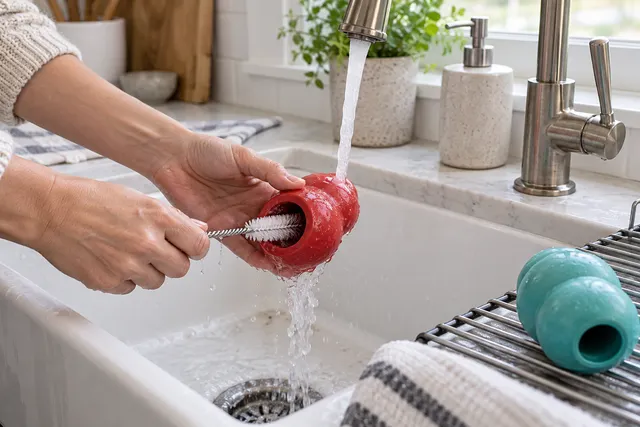
The maker’s hand-wash instruction is a meaningful ownership detail. If your preference is to put every food-contact item through a dishwasher, do not assume this product fits that routine. Follow the current directions supplied with it rather than transferring care instructions from a different puzzle.
Before washing, separate the task into checking for leftover food, following the prescribed cleaning method and confirming that the set is ready to store. Keep removable parts together while doing this. A designated washing area can make it easier to notice when a component has been left behind.
We have not measured cleaning time, tested dried-on foods or checked how quickly every recess dries. Those limits matter because two owners may create very different cleanup workloads with the same board. Choose preparation methods only within the product directions and the food guidance relevant to your dog.
If cleanup regularly discourages you from using a product, it is not providing much value. A simpler setup that you maintain consistently can be the more practical purchase for your household.
Compare it with a different mechanism, not another color
The existing Dog Tornado review provides a separate product comparison point. When reading it, focus on the type of movement, your role during play and the work afterward. Do not assume that two items with the same difficulty label provide an identical experience.
For a new puzzle user, our introduction guide offers a broader observation-led framework. That guide does not establish that Dog Brick is the correct purchase. It helps you think about the activity before committing to a particular board.
A useful comparison sheet has four lines: what action the game asks for, what the owner must manage, how the equipment is cleaned, and where it is stored. Complete those lines for each candidate using its own directions. Leave an unanswered question visible rather than filling it with assumptions.
Price belongs after those questions. A discounted board that does not suit the household is still an unnecessary purchase, while a well-used item need not have the longest list of features.
Check the offer and the delivered item
At checkout, match the Dog Brick name with model 67333 and the selected offer. The reference listing here is blue and sold as one count. Different marketplace pages can display recommendations or bundles beside the item, so make sure you know what your actual order contains.
Check the seller and current return conditions yourself. This article does not preserve a price, discount percentage or customer star rating as a recommendation. Those details can change, and a favorable number does not resolve questions about supervision or component management.
When the item arrives, compare the received contents with its own packaging and instructions. Keep the order record until you know whether everything is present and the product is suitable. If the item appears damaged or incomplete, resolve that with the seller or manufacturer before treating it as ready for use.
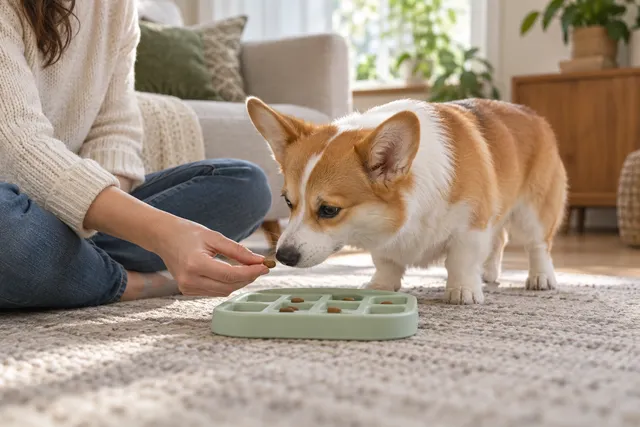
The product module shows the initial image from the verified listing. The cover is a separate illustrative owner-and-dog scene and does not depict a testing session.
Frequently asked questions
Is Dog Brick a chew toy?
No. The manufacturer specifically says not to let a dog chew the game or its pieces. It is intended for supervised puzzle use. If your purchasing priority is an object for chewing, assess a product intended for that job instead.
Does Level 2 mean my dog must pass a test first?
No formal test was established in the material checked for this review. Read the described actions and the supplied instructions. The label is a guide to the product’s intended challenge, not a score for your dog.
Can I rely on it for a whole meal?
We do not make that recommendation. Capacity wording in the checked listing conflicted, and we have not measured the board. Plan any food use around the dog’s existing feeding guidance and verified product instructions.
How long will it keep a dog occupied?
We have no measured duration. A household’s useful outcome might be an enjoyable brief activity, not a long session. Do not buy on a promise that every dog will remain interested for the same amount of time.
What would make you skip it?
Skip it if you need unattended use, dislike managing loose components, or cannot accommodate the prescribed cleaning routine. Those are practical mismatches that an attractive price does not fix.
Sources and buying judgment
Identity and product-image checks were completed on October 7, 2026 against the US listing for B0711Y9XTF. The official Dog Brick page supplied the mechanism and care information. We did not turn customer comments or promotional health claims into testing evidence.
Shortlist Dog Brick for a deliberately supervised activity with room for setup and cleanup. Resolve component, care and food-use questions first. The strongest reason to choose it is a good match between its moving-part format and a routine you actually want to maintain.