Best for a Walking-Bag Marker? Nite Ize SpotLit Rechargeable Review
A source-based assessment of the white SpotLit rechargeable clip light: placement, charging, weather limits and the difference between a marker and a path light.

Nite Ize SpotLit Rechargeable Carabiner Light White / one light / SLGSR-02-R6
Consider it for
Owners who want a small supplementary marker on suitable walking equipment.
Check before buying
Not a tracker or restraint connector; no immersion rating or visibility distance verified.
Jump to a section
Direct answer: consider it as a small supplementary marker
The Nite Ize SpotLit Rechargeable Carabiner Light is worth considering when you want a small light that moves easily between a walking bag, keys, and a suitable collar attachment point. Its strongest use case is making a particular item easier to notice in dim surroundings. Choose something else if your main need is illuminating the path ahead, locating a missing dog remotely, or avoiding a charging routine.
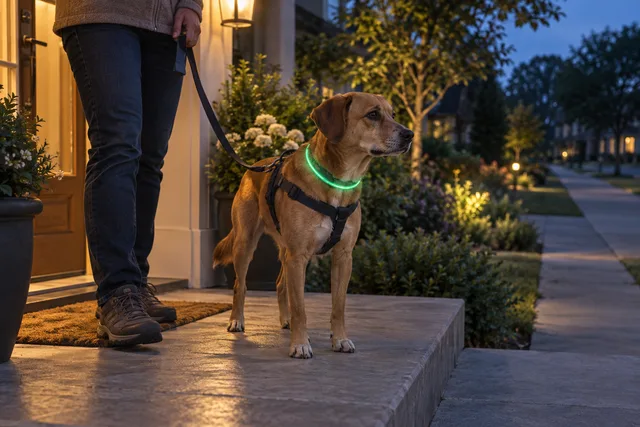
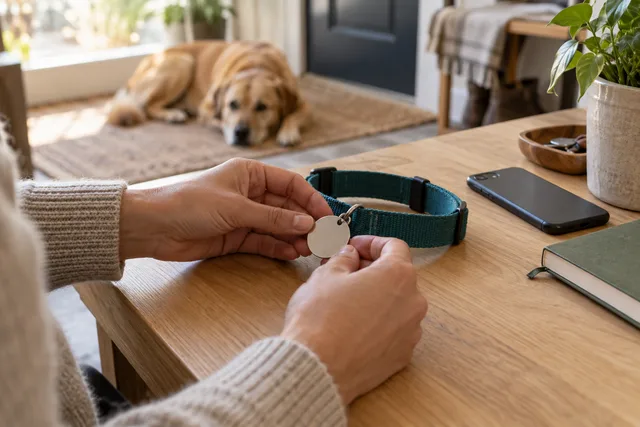
This source-based review covers the white rechargeable model SLGSR-02-R6, verified on the US listing under ASIN B0DVV58RSF. We have not physically tested brightness, viewing distance, battery endurance, or the clip under load. The lifestyle cover is an illustration; the product module shows the verified initial listing image. Treat the light as an addition to your ordinary walking equipment, with no promise that a driver or another pedestrian will always notice it.
Identify the rechargeable model before comparing offers
SpotLit is a family name that appears on several listings. For this assessment, the manufacturer’s model code and the selected retailer’s model code match. That is more dependable than assuming that every search result with the same first word has the same power source or controls. The buying button points to the white rechargeable carabiner light described here.
Keep the model code with your purchase record. When a retailer displays other colors, packs, or similarly named lights, check what you actually selected before ordering. A different photograph does not establish a different function, and a shared family name does not establish matching battery instructions. We do not create separate recommendations for minor listing changes.
The current selection has a stainless steel clip, button control, and steady or flashing white light. Manufacturer figures are up to 3.5 hours per charge and approximately two hours to recharge using micro-USB; the cable is not included. Those are published specifications, not measurements from our own walk.
Decide what you want the light to help you notice
A light on a zipper pull and a light on a collar solve different placement problems. On a bag, it can mark the bag’s location when you set it down. On keys, it can make that small group of items more conspicuous. On a dog, its usefulness depends on whether the attachment remains visible as the dog changes direction.
Start with the actual problem. If you struggle to find a dark walking bag near the door, a marker attached to that bag is a straightforward arrangement. If you need to see uneven pavement, compare dedicated walking lights instead. A visible point of light is not the same thing as a controlled beam aimed at the ground.
The product is not a GPS tracker or a substitute for identification. There is no remote-location function established for this selection. Keeping that distinction clear prevents a small lighting accessory from being assigned a job it cannot perform. Your decision should be about an ordinary, nearby visibility task rather than an imagined recovery system.
Placement matters as much as the light itself
Before choosing a collar attachment point, look at what already occupies the available ring. Tags, a leash clip, and an added accessory can compete for space. Keep the leash connected to the attachment intended for restraint; do not route it through the light’s carabiner. The accessory is not being recommended as load-bearing walking hardware.
Check whether the light can hang without interfering with the collar buckle or resting where the dog repeatedly mouths it. A small accessory that dangles freely may work differently on a large dog and a small dog. Hair, clothing, and the direction of travel can obscure a light even when it is switched on.
A bag loop may be the simpler placement if collar attachment is awkward. That changes what the light marks, but it can still match the owner’s intended use. There is no requirement to place every pet-related accessory directly on the dog. Choose a location you can inspect and operate without interrupting leash control.
A short home trial can reveal everyday annoyances
Try the arrangement at home before relying on it during a walk. With the dog calm and supervised, check that the clip closes fully and that the light does not crowd other hardware. Observe how it moves as the dog stands, turns, and lowers the head. Remove it if the dog persistently tries to mouth it or the attachment interferes with normal equipment.
Then have another adult look from several ordinary positions while you maintain control of the dog. The purpose is to notice obvious obstructions, not to certify a maximum visible distance. Looking straight at a stationary light from one angle says little about a moving dog partly screened by a coat or hedge.
Include your own comfort in that trial. A light that repeatedly taps a tag, catches a pocket, or needs fiddly repositioning can become an accessory you leave behind. If the problem is placement, adjust placement. If it is the overall hanging format, a different format may suit the routine better. Do not infer broad performance from a single successful glance.
Charging convenience depends on the rest of your kit
The charging connection deserves attention before purchase. Many households now organize their portable equipment around a different connector, so check whether you already have a suitable cable. An inexpensive accessory can still create friction if its charging lead is missing whenever you need it. Keep a compatible lead in a consistent place rather than assuming another device’s cable fits.
Use the manufacturer’s charging directions and the cable connection intended for the product. Do not force a connector into the port. Charge the removed accessory in an appropriate dry location where the dog cannot reach the lead or chew the light. The published full-charge indicator changes from red to green, which provides a simple completion cue.
Plan around your actual sequence of walks. A published runtime is not a guarantee that a partly charged unit will last through several outings. Check operation before leaving, and recharge as your routine requires. We cannot predict cold-weather endurance, aging-battery behavior, or the relative endurance of each mode because those conditions were not tested here.
Weather resistance has a narrower meaning than waterproofing
Nite Ize describes the body as weather resistant. The source reviewed does not give this model a verified immersion rating. That leaves an important boundary: this assessment does not recommend it for underwater use or assume it will tolerate every wet activity. Do not borrow a waterproof claim from another SpotLit product simply because the names are similar.
After a damp outing, inspect the accessory and follow its supplied care directions before charging. Keep the charging connection free of obvious dirt and moisture. This review does not specify an unverified washing method, detergent, or soaking time. If the instructions are missing, obtain the correct instructions for the model rather than applying another light’s care routine.
Also inspect the clip and housing for damage. A marker that no longer attaches securely is not made reliable by still lighting up. Keep a damaged unit out of the walking kit until it has been properly assessed or replaced. We have no evidence to assign a universal service life or replacement interval.
Steady light and flashing light are practical choices
Having two illumination modes gives you a choice about how the marker appears. Consider the environment and the people around you when selecting a mode. A flashing point close to someone’s face can be distracting, while an unobtrusive location on a bag may be easier to live with. There is no measured comparison here establishing that one mode is universally more effective.
Before departure, check the selected mode in the setting where you will use it. A bright indoor room may make it harder to judge whether you have chosen the behavior you intended. Operate the button while stationary rather than looking down and changing settings in the middle of a busy crossing.
The accessory does not remove the need to pay attention to traffic, leash handling, or the surface ahead. Avoid making an entire evening routine depend on a single small device. If the light stops working, you should still have a sensible way to finish the outing. That is a planning consideration, not evidence of a particular failure rate.
Compare formats without treating them as interchangeable
Our NiteHowl review covers a necklace-style light, while this review examines a hanging clip format. Those shapes create different placement decisions. A separate necklace occupies space around the neck; a clip needs a suitable attachment point. Neither format should automatically be called better without considering the dog’s existing equipment and the owner’s intended use.
A reflective accessory is another different category. It relies on incoming light rather than the same operating arrangement as an active light. A dedicated flashlight addresses yet another task: helping its user see an area or path. You may have reasons to combine equipment, but purchasing several items is not automatically a better answer than identifying the missing function.
For a practical comparison, write down where the accessory would attach, how you would power it, and what you want to see. Reject options that fail one of those basic requirements. That approach is more useful than ranking unrelated products by appearance or assuming a higher price establishes a longer visible distance.
What to check when the package arrives
Confirm the model on the packaging matches the offer you selected. Inspect the housing, clip, and charging connection without dismantling the unit. Keep the packaging and purchase details until you have checked normal operation. If the contents or model differ, resolve that mismatch with the seller rather than inventing an explanation from a similar product page.
Check the instructions for the exact model before your first charge and use. This review does not reproduce battery replacement steps from older or different SpotLit versions. Rechargeable and replaceable-battery products should not be treated as interchangeable during maintenance. Do not pry open this selection based on a video or diagram for another model.
Finally, decide where the light belongs between outings. A small designated tray near the walking bag can make its absence obvious. If it moves between keys and a bag, remember which location you selected before leaving. The portability is useful, but a consistent routine prevents a useful accessory from becoming another misplaced object.
Frequently asked questions
Is this the color-changing SpotLit XL?
No. The verified selection is the white rechargeable carabiner model SLGSR-02-R6. This article does not transfer XL specifications, color behavior, or charging details to it.
Is a charging cable included?
The manufacturer says the micro-USB cable is not included. Check whether you already have the correct lead and review the selected offer if a retailer advertises a bundle.
Can the clip hold a leash connection?
Do not use the light as restraint hardware. Connect the leash to the appropriate attachment on the collar or harness and keep this accessory separate from that load path.
Will it help me find a lost dog remotely?
No remote tracking function is established. It is a light, not a location transmitter. Continue to use appropriate identification and ordinary control of your dog.
Can it be used for swimming?
This model is described as weather resistant. We did not verify an immersion rating and do not recommend treating that wording as a swimming specification.
Does this review include a visibility-distance test?
No. There are no measured distance, beam, clip-load, or runtime results here. The buying assessment separates published features from the practical checks an owner can make.
Verdict and sources
The SpotLit Rechargeable is most convincing as a transferable marker for an owner who has a clear attachment point and a workable charging habit. It is a less convincing choice when the underlying need is a path light, tracking device, or equipment requiring proven immersion performance. Choose the function first and the accessory second.
The Nite Ize product page supplies the model and published operating specifications. The US listing linked below establishes the selected product identity and initial product photograph. Details were checked on October 8, 2026; no price, rating, or customer-test claim is used as evidence.
For another lighting format, read the NiteHowl review. Our guides to organizing walking supplies and updating dog identification cover the surrounding routine.
Product details

Nite Ize SpotLit Rechargeable Carabiner Light
White / one light / SLGSR-02-R6
Read customer reviews on Amazon ↗
- Steady white glow and flash modes
- Stainless steel attachment clip
- Micro-USB charging; cable not included
Consider for: Owners who want a small supplementary marker on suitable walking equipment.
Before you choose: Not a tracker or restraint connector; no immersion rating or visibility distance verified.
Product information source · Reviewed 2026-10-08
Check current price, seller and options on Amazon.
Manufacturer and selected US listing checked; no hands-on testing. Affiliate link.