How to Plan a Farmers Market Visit with a Dog
Build a practical market shopping plan around pet boundaries, food stalls, handler responsibilities and an alternative when access does not fit.
Jump to a section
Quick answer
Plan a farmers market visit with a dog around the exact operator’s pet policy, the areas you can actually enter and the shopping tasks you need to complete. Check permission before departure, distinguish shopper paths from vendor spaces, and decide who will hold the leash while someone selects produce or pays. A market described as pet-friendly may still have indoor or stall boundaries that change your route.
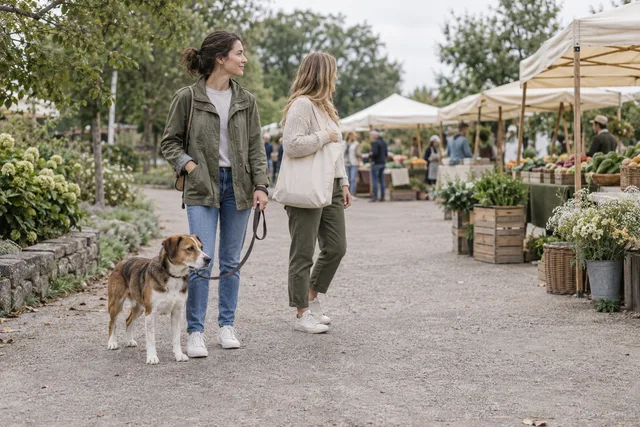
Make the visit optional. If your shopping requires entering an area where pets cannot go, arrange a permitted alternative or shop without the dog. This guide is a planning worksheet for pet owners, not a legal access determination, behavior-training program or recommendation that every dog should attend. The pictured market scene is illustrative, not a photograph of one of the operators discussed below.
Start with the exact market and visit date
Write down the market’s name, operator, location and date before searching for its pet information. Several events may use the same neighborhood name, and a permanent food hall may sit beside a weekend outdoor market. A favorable description of one part of the site does not establish access to every adjacent business or event.
Use the operator’s official visitor page or FAQ as your starting point. Keep the page address and the date you checked it in a short visit note. Look for announcements affecting the event you plan to attend. An old photograph of dogs beside a stall, a vendor selling pet products or a listing on a travel directory does not answer the operator-specific permission question. If the official wording leaves an essential part unclear, seek clarification before committing to the outing.
Read permission together with its boundaries
Permission is more useful when it tells you where a pet may remain. Read the surrounding conditions rather than saving only the word yes. Your note should distinguish public shopper walkways, spaces immediately around food displays, outdoor patios and indoor buildings. Where the page does not identify a boundary, keep that point unresolved instead of drawing your own exception.
For a concrete example, Portland Farmers Market’s FAQ permits pets at its five markets with conditions including a short leash, owner control and cleanup. It separates shopper walkways from vendor booths, which pets must stay away from. This is that operator’s policy, not a universal market rule. It illustrates why knowing the allowed walking area matters as much as knowing whether pets are admitted.
An outdoor welcome may stop at an indoor door
Dallas Farmers Market’s FAQ welcomes leashed dogs in the outdoor patio areas of The Market and The Shed, while excluding pets from inside The Market Building. It also asks owners to clean up and be considerate. Those are venue-specific distinctions, not instructions for every market in Texas or elsewhere.
Use this example to test your own itinerary. If your intended purchase, meal or other stop is indoors, verify that area separately. A website’s broad pet-friendly label should not become a plan to enter a restricted building. Mark the door or section where your route would have to change. You can then choose a different shopping arrangement before arrival, rather than discovering the conflict while holding a leash and a full basket.
Decide whether this shopping trip suits the dog
Admission is only one planning question. Seattle Neighborhood Farmers Markets’ FAQ allows dogs at its markets but emphasizes crowding, children, strollers and food smells. It asks owners to consider whether a pet can behave appropriately in that setting, keep dogs close on leash and away from food and other shoppers, and leave if behavior requires it.
Treat that as a prompt to assess the outing, not as a training prescription. Compare the actual task with what you already know about your dog’s ordinary outings. A long shopping list, multiple queues or a need to examine delicate items may require more divided attention than a short walk past the perimeter. You do not have to include the dog simply because the policy permits attendance. Permission creates an option; it does not establish that this particular visit is worthwhile for your household.
Turn the shopping list into a route
Group your list by the places where purchases must happen. A produce stall, an indoor counter and an information booth may require different access arrangements. Put the essential purchases first and identify any that cannot be completed while a dog remains in a permitted space. Keep speculative stops separate from tasks you must finish.
A simple route record can say: arrival point, information location, first purchase, second purchase and departure. Beside each stop, write the pet boundary you verified and the adult responsible for the leash. This is an organizational suggestion, not a surveyed map or a claim about walking distances. If you cannot make the route work without crossing an uncertain boundary, simplify the visit or choose a dog-free shopping trip. Do not solve a missing access answer by assuming that a short stay inside will be acceptable.
Assign the leash and purchase tasks before you arrive
Shopping involves reaching for items, discussing an order, paying and carrying purchases. Decide how those tasks will happen while the dog remains with an attentive handler. If two adults attend, one can handle the shopping while the other remains with the dog in an allowed place. Agree where you will reunite without relying on a meeting point beside a food display.
If you attend alone, consider whether your planned transactions are practical with the dog beside you. A smaller list or a different shopping arrangement may be easier to organize. This guide does not recommend tying the dog outside a shop, passing the leash to an unprepared stranger or asking a vendor to provide care. The plan should identify a real person and a permitted location, rather than turning a stallholder or a doorway into an improvised holding arrangement.
Pack for the visit you have actually planned
Choose a manageable bag for the ordinary supplies you already use on outings, including waste bags and your established water arrangement. Leave space for purchases, or assign a separate shopping bag to the person making them. Keep the leash and cleanup supplies accessible rather than underneath produce or payment items.
There is no required product purchase in this guide. A longer equipment list does not solve an access problem or guarantee comfortable attendance. Avoid adding unfamiliar equipment solely for this trip without understanding its directions and fit. If the operator specifies a leash condition, check how your existing setup meets that condition before departure. This planning step does not replace product instructions, individualized care guidance or a handler’s decision to leave the dog at home.
Keep food displays outside the dog route
The distinction between a walkway and a vendor space should remain visible while you shop. Choose a waiting position that respects the operator’s stated boundaries and leaves room for other customers. A vendor’s invitation to look at an item does not necessarily answer the market-wide pet question. Keep the dog and your shopping movement organized around the allowed area.
Do not assume that samples, dropped produce or food sold for people are appropriate dog treats. This article makes no feeding recommendations and does not assess ingredients. The useful task is to avoid making an unplanned food interaction part of the outing. If you need to reach an item beyond the place where the dog may stand, use your agreed shopping arrangement or leave that purchase for another visit. A clear boundary is easier to respect when the purchase plan accounts for it.
Check the arrival signs before entering the shopping area
At arrival, compare the current signs and site layout with your saved note. Identify the information point without moving into a restricted space. If a boundary has changed or the event looks different from the description, pause and obtain the relevant clarification. Staff can explain an operator’s current arrangements; a photograph from a previous season cannot.
Keep the question specific: does the published pet permission apply to today’s event, and where may a pet remain while a purchase is made? You are seeking a usable route, not a debate about whether another visitor brought a dog. Do not treat someone else’s entry as proof of permission. If the answer prevents your planned shopping, use the alternative you arranged or return without the dog. A changed plan is an ordinary outcome, not a failed outing that must be rescued by finding a loophole.
Build a departure option into the plan
Decide in advance which purchases can be abandoned or postponed. That removes pressure to complete the entire list if the route, crowding or operator’s instructions make the visit impractical. Keep a departure path in mind when selecting a waiting place, without claiming that any location is guaranteed to remain clear.
A simple agreement between companions might be that the handler leaves the shopping area with the dog while the shopper finishes only an essential transaction, then both reunite at their previously identified permitted point. If that arrangement is unavailable, leave together and finish shopping another way. This guide does not diagnose discomfort or teach corrective handling. Its narrower purpose is to make ending the visit possible without an argument, a missing caregiver or a shopping list that overrides the decision to depart.
Use a short visit worksheet
Create one note with seven fields: market and operator; visit date; official pet-policy link; allowed areas; excluded areas; shopping and leash responsibilities; alternative plan. Fill each field with a verified answer or the word unresolved. An unresolved entry is useful because it shows what still prevents a workable itinerary.
For example, a generic note could record an outdoor shopper path as confirmed, an indoor food hall as excluded, one adult as handler and the other as purchaser, and a dog-free return trip as the alternative. This is a fictional planning example, not a description of a real market. Add the exact wording that matters to your own event. Avoid copying a different operator’s conditions into an empty field merely because that market’s FAQ is easier to find.
Keep the next visit separate from this one
Afterward, note which arrangements worked and which purchases needed a different approach. Record practical facts such as an unresolved indoor boundary or a meeting point that did not suit the actual layout. Do not turn one successful visit into a blanket endorsement for every weekend, location or dog.
For a later visit, reuse your worksheet structure while checking the current event information. You can keep familiar supplies and responsibilities without assuming that permission or boundaries remain identical. The goal is a clear shopping decision with a realistic alternative, not a record that proves your dog must attend. A market visit without the dog may be the most useful version when you need to concentrate on the purchases.
Frequently asked questions
Does pet-friendly mean dogs can enter every stall or building? Check the operator’s boundaries. The examples above show why shopper paths, vendor spaces and indoor areas need separate attention. The phrase alone does not describe a complete route.
Can I use a different market’s FAQ as permission? No. It can show what questions to ask, but the decision needs the policy for your exact operator and event. Save that source with your visit note.
What if I cannot shop and supervise at the same time? Change the shopping arrangement, reduce the task or attend without the dog. The plan should not depend on an unknown person providing care.
Is this a guide to service-animal access rights? No. It addresses optional outings with pets and does not determine legal rights or exceptions. For an access question, use the relevant official information for that situation.
Do I need a new leash or special market bag? No purchase is recommended here. Use suitable existing supplies according to their directions and the verified event conditions. Equipment cannot substitute for permission or a workable itinerary.
Sources and related reading
The linked FAQs from Seattle Neighborhood Farmers Markets, Portland Farmers Market and Dallas Farmers Market were checked for limited operator-specific examples. The route worksheet, division of shopping tasks and alternative-plan format are original organizational suggestions. No nationwide rule, on-site inspection, behavior result or legal exception is claimed.
For different outings, read checking dog park rules and checking trail rules. For preparing the ordinary items you keep ready, see organizing dog walking supplies. Those guides address separate tasks and do not establish permission at a food market.