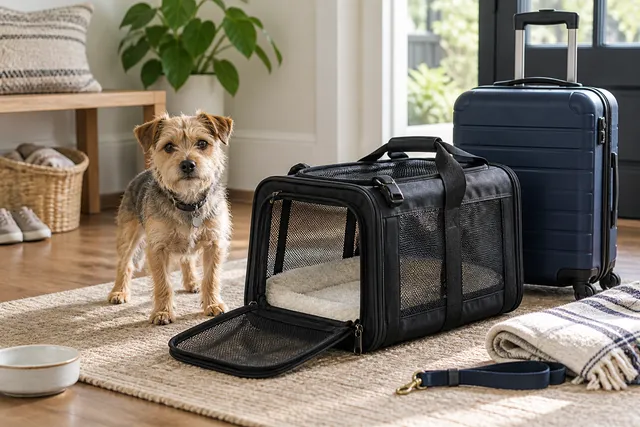
How to Size a Soft Dog Carrier: Fit and Travel Questions Answered
Check your dog’s measurements, the carrier’s usable space and the requirements of your journey separately. A weight limit or airline-friendly label is only part of the decision.
Jump to a section
How do you choose the right size soft dog carrier?
Use your dog’s current measurements, the exact carrier’s sizing instructions and its maximum weight limit together. Then check the usable space in the fully assembled carrier. If you plan to fly, compare the same carrier with the operating airline’s requirements for every part of your journey.
A bag can meet a published weight limit while still being unsuitable for a particular dog’s shape. It can also fit the dog but fail a travel requirement. Keep those decisions separate so that a reassuring product description does not hide an unanswered question.
This is a purchasing and measurement guide for soft carriers. It does not certify a product for an itinerary, prescribe a confinement duration or establish vehicle crash protection. The aim is to make your next conversation with a manufacturer or travel operator specific and useful.
What should you record about your dog first?
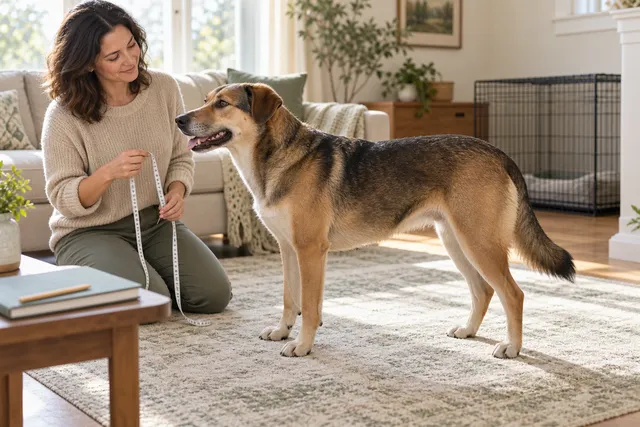
Start with the measurement points specified by the carrier manufacturer. Record your dog’s actual readings, the date and the units, and keep any recommended allowances separate. Avoid transferring a formula from a wire-crate guide unless the carrier maker explicitly uses that method.
Use a calm moment when your dog can stand naturally. A second person can write down the results while you observe posture and endpoints. If the dog crouches, twists or walks away, pause rather than treating an awkward reading as reliable.
Record current weight as another piece of information. Do not estimate it from an old veterinary visit if the dog has grown or changed since then. If you cannot obtain a reliable reading, arrange help before choosing a product close to its stated limit.
A short note on normal posture can help you formulate questions, but it is not a substitute for the maker’s fit instructions. The final assessment should concern the individual dog rather than the breed pictured on the packaging.
Why should measurements come before the weight limit?
Sherpa’s Original Deluxe product page instructs shoppers to choose using pet measurements followed by weight, remain within the maximum weight limit and leave room for changing position. That is a useful reminder that a weight ceiling does not describe the entire fit.
Think of the weight figure as one condition that must be satisfied, not a promise that every dog below it belongs in that size. If the measurements and weight guidance seem inconsistent for your dog, ask the manufacturer how to interpret them.
Do not use the carrier’s soft construction as a reason to overlook the mismatch. A flexible panel does not create a documented increase in usable space or an exception to a published limit.
When comparing products, place the weight limit beside the interior measurements in your notes. Keeping them on the same row makes it harder to accidentally select a bag based on only the most convenient number.
Which carrier dimensions matter?
Separate exterior length, width and height from the space your dog can actually use. The exterior matters for storage and transport constraints. The interior matters for the animal. A listing may give one set of measurements without clearly identifying the other.
Look for a diagram that labels each dimension. Confirm whether the figures describe the assembled bag with its liner installed, a folded item or packaging. If the answer is unclear, leave a question mark in the comparison rather than estimating from product photographs.
Soft carriers can have sloped ends and rounded corners. A simple rectangular headline measurement may not explain the shape around the dog’s head or shoulders. Ask about usable room where that distinction matters.
Make the comparison with the intended base and liner in place. Removing essential support or compressing the bag around the animal is not a reliable way to make an unsuitable size pass a check.
What should a fit checklist contain?
| Check | Information to collect | Question it answers |
|---|---|---|
| Dog | Current measurements and weight | Which size should be considered? |
| Carrier | Exact model, size and configuration | Which instructions apply? |
| Interior | Usable space with liner installed | Can the dog use the bag as intended? |
| Exterior | Assembled length, width and height | Does it meet the journey’s limits? |
| Access | Openings, handles and closures | Can you operate it comfortably? |
| Travel | Current operator requirements | What else needs confirmation? |
Keep the worksheet with links to the current instructions. If another family member finishes the purchase, they should be able to identify the exact selection and the unresolved questions without reconstructing your search history.
How do the openings affect everyday use?
An opening’s position can change how you handle the carrier even when two bags have similar overall dimensions. Consider whether you need access from above, from an end or from both directions. Read the instructions for the actual product before deciding how you will use it.
Sherpa lists top and side entry on the Original Deluxe. Our review of the Black Medium version looks at that specific selection. Those features should not be assumed for every product carrying the same brand name.
Imagine the place where you will prepare the bag: a hallway, a waiting area or a room at home. Can you reach the closures without placing the carrier in an awkward position? Is there room to check all of them before moving?
For the first inspection, work with the bag empty. Familiarize yourself with its openings and support parts according to the manual before asking the dog to approach. This avoids discovering an unfamiliar closure while you are already managing the animal.
Does airline-friendly wording guarantee acceptance?
No. Confirm the operating airline’s current rules for your particular trip. A product page does not determine available space on every aircraft, pet reservation availability or the other conditions of travel.
Delta’s current guidance is one example: it asks travelers to have carrier dimensions available when booking a pet and explains that under-seat requirements depend on the aircraft. Treat that as a reason to verify your own journey, not as approval of a bag mentioned here.
Write the flight details beside the carrier’s exterior measurements. For connections, note each operating airline rather than only the company shown most prominently on the booking confirmation. Keep the information organized so that you can ask the right operator the right question.
If the flight changes, revisit the requirements. A previous journey in the same bag or a favorable owner review is useful background, but neither establishes acceptance on a different trip.
What should you ask the airline before ordering?
Prepare a short, factual description: the carrier model, its assembled dimensions, your dog’s measurements and the intended flights. This is more useful than asking whether a medium bag is allowed.
Ask which current carrier and pet requirements apply to the operating aircraft and seating arrangement. Confirm how a pet reservation is handled and where to find the complete requirements for the route. Keep the response and the source page with your travel records.
Do not reduce the discussion to bag size if other conditions remain unanswered. Health, documentation and destination requirements need their own review; this article deliberately does not turn a carrier worksheet into a complete travel checklist.
Build in time to inspect the delivered item. Ordering at the last moment leaves fewer options if the box contains a different version, the fit is unsuitable or the operator clarifies a requirement you had misunderstood.
How can you compare two shortlisted carriers?
Use a separate column for each exact model and size. Put confirmed details in the table and leave uncertain ones blank. A blank field is a useful prompt for follow-up, not a reason to copy a figure from a similar-looking listing.
After checking fit requirements, compare the practical differences: how the bag opens, where the handles sit, whether the liner can be removed and how the empty carrier is stored. Decide which of those details addresses a real need in your routine.
Keep claims in proportion to their evidence. A comfortable-looking shoulder pad is a design feature; it does not establish that you can comfortably carry your dog for a particular distance. Consider your own handling needs without inventing a tested limit.
If neither option has the information needed for a confident fit decision, widen the shortlist. Choosing between two incompletely documented products is not necessary simply because they appeared first in a search.
What should you check when the carrier arrives?
Compare the label with the exact model and size you researched. Check the included components against the instructions, and inspect the bag before use. If something is missing or damaged, resolve it with the seller or manufacturer.
Assemble the carrier as directed and confirm the measurements in that state. Check the liner and base arrangement, then review how each opening closes. Do not modify structural pieces to recreate a specification from a listing.
Assess the dog’s fit calmly and without forcing entry. If the dog is uncomfortable with the carrier, separate that concern from the size comparison and obtain appropriate guidance. This guide does not recommend using a closed bag to make an unwilling dog tolerate it.
Keep the packaging and order record until the checks are complete. If an exchange is necessary, record which dimension or requirement was not met so that the next option addresses the actual problem.
Which mistakes make sizing harder?
Using a size name as a measurement: small, medium and large belong to a particular product range. Compare the actual specifications when moving between brands.
Forgetting the liner: assess the assembled carrier you intend to use. An empty shell is not the same arrangement.
Counting flexibility as spare room: use only the adjustments described by the maker. Soft sides do not override comfort or weight requirements.
Borrowing another traveler’s approval: an owner account may involve a different animal, bag version or flight. Identify those differences before drawing a conclusion.
Confusing a transport strap with crash evidence: check the exact product’s documentation. This article makes no crash-protection claim for an ordinary soft carrier.
What other questions should you resolve?
Can I buy a larger carrier for future growth?
Consider both current fit and the intended use. A larger bag may create a different transport problem. Ask the manufacturer about an appropriate option for a growing dog rather than assuming one purchase will cover every stage.
Should I choose by breed?
Use breed examples only to start browsing. Your individual dog’s current measurements and the product’s requirements are the basis for the actual selection.
Does this replace an indoor crate measurement?
No. The two products have different construction and intended use. Use our indoor crate sizing guide for that separate decision.
Can a successful size check guarantee a calm journey?
No. Fit is one part of preparation. A bag’s dimensions do not establish how an individual dog will respond to travel or confinement.
How can you keep your comparison easy to update?
Save a dated copy of the relevant dimensions and a link to the manufacturer’s instructions. Write down which details you confirmed directly and which still need a response. This prevents a later change of color or size from silently inheriting the notes for a different option.
For travel, keep the product record separate from the itinerary record. Updating a flight should prompt another operator check; replacing the bag should prompt another fit check. A simple two-part record makes both changes easier to manage without repeating every step of your original search.
Where can you verify these details?
Sources checked September 15, 2026. The worksheet and comparison process are editorial suggestions. No hands-on carrier or travel testing is claimed.
- Sherpa: Original Deluxe, Black Medium — model identity, measurement-first guidance and entry features.
- Delta: pet travel overview — an example of operator-specific carrier and reservation requirements.
Browse carriers and travel supplies for related reading. Recheck the operator’s current requirements before travel, especially after itinerary changes.