How to Wash a Removable Dog Bed Cover: Care Questions Answered
Separate the cover, liner and filling before laundry day. Use the right care instructions, plan drying time and refit the cover without forcing the zipper.
Jump to a section
How do you wash a removable dog bed cover?
Identify the exact bed, read the cover’s care label, remove the components that must stay out of the wash, and follow the specified washing and drying settings. Reassemble only when the cleaned parts are dry. A removable cover does not automatically mean the foam, bolster or inner liner can go through the same cycle.
Start by answering three questions: which part needs cleaning, what method does its label allow, and where will it dry? That sequence prevents the common mistake of starting the washing machine before discovering that a second component needs different treatment.
This guide covers ordinary laundry planning for removable bed covers. The examples below show why manufacturer instructions matter; they are not interchangeable recipes for every dog bed. Keep the instructions for your own model beside you while working through the checklist.
What should you check before unzipping the bed?
Find the brand, model, size and care label while the bed is still assembled. Photograph the label clearly enough to read later. If you bought a replacement cover, use its directions rather than assuming it has the same fabric or backing as the original.
Take a second photograph showing the bed’s underside and zipper position. On a bed with several compartments, note which opening belongs to the mattress and which belongs to the raised sides. This is an organizational step, but it can save a surprising amount of guesswork when everything is ready to go back together.
Look for existing damage before washing. Record an open seam, missing zipper pull or damaged backing separately from ordinary dirt. If a component is already coming apart, resolve that problem with the manufacturer before treating laundry as the solution.
When a label is missing, send the maker the order number and photographs. Ask specifically about the cover, liner and filling, rather than simply asking whether “the bed” is washable.
Which parts belong in the washing machine?
Create a separate instruction record for each component. A bed that looks like one upholstered cushion can contain several materials with different care requirements. The word waterproof describes a function; by itself, it does not specify a washing method.
| Part | Question to resolve | What to record |
|---|---|---|
| Outer cover | Machine wash, hand wash or wipe only? | Cycle, temperature and drying method |
| Inner liner | Does it have its own care label? | Separate cleaning and drying directions |
| Foam mattress | What treatment does the maker permit? | Keep separate until instructions are confirmed |
| Bolster or loose filling | Does it come out of a separate compartment? | Removal and reassembly sequence |
For example, a clean outer cover may be the only part that needs laundering after an ordinary dusty week. A spill that reached inside creates a different job. Inspect the actual layers rather than assuming that washing the visible fabric deals with everything underneath.
Why do manufacturer instructions differ?
FurHaven’s care guide distinguishes indoor fabric covers from coated outdoor covers and water-resistant liners. Its indoor-cover example permits a cold wash after removing the inserts, while its outdoor-cover and liner guidance calls for wiping rather than machine washing. That distinction matters more than a general “washable bed” description.
PetFusion’s support instructions, by contrast, describe delicate washing for the cover and liner, low or no heat, closed zippers, and hanging or an appropriate low/no-heat tumble setting for drying.
Barker Beds’ FAQ specifies a cold gentle wash for its covers, mild detergent and no bleach, with separate cool-water and hang-drying directions for liners. Its dryer wording also emphasizes no heat.
These examples demonstrate variation, not a brand ranking. If a current sewn-in label differs from an older web page, contact the manufacturer with both references before choosing a setting. Do not average conflicting temperatures or pick whichever instruction finishes fastest.
How should you prepare the cover and laundry area?
Set aside a clean, dry place for components that will not be washed. Keep them away from the laundry sink and any damp cover. Lay out a separate space for the finished pieces so you do not have to put clean fabric back beside the dirty cover.
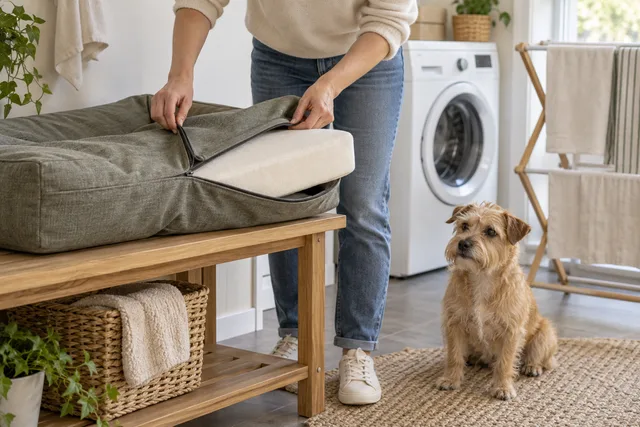
Remove the cover according to the bed’s construction. Open the zipper fully and work the fabric around the corners, supporting the insert instead of hauling it through a partly open gap. If it catches, stop and look for a second compartment or concealed fastening.
Deal with loose hair before loading the machine, using a fabric-appropriate method. Check folds and corners, where small debris can be easy to miss. Collect what you remove rather than moving the mess onto nearby clean laundry.
Finally, read the washer’s loading guidance. A large empty cover still needs an appropriate machine and load arrangement. If using a shared laundry facility, check that its rules allow pet bedding before taking it there.
Which detergent and cycle should you choose?
Use the combination permitted by the cover maker and compatible with your washing machine. Measure detergent according to its instructions and the actual load. A generic capful is not a useful universal dose because products and machines differ.
Write the selected settings down before starting, especially if someone else will finish the laundry. A note such as “cover only; settings copied from label; liner stays separate” is more useful than a vague instruction to wash the dog bed.
Do not add a stain treatment simply because it worked on clothing. Check the bed fabric instructions and the treatment’s own directions, including any compatibility check. If approval is unclear, ask the manufacturer rather than trying several household mixtures in succession.
For an unfamiliar stain, record what happened and which part is affected. That gives customer support a concrete question. This routine does not promise stain removal, disinfection or restoration of damaged fabric, and a fresh fragrance is not an acceptance test for any of those outcomes.
How should you plan drying and reassembly?
Choose the drying method before starting the wash. Identify a place where the cover can dry as directed without blocking a doorway or being returned to the dog too soon. Arrange another suitable resting place for the interval.
Do not promise yourself a fixed turnaround based only on the washing-cycle display. The cover’s seams, thickness, shape and permitted drying method all affect the practical schedule. Leave enough flexibility to keep components apart if they are not ready.
Before refitting, inspect the fabric and follow any remaining drying directions. Check the seams and folded edges rather than looking only at the broad sleeping surface. Keep the cover off the insert if any part is still damp.
Use your before photograph to orient the pieces. Align the cover corners and seat each insert before closing the zipper. If it needs force, reopen it and check for trapped fabric, an incorrectly positioned bolster or a mismatched component. Pulling harder should not be the default next step.
What if the cover no longer fits comfortably?
First confirm that every piece belongs to the same bed. In a household with two similar beds, it is easy to swap covers while doing laundry. Compare the size labels and the photographs taken before disassembly.
Next check orientation. A shaped cover may look almost symmetrical while still having a definite front and back. Follow the manufacturer’s assembly instructions rather than trying to reshape the mattress to suit the first arrangement you attempted.
If the cover still will not fit, record the settings used and photograph the mismatch. Contact the maker before stretching wet fabric, cutting the foam or changing the zipper. Those improvised fixes can leave you with a different problem and make the original issue harder to assess.
Keep the bed out of normal use until the assembly is complete and secure. A spare cover can be convenient, but verify compatibility with the exact model and size before ordering one. Similar external dimensions do not establish that the seam pattern and compartments match.
How often should you wash the cover?
Build a routine around the manufacturer’s guidance and the condition of the bed in your home. A calendar reminder is useful for inspection, but it should not become a reason to ignore a dirty cover between scheduled laundry days.
For the first few weeks, note when you check the bed, what you find and which part needs attention. A dog returning from muddy walks creates a different household workload from one that usually settles on a separate washable blanket. Observe your own arrangement instead of copying a schedule from an unrelated product review.
Keep the routine simple enough to repeat: inspect, identify the affected part, consult its directions, clean, dry and reassemble. If the process repeatedly leaves you without usable bedding, consider whether a compatible spare cover would solve that practical problem. It is an optional convenience, not a requirement to purchase another full bed.
Which mistakes are worth avoiding?
- Following the wrong label: confirm whether it belongs to the cover or another component.
- Treating all liners alike: resolve their individual care instructions.
- Starting without a drying plan: prepare an alternative resting place first.
- Forcing a zipper: check alignment and trapped material before continuing.
- Ignoring an existing tear: separate a repair question from a cleaning task.
A useful final check is to explain the routine to another household member without relying on memory. If you cannot identify which pieces stay out of the machine or which drying setting is permitted, there is still a question to resolve before laundry begins.
Frequently asked dog bed cover questions
Can I wash the whole bed if the cover comes off?
Only if the manufacturer explicitly permits that for the complete item. A zippered cover establishes that it can be removed, not that everything inside shares its care instructions.
Should I turn the cover inside out?
Check the exact directions. Do not transfer a clothing habit to a bed with a different backing or construction. Note the maker’s zipper instructions at the same time.
Can I put the foam back before the cover is completely dry?
Wait until the cleaned parts are dry and ready for reassembly. If you need the sleeping space sooner, use the alternative arrangement prepared before washing.
Does a waterproof liner eliminate all cleaning?
No. It is a separate component with its own inspection and care needs. Identify what reached the liner and follow its directions instead of assuming the outer cover is the only part worth checking.
What should I do when instructions are unclear?
Send the manufacturer the model, size, label photograph and a precise question. Ask about one component at a time. Save the response with the order record for the next laundry day.
Your next laundry-day checklist
Before starting, have the correct label, a photograph of the assembled bed, a place for dry inserts and a plan for drying the cover. After cleaning, confirm that the pieces are dry, correctly oriented and enclosed without forcing the zipper. Put the instructions somewhere accessible so the next wash requires less preparation.
For a future purchase, our washable-cover dog bed guide helps you evaluate maintenance alongside fit. Browse Beds & Furniture for related reading, or use the How-To library for another household task.
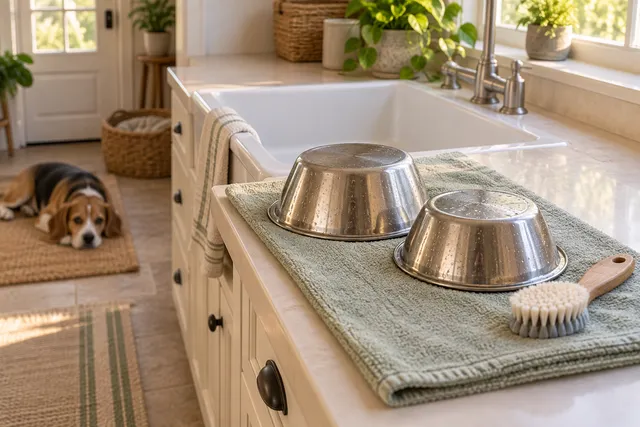
Manufacturer sources linked above were checked September 16, 2026. Their care examples are attributed to the relevant brands; the planning worksheet and household workflow are editorial suggestions. This article does not claim a comparative laundry test. The cover image illustrates preparation and is not a photograph of a named branded bed.